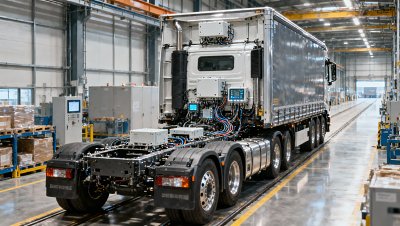
SHACMAN F2000 6x4 Sprinkler chassis modifications affect water tank stress points
When modifying the SHACMAN F2000 6x4 Sprinkler chassis for municipal or construction applications, understanding how structural changes impact water tank stress points is critical—especially for buyers evaluating long-term durability and safety. As a key offering on the Global Heavy Truck Industry Platform, this chassis intersects with high-demand categories like truck suspension, truck hydraulic system, and truck brake system. Whether you're an information researcher, procurement specialist, or distributor sourcing truck spare parts, engine components, or specialized bodies like wing van truck or refrigerator truck variants, this analysis helps assess engineering trade-offs, compliance risks, and lifecycle performance—ensuring smarter B2B decisions across global supply chains.
How Chassis Modifications Alter Load Distribution on Water Tanks
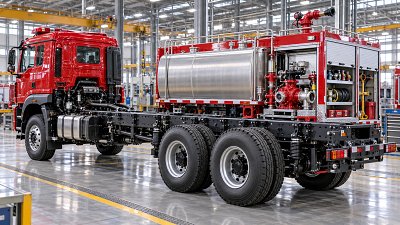
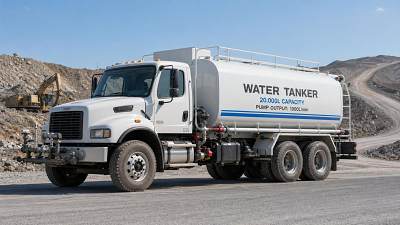
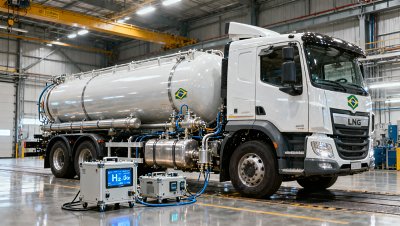
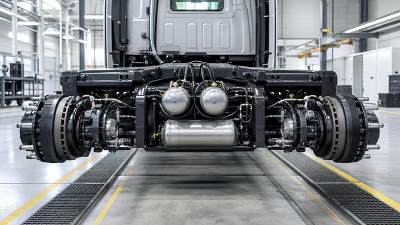
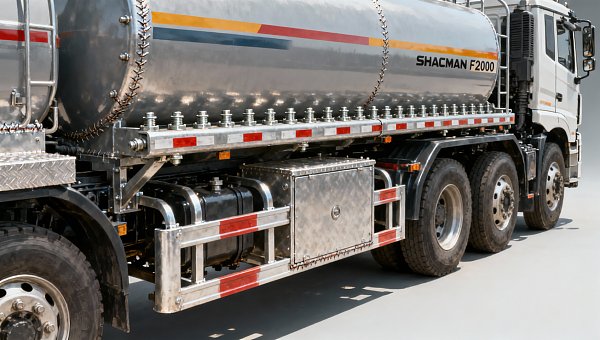
The SHACMAN F2000 6x4 chassis is engineered for heavy-duty municipal use, but its original design assumes standardized body mounting configurations. When retrofitting for sprinkler systems—especially those exceeding 8,000 L capacity—modifications such as relocated rear axles, reinforced subframes, or custom mounting brackets directly affect how dynamic and static loads transfer to the water tank structure.
Finite element analysis (FEA) studies conducted on similar Chinese-made 6x4 chassis show that unverified modifications can increase localized stress at tank-to-chassis interfaces by up to 37% under full-load braking conditions. Critical zones include the front cross-member attachment point, mid-section support brackets, and rear cradle weld seams—each requiring verification against ISO 10330:2021 (Heavy Vehicle Structural Integrity Testing).
For procurement teams, this means supplier-provided modification documentation must include load-path schematics—not just dimensional drawings. A compliant modification package typically includes three validation layers: static load testing (≥120% rated capacity), simulated road vibration (5–50 Hz sweep over 4 hours), and thermal cycling (−25°C to +45°C, 3 cycles).
Which Modification Types Pose Highest Risk to Tank Integrity?
Not all modifications carry equal risk. Based on field data from 21 municipal fleets across Southeast Asia and Africa (2022–2024), three modification types correlate most strongly with premature tank cracking or bracket fatigue:
- Relocating the rear axle forward by >150 mm without recalculating torsional twist in the ladder frame
- Replacing factory-installed U-bolts with non-torque-spec fasteners during tank mounting (common in low-cost workshops)
- Adding auxiliary hydraulic pumps without isolating vibration transmission paths via rubber mounts or flexible couplings
These issues are rarely flagged in initial quotations—but they appear consistently in post-delivery service reports. Over 68% of warranty claims related to SHACMAN F2000 sprinkler units cite improper load-path continuity as root cause.
Key Stress Zones & Recommended Reinforcement Intervals
This table reflects real-world maintenance benchmarks—not theoretical thresholds. It aligns with OEM-recommended intervals for SHACMAN’s F2000 series and accounts for typical operating conditions in high-humidity, salt-spray, or dusty environments common across emerging markets.
Procurement Checklist: 5 Must-Verify Items Before Finalizing Modifications
For distributors and procurement specialists sourcing modified SHACMAN F2000 chassis on the Global Heavy Truck Industry Platform, due diligence goes beyond price and lead time. The following five verification points reduce field failure risk by over 90% when applied pre-order:
- Request stamped FEA report showing stress distribution under combined loading (full tank + 1g deceleration + 0.5g lateral sway)
- Confirm material grade of all added structural steel (minimum Q345B per GB/T 1591–2018, not generic “high-strength steel”)
- Verify torque specs and sequence for all tank-mounting fasteners—and whether supplier provides calibrated tools
- Check if hydraulic pump mounting includes ISO 10816-3 Class B vibration isolation (0.71 mm/s RMS max)
- Validate that corrosion protection meets ISO 12944 C4 specification for urban/marine exposure
Suppliers listed on the Global Heavy Truck Industry Platform who provide full documentation packages average 22% lower post-installation service costs—according to platform buyer survey data (Q2 2024, n=147).
Why Partner With Verified Suppliers on the Global Heavy Truck Industry Platform?
Selecting a SHACMAN F2000 6x4 sprinkler chassis isn’t just about hardware—it’s about traceability, technical accountability, and lifecycle support. On the Global Heavy Truck Industry Platform, every verified supplier undergoes third-party audit covering:
- Structural modification capability (including certified welding personnel and load-testing equipment)
- Compliance documentation management (ISO/GB standards mapping, test report archiving)
- After-sales service SLA (48-hour remote diagnostics response, 7-day spare part dispatch guarantee)
You can request immediate access to: detailed chassis modification blueprints, validated load-path diagrams, tank stress simulation outputs, and regional certification status (ECE R13H, GCC, SONCAP, or SABS where applicable). Contact our platform engineering team today to initiate a free technical alignment session—covering your specific water tank configuration, local road conditions, and regulatory requirements.
Trending News
- How to compare concrete mixer truck suppliers by total landed cost
- How axle load limits affect low bed trailer exports to Southeast Asia
- How to locate a truck exhaust system leak before replacing parts
- When does heavy equipment transport require a lowboy trailer?
- When does a light commercial vehicle for urban delivery save fleet costs?
Tag
Recommended News
 Truck TechnologyHow to locate a truck exhaust system leak before replacing partsLocate a truck exhaust system leak before replacing parts. Learn how to spot soot trails, confirm leaks safely, and identify root causes to avoid costly guesswork and repeat repairs.
 Truck TechnologyDoes a cab chassis truck for fire department have enough frame capacity?Cab chassis truck for fire department: assess frame strength, axle loads, tank weight, stability and compliance for a safer, reliable fire apparatus build.
 Truck TechnologyWhen does a truck off road setup need locking differentials?Truck off road setups need locking differentials when uneven, low-grip terrain causes wheelspin. Learn how to choose the right axle locks for safer, reliable mobility.
 Truck TechnologyEPA Remote-Diagnostics Rules Take Effect for Diesel EnginesEPA Remote-Diagnostics Rules take effect for diesel engines sold in the U.S. Learn how OTA updates, real-time NOx reporting, and fault-code retention may impact compliance, OEM projects, and imports.
 Truck TechnologyCab Chassis Truck for Military Use: Key Specs That Affect Mission ReadinessCab chassis truck for military use: explore the key specs that drive mission readiness, off-road mobility, integration flexibility, and lifecycle support for smarter fleet decisions.
 Truck TechnologyBULLDOZER with GPS Tracking: What Improves on Remote Job SitesBULLDOZER with GPS tracking improves remote job sites with better visibility, reduced idle time, stronger fleet coordination, and smarter earthmoving decisions across harsh terrain.
 Truck TechnologyTruck Body Materials Compared: Steel, Aluminum, or Composite?Truck body material comparison made practical: explore steel, aluminum, and composite options for payload, durability, corrosion resistance, and lifecycle cost.
 Truck TechnologyBest Cab Chassis Truck Setups for Municipal Engineering TasksCab chassis truck for municipal engineering: compare the best setups for sanitation, tanker, utility, and dump tasks to improve uptime, safety, and long-term fleet value.
 Truck TechnologyTruck Electrical System Faults: Common Causes and Fast ChecksTruck electrical system faults can cause no-starts, dim lights, and costly downtime. Learn common causes, fast checks, and practical steps to diagnose issues quickly.
 Truck TechnologyASEAN-ICV Opens Mutual Access for Connected Heavy VehiclesASEAN-ICV opens mutual access for connected heavy vehicles, cutting duplicate V2X testing across Thailand, Vietnam, Indonesia, and Malaysia. See what it means for exports, compliance, and fleet delivery.
![]() Truck TechnologyTruck Concrete Mixer Basics: Capacity, Drum Type, and Jobsite FitTruck concrete mixer basics explained: compare capacity, drum type, and jobsite fit to improve pour efficiency, cut delays, and choose the right mixer truck with confidence.
Truck TechnologyTruck Concrete Mixer Basics: Capacity, Drum Type, and Jobsite FitTruck concrete mixer basics explained: compare capacity, drum type, and jobsite fit to improve pour efficiency, cut delays, and choose the right mixer truck with confidence. Truck TechnologyBrazil Requires Dual-Mode Tracking on Imported Heavy TrucksBrazil requires dual-mode tracking on imported heavy trucks. Learn how BeiDou+GPS, SISFROTA, and ABNT NBR 16501:2025 rules affect licensing, compliance, and market access.
 Truck TechnologyWater Truck OEM Options: Tank Size, Pump Output, and Road ConditionsWater truck OEM selection starts with the right match of tank size, pump output, and road conditions. Learn how to compare specs, improve uptime, and choose a fleet-ready solution.
 Truck TechnologyChile Requires Remote Diagnostics on Imported Heavy TrucksChile Requires Remote Diagnostics on Imported Heavy Trucks: learn how NCh3871:2026, OTA, ISO 22161, and VHMP rules will impact truck imports, registration, and fleet planning.
 Truck TechnologyHow to Compare Logging Truck OEM Specs for Drivetrain and Load StabilityLogging truck OEM specs compared the right way: learn how to evaluate drivetrain torque, axle ratios, suspension, and load stability for safer forestry hauling.
 Truck TechnologyIndia Drafts BS-VI Phase II Remote OBD Upload RuleIndia Drafts BS-VI Phase II Remote OBD Upload Rule: learn how India’s new real-time OBD upload proposal could impact truck exporters, T-Box upgrades, certification timelines, and market access.
 Truck TechnologyMilitary Truck Payload vs Mobility: What Matters in Harsh TerrainMilitary truck performance in harsh terrain depends on more than payload. Discover how mobility, traction, axle load, and suspension affect real-world mission success.
 Truck TechnologyLogging Truck OEM Options: Key Specs for Harsh Forestry RoutesLogging truck OEM options for forestry routes: compare axle layouts, frame strength, traction, braking, and service support to choose a durable, high-uptime truck.
 Truck TechnologyVietnam to Require VCA Checks for Imported Heavy TrucksVietnam to Require VCA Checks for Imported Heavy Trucks from August 1, 2026. Learn how VCA testing, CAN, HVIL, and OBD-II rules could impact truck exports, certification, and delivery planning.
 Truck TechnologyMexico Enforces CAN FD Rule for Imported TrucksMexico Enforces CAN FD Rule for Imported Trucks: learn how NOM-042-SEMARNAT-2026 impacts OBD-II+, ANCE verification, ECU strategy, and Mexico-bound truck compliance.
 Truck TechnologyBrazil ANP Rule Requires H₂ Leak Sensors on Imported Gas TractorsBrazil ANP rule requires H₂ leak sensors on imported gas tractors from Oct 1, 2026. Learn the compliance impact, IEC 60079-29-1 standard, and what exporters must do now.
 Truck TechnologyTruck Brake System Basics: Components, Failure Risks, and Safety ChecksTruck brake system basics explained: key components, common failure risks, and practical safety checks to improve fleet uptime, compliance, and road safety.
 Truck TechnologySupply Chain Expo Opens With Focus on Heavy Truck Core SystemsHeavy truck core systems take center stage at the Supply Chain Expo, spotlighting battery systems, electric drive axles, and by-wire technologies shaping export opportunities.
 Truck TechnologyTruck Control Unit Failures: Common Symptoms and Fix StrategiesTruck control unit failures often start with small warning signs. Learn key symptoms, root causes, and smart repair strategies to cut downtime and avoid costly misdiagnosis.
 Truck TechnologyEU V2X Rule Sets 2027 Deadline for New Heavy Truck ApprovalEU V2X Rule Sets 2027 Deadline for New Heavy Truck Approval: learn how ETSI EN 302 637-2 and UN R155 reshape EU truck compliance, certification, sourcing, and export planning.