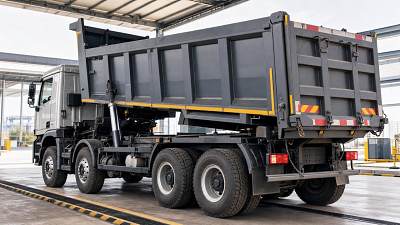
Truck Tipper Safety Checks Before Daily Operation
Before any truck tipper enters daily service, safety checks are essential for preventing equipment failure, workplace accidents, and costly operational delays.
A structured routine verifies hydraulics, brakes, tipping mechanisms, tires, lights, and load-related components before work begins.
For land transport equipment, a reliable truck tipper inspection program supports safer loading, transport, unloading, and fleet compliance.
Why Daily Truck Tipper Checks Depend on the Operating Scene
A truck tipper does not face the same risks in every job. Site conditions shape the inspection priority.
Urban construction routes create different hazards from quarry haul roads, highway aggregate delivery, or municipal waste collection.
Daily safety checks should match the working environment, load type, travel distance, and unloading method.
A short checklist may miss critical risks when a truck tipper moves between paved roads and rough ground.
The right approach links the scene, the mechanical stress, and the inspection action.
Core scene factors to judge before departure
- Load density, moisture, adhesion, and shifting risk.
- Road gradient, surface stability, turning space, and traffic exposure.
- Tipping area clearance, ground level, and overhead hazards.
- Required braking performance during repeated loaded cycles.
- Hydraulic duty frequency and cylinder extension conditions.
Construction Site Use: Check Stability Before the Truck Tipper Raises
Construction sites often combine uneven ground, tight access, pedestrians, machinery, and fast unloading schedules.
Before a truck tipper enters this scene, tire condition and suspension balance need close attention.
Inspect tire pressure, sidewall cuts, embedded stones, wheel nuts, and visible rim damage.
Uneven inflation can affect body stability when the truck tipper lifts a loaded bed.
The tipping area must be firm, level, and free from trenches, soft soil, or loose fill.
Check tailgate locks, hinges, and release mechanisms before loading soil, sand, rubble, or asphalt.
A jammed tailgate can shift the center of gravity and increase rollover risk during unloading.
Construction-focused inspection points
- Confirm mirrors, cameras, alarms, and warning lights operate clearly.
- Check body subframe pins, pivot points, and visible weld areas.
- Look for debris around the hoist, chassis, and rear axle.
- Verify mudguards and underrun protection are secure.
Quarry and Mining Roads: Prioritize Brakes, Tires, and Hydraulic Strength
Quarry duty places heavy shock loads on any truck tipper operating over stones, gradients, and abrasive surfaces.
Start with the braking system because loaded downhill travel can rapidly expose weak components.
Check air pressure build-up, brake response, warning indicators, leakage sounds, and parking brake holding ability.
Inspect brake lines, chambers, slack adjusters, drums, discs, and visible wear signs where accessible.
A truck tipper in quarry service also requires strict tire inspection before every loaded cycle.
Cuts, bulges, exposed cords, irregular wear, and low tread depth can quickly become critical failures.
Hydraulic hoses should be inspected for abrasion, cracking, leaks, swelling, and loose fittings.
A slow hydraulic response may indicate low oil, internal leakage, air entry, or pump wear.
Mining and quarry judgement points
- Never start work with unresolved brake warning signals.
- Reject operation if hydraulic oil leaks near hot surfaces.
- Confirm retarder or engine brake function where fitted.
- Check that load limits match material density and route gradient.
Highway Aggregate Delivery: Confirm Legal Roadworthiness and Load Control
A truck tipper carrying aggregate on public roads must meet both operational and legal safety expectations.
Lighting, reflectors, license plates, mirrors, horn, wipers, and warning devices need daily verification.
Check turn signals, brake lights, reverse lights, side markers, and hazard lamps before leaving the yard.
Load security is another important highway concern for every truck tipper transporting loose material.
The body should not leak stones, sand, or fines through damaged panels or unsecured tailgates.
Covers, tarpaulins, or sheeting systems should move smoothly and lock correctly when required.
Inspect the cab for seat belts, gauges, fire extinguisher, emergency kit, and clear dashboard warnings.
A roadgoing truck tipper also needs clean number plates, visible markings, and unobstructed reflective tape.
Municipal and Waste Transport: Watch Contamination, Tailgate Sealing, and Visibility
Municipal duties expose a truck tipper to wet loads, mixed debris, stop-start driving, and dense traffic.
Check tailgate sealing surfaces, locking hooks, rear lights, and reflectors for dirt or damage.
Waste residue can hide cracked hinges, blocked drains, leaking seals, and corroded floor sections.
Clean critical inspection areas before judging whether the truck tipper is ready for service.
Frequent low-speed maneuvers make visibility systems essential in municipal operations.
Reverse alarms, cameras, proximity sensors, mirrors, and beacons should be tested in real conditions.
If the route includes narrow streets, confirm steering response and power steering fluid condition.
Different Truck Tipper Scenarios Require Different Inspection Emphasis
This comparison helps align each truck tipper checklist with the real operating duty.
A single generic form may be useful, but scene-specific items make it stronger.
Hydraulic and Tipping System Checks Before Any Loaded Operation
The hydraulic system is central to truck tipper safety because it controls body lifting and lowering.
Check the hydraulic oil level according to the manufacturer’s recommended position and procedure.
Inspect cylinders for scoring, dents, corrosion, oil film, and seal leakage.
Look at hoses along the full visible length, especially near bends and clamping points.
Operate the control briefly without load when allowed, then listen for abnormal noise or vibration.
The truck tipper body should raise smoothly, stop reliably, and lower without sudden movement.
Check safety props, body locks, limit devices, and emergency stop functions where fitted.
Never work beneath a raised body without an approved mechanical support correctly positioned.
Load-Related Checks That Prevent Tipper Rollover and Structural Damage
Load condition can turn a sound truck tipper into a high-risk vehicle if not checked early.
Confirm that planned material does not exceed legal payload or chassis design limits.
Wet clay, ore, demolition waste, and compacted soil may be heavier than expected.
Check for uneven loading, stuck material, frozen cargo, and load adhesion to the body floor.
Uneven material can shift sideways as the truck tipper body rises.
Body liners, floor condition, and side panels should be checked for deformation or sharp damage.
If material may stick, unloading should be planned on level ground with extra caution.
Quick load decision checklist
- Is the material weight known or estimated conservatively?
- Is the load centered between the sides?
- Can the tailgate release fully and safely?
- Is the tipping surface level and strong enough?
- Are people and equipment outside the danger zone?
Practical Daily Inspection Flow for a Truck Tipper
A practical truck tipper inspection works best when it follows the same order every day.
Start outside the vehicle, move around it, inspect the tipping body, then check the cab.
Finish with a controlled functional test in a safe area before accepting the vehicle for work.
Recommended sequence
- Walk around and check for leaks, damage, loose parts, or missing guards.
- Inspect tires, wheels, suspension, mudguards, steps, and handholds.
- Check hydraulic tank, hoses, cylinders, controls, and warning labels.
- Verify tailgate, hinges, pins, body floor, side panels, and locking points.
- Test lights, horn, mirrors, cameras, alarms, seat belts, and instruments.
- Confirm brakes, steering, clutch or transmission response, and parking brake hold.
- Record defects and remove the truck tipper from service if safety is uncertain.
Common Misjudgments That Increase Truck Tipper Risk
Many incidents start with small defects that were considered acceptable during a busy shift.
A minor hydraulic leak may worsen under load, pressure, temperature, or repeated cycles.
A slightly soft tire can reduce stability when the truck tipper body is fully raised.
A delayed tailgate release can create sudden load movement and dangerous body stress.
Another common mistake is inspecting the vehicle without considering the day’s specific route.
A truck tipper prepared for highway use may still be unsuitable for wet excavation ground.
Frequently ignored points
- Overhead power lines or structures near the tipping zone.
- Sticky loads that do not slide evenly during discharge.
- Blocked rear lights after muddy or dusty work.
- Air system moisture, slow pressure build-up, or audible leakage.
- Missing inspection records after shift changes or subcontracted work.
Scenario-Based Maintenance Records Improve Reliability and Compliance
Daily checks become more valuable when findings are recorded, reviewed, and linked to maintenance decisions.
A truck tipper with repeated hydraulic seepage should not only receive temporary cleaning.
The root cause may involve hose routing, cylinder seals, overloaded work, or contamination.
Inspection records also show whether certain routes accelerate tire wear, brake wear, or body damage.
Digital checklists can improve consistency, photo evidence, defect tracking, and repair confirmation.
For cross-border sourcing and fleet expansion, standardized inspection criteria support better equipment comparison.
Action Guide: Build a Safer Truck Tipper Operation Before the First Load
The safest daily operation begins before the first bucket, conveyor, or loader fills the body.
Match the checklist to the scene, confirm mechanical readiness, and stop when critical defects appear.
A dependable truck tipper should combine strong chassis design, reliable hydraulics, effective brakes, and clear visibility.
When evaluating land transport equipment, compare suppliers by safety features, documentation, service support, and application fit.
The Global Heavy Truck Industry Platform helps connect heavy vehicle needs with global product discovery and supplier comparison.
Use structured safety requirements when reviewing any truck tipper for construction, quarry, highway, or municipal duty.
A clear pre-operation process reduces downtime, protects people, and keeps heavy-duty transport moving with confidence.
Trending News
- How to compare concrete mixer truck suppliers by total landed cost
- How axle load limits affect low bed trailer exports to Southeast Asia
- How to locate a truck exhaust system leak before replacing parts
- When does heavy equipment transport require a lowboy trailer?
- When does a light commercial vehicle for urban delivery save fleet costs?
Tag
Recommended News
 Fleet ManagementWhen does a light commercial vehicle for urban delivery save fleet costs?Light commercial vehicle for urban delivery: learn when route density, payload utilization, access, and driver productivity can reduce fleet cost per successful stop.
 Fleet ManagementHeavy Truck Specs That Matter Most for Long-Term Fleet PlanningHeavy truck specs that truly shape long-term fleet success: compare payload, torque, axle setup, fuel efficiency, and parts support to cut downtime and plan smarter.
 Fleet ManagementTruck Parts Supplier Risks That Affect Long-Term Fleet CostsTruck parts supplier risks can quietly increase long-term fleet costs through downtime, poor fitment, and supply delays. Learn how to choose smarter and protect uptime.
 Fleet ManagementSemi Trailer Distributor Red Flags That Can Delay Fleet ExpansionSemi trailer distributor warning signs can stall fleet expansion fast. Learn the key red flags in inventory, delivery, support, and compliance before you buy.
 Fleet ManagementLogistics Transportation Trends Reshaping Fleet Cost ControlLogistics transportation trends are redefining fleet cost control. Discover how data, sourcing, and equipment strategy help fleets cut risk, improve utilization, and stay competitive.
 Fleet ManagementOff Road Truck Safety Risks and Maintenance Checks Before DeploymentOff road truck safety starts before deployment. Learn key risks, maintenance checks, and inspection steps to reduce downtime, protect crews, and keep every jobsite moving.
 Fleet ManagementTruck Fleet Cost Control: 7 Metrics That Matter in 2026Truck fleet cost control in 2026 starts with 7 key metrics. Learn how fuel, uptime, utilization, downtime, and TCO reveal hidden costs and smarter sourcing decisions.
 Fleet ManagementHeavy Truck Fuel Efficiency: What Impacts Operating CostsHeavy truck fuel efficiency directly impacts operating costs. Learn how design, payload, maintenance, and driver behavior affect fuel use and smarter truck buying decisions.
 Fleet ManagementTruck Fleet Planning Tips for Lower DowntimeTruck fleet planning tips to cut downtime, improve uptime, optimize maintenance, manage spare parts, and build a more reliable, cost-efficient transport operation.
 Fleet ManagementTruck Tipper Safety Checks Before Daily OperationTruck tipper daily safety checks made simple: inspect hydraulics, brakes, tires, lights, loads, and tipping stability to reduce downtime and operate with confidence.
 Fleet ManagementDump Truck Supplier Risks in Mining ProjectsFind out how to choose a reliable dump truck supplier for mining industry projects, reduce sourcing risks, secure parts support, and improve uptime in harsh mining operations.
 Fleet ManagementBest Commercial Vehicle Parts for Warehouse Fleets with High Stop-Start UseCommercial vehicle parts for warehouse fleets should handle heavy stop-start use with fewer failures. Discover proven brake, battery, suspension, and steering choices that cut downtime.
 Fleet ManagementDelivery Truck Supplier in USA: What Matters Most for Fleet ExpansionDelivery truck supplier in USA selection impacts uptime, cost, and fleet growth. Learn how to compare suppliers by route needs, service support, and long-term scalability.
 Fleet ManagementHow to Choose Commercial Vehicle Parts for Warehouse Fleet UptimeCommercial vehicle parts for warehouse fleets directly impact uptime. Learn how to choose durable, accurate-fit parts and reliable suppliers to reduce downtime and control maintenance costs.
 Fleet ManagementWhy a Light Duty Truck Manufacturer in USA Still Matters for Fleet ReliabilityLight duty truck manufacturer in USA choices still shape fleet uptime, parts access, and lifecycle value. See what buyers should compare for more reliable operations.
 Fleet ManagementHow to Plan a Dump Truck Bulk Order for Multi-Site ProjectsDump truck bulk order planning for multi-site projects made simple. Learn how to balance specs, delivery, support, and total cost for smarter fleet decisions.
 Fleet ManagementWhat Makes a Delivery Truck Supplier Cost-Effective in Real OperationsDelivery truck supplier with cost-effective solutions: learn how to cut fuel, maintenance, and downtime costs with a practical checklist for smarter fleet purchasing.
 Fleet ManagementHow Low-Maintenance Truck Spare Parts Suppliers Help Cut DowntimeTruck spare parts supplier with low maintenance benefits help fleets cut downtime, speed repairs, and lower service costs. Discover how smarter sourcing boosts uptime.
 Fleet ManagementHow Commercial Vehicle Parts for Warehouse Improve Daily UptimeCommercial vehicle parts for warehouse operations help reduce downtime, improve safety, and keep trucks and trailers moving efficiently. Discover how the right parts boost daily uptime.
 Fleet ManagementCommercial Vehicle Parts for Cold Storage: Reducing Failure in Daily UseCommercial vehicle parts for cold storage help reduce daily failures, protect cargo quality, and improve fleet uptime. Discover scenario-based maintenance insights for refrigerated transport.
 Fleet ManagementDelivery Truck Supplier in USA: What to Compare Before Expanding a FleetDelivery truck supplier in USA comparison guide for fleet expansion. Learn how to evaluate quality, service, parts support, and lifecycle cost before you invest.
 Fleet ManagementBest Commercial Vehicle Parts for Warehouse OperationsCommercial vehicle parts for warehouse operations should boost safety, uptime, and load control. Explore the best brake, tire, steering, and lighting solutions for efficient fleet performance.
 Fleet ManagementTruck Cement Mixer Supplier: What to Check Before Fleet ExpansionTruck cement mixer supplier selection can make or break fleet expansion. Learn the key checks on quality, compliance, parts support, and total cost before you buy.
 Fleet ManagementTruck Trailer Supplier Checklist for Long-Haul Fleet ExpansionTruck trailer supplier checklist for long-haul fleet expansion: compare compliance, lifecycle cost, delivery, and support to reduce sourcing risk and scale with confidence.
 Fleet ManagementIs a Lightweight Semi Trailer Manufacturer the Right Fit for High-Frequency RoutesFind out if a semi trailer manufacturer with lightweight design is the smart choice for high-frequency routes, balancing payload, durability, compliance, and long-term fleet savings.