China-Mongolia-Russia E-Waybill Mutual Recognition Upgraded
On May 11, 2026, the China–Mongolia–Russia Economic Corridor advanced a critical regulatory milestone with the signing of the Supplementary Agreement on Cross-Border Electronic Waybill Mutual Recognition. This development directly impacts cold-chain logistics operators, vehicle manufacturers, and cross-border trade enterprises across all three countries—driven by newly mandated real-time temperature data interoperability and standardized onboard monitoring requirements.
Event Overview
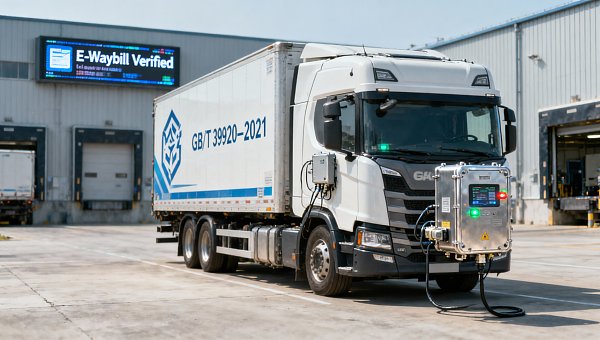
On May 11, 2026, China, Mongolia, and Russia signed the Supplementary Agreement on Cross-Border Electronic Waybill Mutual Recognition, stipulating that all tractors engaged in cross-border cold-chain transport must be equipped with an onboard temperature control data acquisition and upload module compliant with GB/T 39920–2021. This standard has been formally adopted by the Mongolian Technical Supervision Agency (MTS) and Russia’s GOST-R system, making it a mandatory vehicle准入 condition for cold-chain operations across the corridor.
Industries Affected
Direct Trading Enterprises
Exporters and importers handling perishable goods—including dairy, meat, pharmaceuticals, and horticultural products—now face stricter pre-departure compliance checks. Non-compliant vehicles risk cargo rejection at border checkpoints or delayed customs clearance. The requirement effectively shifts part of traceability accountability from shippers to transport providers, altering contractual risk allocation in cold-chain service agreements.
Raw Material Procurement Enterprises
Firms sourcing raw agricultural or marine inputs from one corridor country for processing in another must now verify carrier certification status prior to booking. Delays in verifying onboard module functionality—or retrofitting older fleets—may constrain procurement lead times, especially during peak harvest or seasonal demand windows. Procurement teams are advised to update supplier qualification checklists to include hardware certification under GB/T 39920–2021.
Processing & Manufacturing Enterprises
Food processors, biopharma producers, and frozen seafood packagers relying on just-in-time inbound logistics may experience increased variability in arrival temperature logs. While real-time data sharing improves visibility, inconsistencies in module calibration or intermittent connectivity could trigger false non-conformance alerts—requiring internal SOP updates to distinguish technical anomalies from actual temperature excursions.
Supply Chain Service Providers
Third-party logistics (3PL) providers, freight forwarders, and fleet management platforms must integrate GB/T 39920–2021 module data feeds into their TMS and cold-chain dashboards. Those lacking API-ready interfaces for real-time temperature telemetry will face operational friction—especially when reconciling electronic waybills with live sensor outputs across jurisdictional systems (e.g., China’s E-Customs platform, Mongolia’s e-Logistics Portal, Russia’s ASU “Mercury”).
Key Focus Areas & Recommended Actions
Verify Vehicle Certification Status Before Booking
Confirm that contracted carriers hold valid GB/T 39920–2021 module certification recognized by MTS and GOST-R—not just domestic Chinese approval. Cross-check certification numbers against national registries where publicly accessible; request attestation letters otherwise.
Update Cold-Chain SLAs to Include Data Integrity Clauses
Revise service-level agreements to specify minimum uptime thresholds for temperature telemetry (e.g., ≥99.5% transmission availability), acceptable latency (
Conduct Interoperability Testing with All Three National Platforms
Before full deployment, test end-to-end data flow: from onboard module → carrier TMS → national e-waybill gateway (China’s “Single Window”, Mongolia’s e-Customs, Russia’s Mercury). Pay particular attention to timestamp synchronization, unit conversion (°C vs. °F), and certificate chain validation across PKI infrastructures.
Editorial Perspective / Industry Observation
Observably, this agreement marks less a technical upgrade than a sovereignty-aligned harmonization effort: rather than adopting ISO or IATA standards, the three nations jointly elevated a Chinese national standard—GB/T 39920–2021—to transnational regulatory force. Analysis shows this reflects growing preference for interoperable but nationally anchored frameworks in Belt and Road infrastructure governance. From an industry perspective, the emphasis on *real-time* data sharing—not just post-hoc reporting—signals a shift toward predictive compliance enforcement, where anomalies trigger automated interventions rather than manual audits.
Conclusion
This mutual recognition framework does not merely digitize paperwork—it redefines accountability boundaries in cross-border cold-chain logistics. The mandatory integration of certified hardware into traction units transforms temperature integrity from a contractual assurance into a measurable, enforceable, and jurisdictionally synchronized performance metric. For stakeholders, adaptation is not optional; it is the new baseline for corridor access.
Source Attribution
Official texts published by: General Administration of Customs of the People’s Republic of China (GACC); Mongolian Technical Supervision Agency (MTS); Federal Agency for Technical Regulation and Metrology of the Russian Federation (Rosstandart). Note: Implementation timelines for legacy fleet grandfathering clauses, module certification renewal procedures, and dispute resolution mechanisms remain pending official guidance—and are subject to ongoing observation.
Trending News
- How to compare concrete mixer truck suppliers by total landed cost
- How axle load limits affect low bed trailer exports to Southeast Asia
- How to locate a truck exhaust system leak before replacing parts
- When does heavy equipment transport require a lowboy trailer?
- When does a light commercial vehicle for urban delivery save fleet costs?
Tag
Recommended News
 Truck TechnologyHow to locate a truck exhaust system leak before replacing partsLocate a truck exhaust system leak before replacing parts. Learn how to spot soot trails, confirm leaks safely, and identify root causes to avoid costly guesswork and repeat repairs.
 Truck TechnologyDoes a cab chassis truck for fire department have enough frame capacity?Cab chassis truck for fire department: assess frame strength, axle loads, tank weight, stability and compliance for a safer, reliable fire apparatus build.
 Truck TechnologyWhen does a truck off road setup need locking differentials?Truck off road setups need locking differentials when uneven, low-grip terrain causes wheelspin. Learn how to choose the right axle locks for safer, reliable mobility.
 Truck TechnologyEPA Remote-Diagnostics Rules Take Effect for Diesel EnginesEPA Remote-Diagnostics Rules take effect for diesel engines sold in the U.S. Learn how OTA updates, real-time NOx reporting, and fault-code retention may impact compliance, OEM projects, and imports.
 Truck TechnologyCab Chassis Truck for Military Use: Key Specs That Affect Mission ReadinessCab chassis truck for military use: explore the key specs that drive mission readiness, off-road mobility, integration flexibility, and lifecycle support for smarter fleet decisions.
 Truck TechnologyBULLDOZER with GPS Tracking: What Improves on Remote Job SitesBULLDOZER with GPS tracking improves remote job sites with better visibility, reduced idle time, stronger fleet coordination, and smarter earthmoving decisions across harsh terrain.
 Truck TechnologyTruck Body Materials Compared: Steel, Aluminum, or Composite?Truck body material comparison made practical: explore steel, aluminum, and composite options for payload, durability, corrosion resistance, and lifecycle cost.
 Truck TechnologyBest Cab Chassis Truck Setups for Municipal Engineering TasksCab chassis truck for municipal engineering: compare the best setups for sanitation, tanker, utility, and dump tasks to improve uptime, safety, and long-term fleet value.
 Truck TechnologyTruck Electrical System Faults: Common Causes and Fast ChecksTruck electrical system faults can cause no-starts, dim lights, and costly downtime. Learn common causes, fast checks, and practical steps to diagnose issues quickly.
 Truck TechnologyASEAN-ICV Opens Mutual Access for Connected Heavy VehiclesASEAN-ICV opens mutual access for connected heavy vehicles, cutting duplicate V2X testing across Thailand, Vietnam, Indonesia, and Malaysia. See what it means for exports, compliance, and fleet delivery.
![]() Truck TechnologyTruck Concrete Mixer Basics: Capacity, Drum Type, and Jobsite FitTruck concrete mixer basics explained: compare capacity, drum type, and jobsite fit to improve pour efficiency, cut delays, and choose the right mixer truck with confidence.
Truck TechnologyTruck Concrete Mixer Basics: Capacity, Drum Type, and Jobsite FitTruck concrete mixer basics explained: compare capacity, drum type, and jobsite fit to improve pour efficiency, cut delays, and choose the right mixer truck with confidence. Truck TechnologyBrazil Requires Dual-Mode Tracking on Imported Heavy TrucksBrazil requires dual-mode tracking on imported heavy trucks. Learn how BeiDou+GPS, SISFROTA, and ABNT NBR 16501:2025 rules affect licensing, compliance, and market access.
 Truck TechnologyWater Truck OEM Options: Tank Size, Pump Output, and Road ConditionsWater truck OEM selection starts with the right match of tank size, pump output, and road conditions. Learn how to compare specs, improve uptime, and choose a fleet-ready solution.
 Truck TechnologyChile Requires Remote Diagnostics on Imported Heavy TrucksChile Requires Remote Diagnostics on Imported Heavy Trucks: learn how NCh3871:2026, OTA, ISO 22161, and VHMP rules will impact truck imports, registration, and fleet planning.
 Truck TechnologyHow to Compare Logging Truck OEM Specs for Drivetrain and Load StabilityLogging truck OEM specs compared the right way: learn how to evaluate drivetrain torque, axle ratios, suspension, and load stability for safer forestry hauling.
 Truck TechnologyIndia Drafts BS-VI Phase II Remote OBD Upload RuleIndia Drafts BS-VI Phase II Remote OBD Upload Rule: learn how India’s new real-time OBD upload proposal could impact truck exporters, T-Box upgrades, certification timelines, and market access.
 Truck TechnologyMilitary Truck Payload vs Mobility: What Matters in Harsh TerrainMilitary truck performance in harsh terrain depends on more than payload. Discover how mobility, traction, axle load, and suspension affect real-world mission success.
 Truck TechnologyLogging Truck OEM Options: Key Specs for Harsh Forestry RoutesLogging truck OEM options for forestry routes: compare axle layouts, frame strength, traction, braking, and service support to choose a durable, high-uptime truck.
 Truck TechnologyVietnam to Require VCA Checks for Imported Heavy TrucksVietnam to Require VCA Checks for Imported Heavy Trucks from August 1, 2026. Learn how VCA testing, CAN, HVIL, and OBD-II rules could impact truck exports, certification, and delivery planning.
 Truck TechnologyMexico Enforces CAN FD Rule for Imported TrucksMexico Enforces CAN FD Rule for Imported Trucks: learn how NOM-042-SEMARNAT-2026 impacts OBD-II+, ANCE verification, ECU strategy, and Mexico-bound truck compliance.
 Truck TechnologyBrazil ANP Rule Requires H₂ Leak Sensors on Imported Gas TractorsBrazil ANP rule requires H₂ leak sensors on imported gas tractors from Oct 1, 2026. Learn the compliance impact, IEC 60079-29-1 standard, and what exporters must do now.
 Truck TechnologyTruck Brake System Basics: Components, Failure Risks, and Safety ChecksTruck brake system basics explained: key components, common failure risks, and practical safety checks to improve fleet uptime, compliance, and road safety.
 Truck TechnologySupply Chain Expo Opens With Focus on Heavy Truck Core SystemsHeavy truck core systems take center stage at the Supply Chain Expo, spotlighting battery systems, electric drive axles, and by-wire technologies shaping export opportunities.
 Truck TechnologyTruck Control Unit Failures: Common Symptoms and Fix StrategiesTruck control unit failures often start with small warning signs. Learn key symptoms, root causes, and smart repair strategies to cut downtime and avoid costly misdiagnosis.
 Truck TechnologyEU V2X Rule Sets 2027 Deadline for New Heavy Truck ApprovalEU V2X Rule Sets 2027 Deadline for New Heavy Truck Approval: learn how ETSI EN 302 637-2 and UN R155 reshape EU truck compliance, certification, sourcing, and export planning.