Bulldozer for Construction: Key Specs That Affect Earthmoving Efficiency
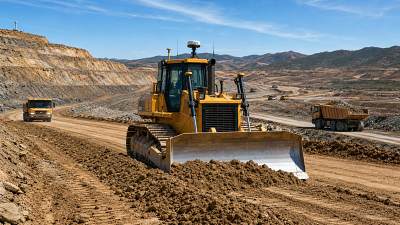
A bulldozer for construction does far more than push soil—it directly impacts cycle times, fuel use, grading accuracy, and jobsite productivity. For operators, understanding the key specifications behind earthmoving efficiency is essential when comparing models for roadwork, site preparation, mining, or municipal projects. This guide highlights the specs that matter most and how they influence real-world performance.
In heavy equipment operations, small specification differences can create large changes in daily output. A machine with the right blade capacity, undercarriage setup, and power-to-weight balance can move more material in 1 shift, reduce track slip on soft ground, and lower refueling frequency across a 10-hour workday.
For operators and fleet buyers using a global B2B sourcing platform, the challenge is not only finding a bulldozer for construction, but matching machine specs to terrain, haul distance, material density, and service conditions. That is where informed comparison becomes more valuable than headline engine power alone.
Why Bulldozer Specifications Directly Affect Earthmoving Efficiency
Earthmoving efficiency is usually measured by three practical outcomes: cubic meters moved per hour, fuel consumed per hour, and grading accuracy over repeated passes. On many construction sites, a 5% to 15% difference in machine match can be more important than a higher advertised horsepower number.
A bulldozer for construction works under constant resistance. Soil type, slope angle, moisture content, and push distance all influence load retention in front of the blade. When one specification is mismatched, operators compensate with extra passes, reduced travel speed, or higher throttle input, which increases wear and operating cost.
The 4 performance areas operators should monitor
- Production rate: material moved per hour or per shift
- Fuel efficiency: liters per operating hour under typical load
- Traction stability: ability to maintain push force without excessive slip
- Finish quality: grade consistency within target tolerance, often within a few centimeters
Why application matters more than brochure numbers
A 20-ton class dozer may perform well in site preparation with medium-density soil, but struggle in saturated clay or overperform for light municipal trimming work. In contrast, a larger machine may boost output in quarry access work but create unnecessary fuel burn on narrow urban sites with short push cycles of 15 to 30 meters.
That is why operators should compare a bulldozer for construction by job profile: road subgrade preparation, landfill spreading, mine support work, bulk cut-and-fill, or fine grading. Each use case prioritizes a different combination of blade size, operating weight, track design, and control system.
Core Machine Specs That Matter Most in Daily Operation
When evaluating a bulldozer for construction, operators should start with the specifications that influence real productivity instead of focusing only on brand familiarity. The six most influential areas are operating weight, engine power, blade type and capacity, undercarriage configuration, transmission response, and ground pressure.
Operating weight and traction balance
Operating weight determines how effectively a bulldozer transfers engine output into drawbar pull. In general, heavier machines generate stronger pushing performance and improved blade penetration. Common construction dozers range from roughly 10 tons for compact site work to more than 40 tons for mining support and major earthmoving.
However, more weight is not always better. On soft ground, excessive ground pressure can increase sinkage and cut traction. For operators, the goal is balance: enough weight for push force, but not so much that mobility suffers in wet fill, sand, or reclaimed ground conditions.
Engine power and usable torque
Horsepower affects travel speed under load, but torque delivery at low and mid range often matters more during actual pushing. A bulldozer for construction that holds stable torque from about 1,200 to 1,800 rpm may feel stronger in dense material than a higher-rated machine with weaker load response.
Operators should also consider power-to-weight ratio. If a dozer is heavy but underpowered, cycle time increases. If it is powerful but too light for the material, track slip rises. The best match supports steady blade fill without frequent stalling or aggressive throttle correction.
Blade type, width, and capacity
Blade selection can change production more than many buyers expect. Straight blades are often preferred for precise grading and shorter pushes. Semi-U blades offer a balanced option for mixed site work. U-blades are suited to carrying more loose material over longer push distances, especially in bulk earthmoving.
Blade capacity is typically expressed in cubic meters. A difference of even 0.5 to 1.5 cubic meters can alter the number of passes required across a full work zone. Wider blades can improve carry volume, but they may reduce maneuverability in confined road or municipal projects.
The table below shows how common specification groups influence field performance when selecting a bulldozer for construction.
For most operators, the key takeaway is that specs work as a system. A large blade on a poorly matched undercarriage will not deliver stable output. Likewise, strong horsepower without suitable traction can increase slip instead of production.
Transmission response and steering control
Power shift transmission behavior affects how smoothly the machine enters the cut, changes direction, and exits the push. On repetitive tasks such as stockpile shaping or road shoulder work, quick forward-reverse response can save seconds per cycle. Across 200 to 300 cycles in a day, that time adds up.
Steering control also matters. Operators working on slopes, trench edges, or compact sites need predictable modulation rather than abrupt correction. Better control lowers rework, improves finish consistency, and reduces unnecessary track wear.
Undercarriage design and ground pressure
The undercarriage is a major cost center and a major productivity driver. Wider track shoes generally reduce ground pressure and improve flotation, which helps on muddy or loose surfaces. Narrower shoes may provide stronger penetration and less drag in firmer ground, depending on site conditions.
For many fleets, undercarriage wear can account for a significant share of maintenance cost over the machine life. Operators should check track frame strength, roller sealing, shoe width options, and expected service intervals. A bulldozer for construction working in abrasive rock will need a different undercarriage strategy than one used in general fill spreading.
Matching Bulldozer Specs to Construction Scenarios
No single dozer fits every site. Efficiency improves when specification choices follow the working environment, material type, and target finish. Buyers sourcing through an international equipment platform should compare not only machine size, but also attachment options, shipping practicality, and after-sales support availability.
Roadwork and subgrade preparation
Roadwork often requires a balance between pushing capacity and grading precision. Machines in the light to mid-size range are commonly used where repeated leveling, shoulder shaping, and lane-width movement matter more than extreme bulk volume. Fine control and visibility become high priorities.
In these tasks, operators often prefer a blade and control package that supports grade consistency over longer distances. If pass-to-pass variation stays within a tight tolerance, fewer corrections are needed before compaction and paving crews move in.
Site preparation and bulk cut-and-fill
For building pads, industrial yards, and logistics infrastructure, the most efficient bulldozer for construction is usually the one that balances blade volume with practical maneuverability. Push distances often fall in the 20 to 60 meter range, so cycle efficiency becomes more important than top travel speed.
Here, a semi-U blade and stable traction package can be a strong combination. Operators should also evaluate whether the machine will work alongside wheel loaders, dump trucks, and compactors in a coordinated sequence, because jobsite flow affects total production.
Mining support and high-resistance materials
Mining support work and hard material handling usually require higher operating weight, stronger drawbar pull, and a robust undercarriage. The machine may spend long periods on uneven ground, sharp rock, or steep access routes. Durability and cooling performance become critical when ambient temperature and load both stay high.
In these conditions, operators should check not only engine output, but also radiator protection, track guarding, service access, and daily inspection points. A few minutes saved during maintenance can protect uptime across multi-shift operations.
The comparison below can help operators and sourcing teams narrow down the right bulldozer for construction by application type.
This comparison shows that efficiency depends on fit. An oversized machine may look productive on paper, but transport difficulty, limited maneuverability, and higher fuel use can reduce actual jobsite performance.
Operator-Focused Features That Improve Productivity and Reduce Fatigue
Even when two machines have similar horsepower and blade size, operator-centered features can change output over an 8 to 12 hour shift. Visibility, seat ergonomics, control effort, noise level, and monitoring systems all influence consistency, especially during finish work or repetitive pushing.
Cab visibility and control layout
A well-designed cab helps operators judge blade corners, track alignment, and slope edge distance more confidently. Better visibility supports fewer correction passes and reduces the risk of material spill beyond target lines. This becomes especially important on road shoulders, trench side work, and confined urban projects.
Control layout should reduce hand movement and allow smooth modulation. During hundreds of direction changes in one shift, even small ergonomic improvements can lower fatigue and help maintain steady production in the final 2 to 3 hours of work.
Grade control readiness and monitoring displays
Many operators now look for a bulldozer for construction that can work efficiently with grade-assist or machine guidance systems. Even if advanced systems are not installed immediately, wiring readiness and display compatibility can make future upgrades easier and less disruptive.
Basic onboard monitoring should clearly show fuel level, coolant temperature, maintenance reminders, and fault alerts. Faster response to abnormal readings can prevent unplanned downtime and protect engine and hydraulic components during peak workload periods.
Useful operator checks before every shift
- Inspect track tension and look for uneven shoe wear
- Check blade cutting edge condition and mounting security
- Confirm fluid levels and look for leaks around hydraulic lines
- Test steering response, brake feel, and reverse alarm
- Verify cab display warnings before entering full load operation
These 5 routine checks can often be completed in 10 to 15 minutes and may help avoid productivity losses later in the shift. For fleets managing multiple machines, standardizing inspection routines also improves operator handover quality.
How to Compare Suppliers and Machines on a Global B2B Platform
For international buyers and operators, machine efficiency is only part of the decision. The best bulldozer for construction should also be practical to source, maintain, and support over its service life. That is why a digital B2B marketplace adds value beyond product listings alone.
A professional heavy truck and equipment platform allows users to compare machine categories, spare parts availability, supplier responsiveness, and application guidance across multiple regions. This is especially useful for contractors expanding into new markets or replacing mixed-brand fleets.
4 supplier evaluation points before purchase
- Specification transparency: complete data on weight, blade capacity, track options, and service intervals
- Parts support: availability of wear parts, filters, rollers, and cutting edges within practical lead times
- Application guidance: ability to recommend setups for mining, roadwork, or municipal conditions
- Trade coordination: clear communication on packing, shipping, documentation, and delivery schedules
Questions operators and buyers should ask
Before ordering, ask about track shoe options, blade configuration, cold or hot climate suitability, and normal maintenance intervals. It is also useful to confirm whether service manuals, spare parts lists, and technical support can be provided in a familiar language.
If the machine will be used in remote projects, parts lead time matters. A delay of 2 to 4 weeks for a critical wear component can reduce fleet availability. For this reason, many buyers use industry platforms not just to find equipment, but to build dependable supply relationships.
Why integrated industry resources support better decisions
A specialized global marketplace for heavy trucks and construction equipment helps buyers compare more than price. Access to product categories, supplier directories, market insights, and buying guides can shorten evaluation time and reduce mismatch risk when sourcing a bulldozer for construction alongside trailers, trucks, or spare parts.
For contractors managing road transport and earthmoving together, this integrated sourcing model is practical. It supports coordinated procurement across truck chassis, complete trucks, construction machinery, and maintenance components used in infrastructure, mining, and municipal engineering projects.
Common Selection Mistakes and How to Avoid Them
One common mistake is choosing a machine based mainly on horsepower. Another is selecting blade capacity without considering push distance, material density, or transport limitations. These errors often create lower real output, not higher production.
Operators should also avoid underestimating undercarriage wear conditions. A machine that performs well in compacted soil may experience faster wear in abrasive rock or debris-filled demolition sites. Matching shoe width, guarding, and maintenance intervals to the environment is a practical way to protect total cost of ownership.
Three simple rules for better machine matching
- Match blade type to material handling style, not just maximum volume
- Check power, weight, and ground pressure together as one operating package
- Evaluate support, parts, and operator comfort before final price comparison
These rules help both field operators and procurement teams choose a bulldozer for construction that performs reliably over the full project cycle rather than only in initial testing.
The most efficient bulldozer is the one that fits the job, the ground, and the operator. When you compare operating weight, torque behavior, blade capacity, undercarriage design, and cab productivity features together, you get a clearer picture of real earthmoving performance.
If you are sourcing a bulldozer for construction for roadwork, site preparation, mining support, or municipal projects, a specialized global B2B platform can help you compare suppliers, review technical data, and identify the right equipment and parts support for long-term use.
To explore suitable machines, compare supplier capabilities, or get a tailored sourcing recommendation for your application, contact us today and learn more about practical heavy equipment solutions through the Global Heavy Truck Industry Platform.
Trending News
- How to compare concrete mixer truck suppliers by total landed cost
- How axle load limits affect low bed trailer exports to Southeast Asia
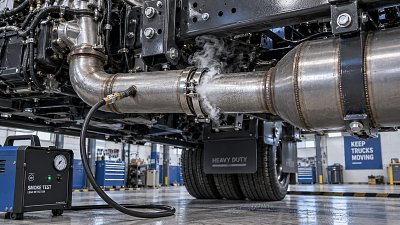
- How to locate a truck exhaust system leak before replacing parts
- When does heavy equipment transport require a lowboy trailer?
- When does a light commercial vehicle for urban delivery save fleet costs?
Tag
Recommended News
 Truck TechnologyHow to locate a truck exhaust system leak before replacing partsLocate a truck exhaust system leak before replacing parts. Learn how to spot soot trails, confirm leaks safely, and identify root causes to avoid costly guesswork and repeat repairs.
 Truck TechnologyDoes a cab chassis truck for fire department have enough frame capacity?Cab chassis truck for fire department: assess frame strength, axle loads, tank weight, stability and compliance for a safer, reliable fire apparatus build.
 Truck TechnologyWhen does a truck off road setup need locking differentials?Truck off road setups need locking differentials when uneven, low-grip terrain causes wheelspin. Learn how to choose the right axle locks for safer, reliable mobility.
 Truck TechnologyEPA Remote-Diagnostics Rules Take Effect for Diesel EnginesEPA Remote-Diagnostics Rules take effect for diesel engines sold in the U.S. Learn how OTA updates, real-time NOx reporting, and fault-code retention may impact compliance, OEM projects, and imports.
 Truck TechnologyCab Chassis Truck for Military Use: Key Specs That Affect Mission ReadinessCab chassis truck for military use: explore the key specs that drive mission readiness, off-road mobility, integration flexibility, and lifecycle support for smarter fleet decisions.
 Truck TechnologyBULLDOZER with GPS Tracking: What Improves on Remote Job SitesBULLDOZER with GPS tracking improves remote job sites with better visibility, reduced idle time, stronger fleet coordination, and smarter earthmoving decisions across harsh terrain.
 Truck TechnologyTruck Body Materials Compared: Steel, Aluminum, or Composite?Truck body material comparison made practical: explore steel, aluminum, and composite options for payload, durability, corrosion resistance, and lifecycle cost.
 Truck TechnologyBest Cab Chassis Truck Setups for Municipal Engineering TasksCab chassis truck for municipal engineering: compare the best setups for sanitation, tanker, utility, and dump tasks to improve uptime, safety, and long-term fleet value.
 Truck TechnologyTruck Electrical System Faults: Common Causes and Fast ChecksTruck electrical system faults can cause no-starts, dim lights, and costly downtime. Learn common causes, fast checks, and practical steps to diagnose issues quickly.
 Truck TechnologyASEAN-ICV Opens Mutual Access for Connected Heavy VehiclesASEAN-ICV opens mutual access for connected heavy vehicles, cutting duplicate V2X testing across Thailand, Vietnam, Indonesia, and Malaysia. See what it means for exports, compliance, and fleet delivery.
![]() Truck TechnologyTruck Concrete Mixer Basics: Capacity, Drum Type, and Jobsite FitTruck concrete mixer basics explained: compare capacity, drum type, and jobsite fit to improve pour efficiency, cut delays, and choose the right mixer truck with confidence.
Truck TechnologyTruck Concrete Mixer Basics: Capacity, Drum Type, and Jobsite FitTruck concrete mixer basics explained: compare capacity, drum type, and jobsite fit to improve pour efficiency, cut delays, and choose the right mixer truck with confidence. Truck TechnologyBrazil Requires Dual-Mode Tracking on Imported Heavy TrucksBrazil requires dual-mode tracking on imported heavy trucks. Learn how BeiDou+GPS, SISFROTA, and ABNT NBR 16501:2025 rules affect licensing, compliance, and market access.
 Truck TechnologyWater Truck OEM Options: Tank Size, Pump Output, and Road ConditionsWater truck OEM selection starts with the right match of tank size, pump output, and road conditions. Learn how to compare specs, improve uptime, and choose a fleet-ready solution.
 Truck TechnologyChile Requires Remote Diagnostics on Imported Heavy TrucksChile Requires Remote Diagnostics on Imported Heavy Trucks: learn how NCh3871:2026, OTA, ISO 22161, and VHMP rules will impact truck imports, registration, and fleet planning.
 Truck TechnologyHow to Compare Logging Truck OEM Specs for Drivetrain and Load StabilityLogging truck OEM specs compared the right way: learn how to evaluate drivetrain torque, axle ratios, suspension, and load stability for safer forestry hauling.
 Truck TechnologyIndia Drafts BS-VI Phase II Remote OBD Upload RuleIndia Drafts BS-VI Phase II Remote OBD Upload Rule: learn how India’s new real-time OBD upload proposal could impact truck exporters, T-Box upgrades, certification timelines, and market access.
 Truck TechnologyMilitary Truck Payload vs Mobility: What Matters in Harsh TerrainMilitary truck performance in harsh terrain depends on more than payload. Discover how mobility, traction, axle load, and suspension affect real-world mission success.
 Truck TechnologyLogging Truck OEM Options: Key Specs for Harsh Forestry RoutesLogging truck OEM options for forestry routes: compare axle layouts, frame strength, traction, braking, and service support to choose a durable, high-uptime truck.
 Truck TechnologyVietnam to Require VCA Checks for Imported Heavy TrucksVietnam to Require VCA Checks for Imported Heavy Trucks from August 1, 2026. Learn how VCA testing, CAN, HVIL, and OBD-II rules could impact truck exports, certification, and delivery planning.
 Truck TechnologyMexico Enforces CAN FD Rule for Imported TrucksMexico Enforces CAN FD Rule for Imported Trucks: learn how NOM-042-SEMARNAT-2026 impacts OBD-II+, ANCE verification, ECU strategy, and Mexico-bound truck compliance.
 Truck TechnologyBrazil ANP Rule Requires H₂ Leak Sensors on Imported Gas TractorsBrazil ANP rule requires H₂ leak sensors on imported gas tractors from Oct 1, 2026. Learn the compliance impact, IEC 60079-29-1 standard, and what exporters must do now.
 Truck TechnologyTruck Brake System Basics: Components, Failure Risks, and Safety ChecksTruck brake system basics explained: key components, common failure risks, and practical safety checks to improve fleet uptime, compliance, and road safety.
 Truck TechnologySupply Chain Expo Opens With Focus on Heavy Truck Core SystemsHeavy truck core systems take center stage at the Supply Chain Expo, spotlighting battery systems, electric drive axles, and by-wire technologies shaping export opportunities.
 Truck TechnologyTruck Control Unit Failures: Common Symptoms and Fix StrategiesTruck control unit failures often start with small warning signs. Learn key symptoms, root causes, and smart repair strategies to cut downtime and avoid costly misdiagnosis.
 Truck TechnologyEU V2X Rule Sets 2027 Deadline for New Heavy Truck ApprovalEU V2X Rule Sets 2027 Deadline for New Heavy Truck Approval: learn how ETSI EN 302 637-2 and UN R155 reshape EU truck compliance, certification, sourcing, and export planning.