Logistics Transportation Trends Reshaping Fleet Cost Control
Logistics transportation is entering a tighter cost era
Logistics transportation once treated fleet cost control as a fuel and maintenance problem.
That assumption no longer holds across road transport equipment markets.
Operating pressure now comes from several directions at the same time.
Fuel volatility changes route economics quickly.
Driver availability affects scheduling discipline and vehicle utilization.
Cross-border trade shifts are also changing sourcing choices for heavy trucks, trailers, and spare parts.
In this environment, logistics transportation performance is increasingly tied to data quality, procurement timing, and asset visibility.
Cost control is moving away from isolated line items.
It is becoming a system decision that links fleet operations, equipment selection, and supplier coordination.
This is why digital heavy truck ecosystems are gaining attention.
Platforms that connect global truck brands, equipment categories, and supplier information help reduce uncertainty before it reaches the road.
The strongest signals are no longer coming from freight volume alone
Freight demand still matters, but it is not the clearest signal anymore.
A more useful reading comes from how fleets are reacting to cost swings.
Recent logistics transportation decisions show a stronger focus on flexibility than on simple capacity expansion.
That shift is visible in three areas.
- Replacement cycles are becoming more selective, with closer attention to total cost of ownership.
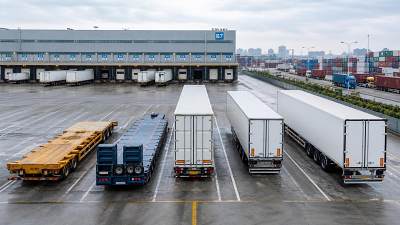
- Trailer matching and load planning are gaining value because idle assets now carry a heavier cost penalty.
- Spare parts sourcing is moving toward multi-market comparison instead of single-channel dependency.
This does not mean expansion has stopped.
It means expansion is being filtered through cost resilience.
For road transport equipment, the market is rewarding configurations that support multiple duty cycles.
Truck chassis, complete trucks, semi-trailers, and service parts are being evaluated together more often.
That broader evaluation is reshaping buying behavior across logistics transportation networks.
Why this change is becoming more visible now
The immediate reason is cost volatility, but the deeper cause is structural.
Logistics transportation has become more exposed to timing risk.
A delayed part, a poor route decision, or a mismatched vehicle specification can now affect margins faster than before.
Digital operations amplify this visibility.
Once fleets can measure empty miles, dwell time, fuel burn, and repair frequency more clearly, hidden inefficiencies become harder to ignore.
Another reason is market access.
Global sourcing is no longer only about finding a lower price.
It is about finding reliable equipment options faster, with clearer supplier context and better trade coordination.
The impact is spreading beyond the transport department
What starts as a logistics transportation cost issue often reaches several connected functions.
Fleet renewal plans, parts inventory, route service levels, and international supplier risk are now linked more tightly.
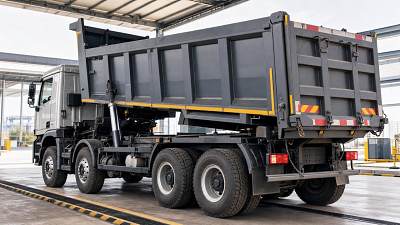
This is especially visible in heavy-duty truck operations.
Equipment choices carry longer financial consequences
A truck selected for one transport profile may underperform when route density or cargo mix changes.
That creates higher fuel consumption, lower uptime, or unnecessary maintenance complexity.
In logistics transportation, the wrong specification can look affordable at purchase and expensive in operation.
Parts strategy is becoming a margin issue
Spare parts availability affects downtime more directly than many budgeting models assume.
When supply chains are fragmented, even common service items can slow asset recovery.
This is pushing more operators to compare parts channels with the same discipline used for truck procurement.
Data quality now shapes commercial decisions
If utilization data is weak, replacement timing becomes guesswork.
If supplier data is incomplete, cross-border sourcing becomes slower and riskier.
That is one reason industry platforms are becoming more relevant in logistics transportation planning.
A clearer sourcing ecosystem is part of cost control
Cost control does not end with route software or telematics dashboards.
It also depends on how clearly the market can be searched and compared.
That is where a specialized heavy truck B2B platform changes the conversation.
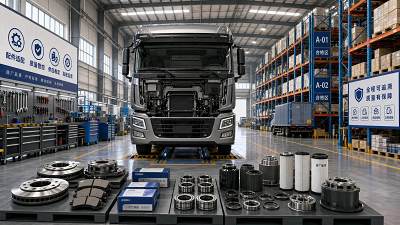
A structured marketplace covering truck chassis and cab, complete trucks, light trucks, construction machinery, trailers, semi-trailers, and spare parts supports faster evaluation.
It also helps connect logistics transportation needs with actual equipment availability across regions.
More importantly, industry directories, buying guides, and market insights reduce information gaps before negotiation begins.
That kind of transparency matters when asset decisions must balance operating efficiency with supply security.
For global heavy truck trade, the advantage is not only convenience.
It is the ability to compare suppliers, product categories, and market signals within one industry context.
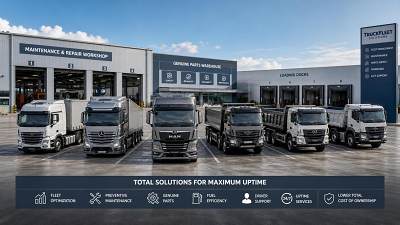
In practice, that supports better timing, better fit, and fewer costly mismatches in logistics transportation investment.
What deserves close attention over the next planning cycle
The next phase will likely reward disciplined visibility more than aggressive expansion.
Several questions now matter more than headline freight growth.
- Are current heavy truck specifications aligned with actual route conditions and payload behavior?
- How much cost is being created by idle trailers, partial loads, or inconsistent dispatch timing?
- Which spare parts categories create the longest downtime risk across the fleet?
- How diversified is the supplier base for core road transport equipment?
- Is logistics transportation data being used for procurement decisions, or only for post-trip reporting?
These are not abstract questions.
They shape whether cost control remains reactive or becomes strategic.
A fleet may not need more vehicles immediately.
It may need better application matching, stronger parts planning, and clearer supplier intelligence.
The practical response is to connect operations, sourcing, and market insight
The most useful response to these logistics transportation trends is not a single tool.
It is a more connected decision model.
Operational data should guide fleet utilization and route choices.
Equipment data should guide replacement and configuration planning.
Market data should guide supplier comparison and timing.
When those three layers stay disconnected, costs usually reappear elsewhere.
When they are connected, logistics transportation becomes more resilient against volatility.
A sensible next step is to review where cost leakage is actually coming from.
Then compare equipment options, supplier coverage, and service support with that evidence in hand.
Markets for heavy trucks and related equipment are still expanding, but the winners will likely be those that pair scale with sharper judgment.
In the current cycle, better logistics transportation decisions begin with better visibility, not bigger assumptions.
Trending News
- How to compare concrete mixer truck suppliers by total landed cost
- How axle load limits affect low bed trailer exports to Southeast Asia
- How to locate a truck exhaust system leak before replacing parts
- When does heavy equipment transport require a lowboy trailer?
- When does a light commercial vehicle for urban delivery save fleet costs?
Tag
Recommended News
 Fleet ManagementWhen does a light commercial vehicle for urban delivery save fleet costs?Light commercial vehicle for urban delivery: learn when route density, payload utilization, access, and driver productivity can reduce fleet cost per successful stop.
 Fleet ManagementHeavy Truck Specs That Matter Most for Long-Term Fleet PlanningHeavy truck specs that truly shape long-term fleet success: compare payload, torque, axle setup, fuel efficiency, and parts support to cut downtime and plan smarter.
 Fleet ManagementTruck Parts Supplier Risks That Affect Long-Term Fleet CostsTruck parts supplier risks can quietly increase long-term fleet costs through downtime, poor fitment, and supply delays. Learn how to choose smarter and protect uptime.
 Fleet ManagementSemi Trailer Distributor Red Flags That Can Delay Fleet ExpansionSemi trailer distributor warning signs can stall fleet expansion fast. Learn the key red flags in inventory, delivery, support, and compliance before you buy.
 Fleet ManagementLogistics Transportation Trends Reshaping Fleet Cost ControlLogistics transportation trends are redefining fleet cost control. Discover how data, sourcing, and equipment strategy help fleets cut risk, improve utilization, and stay competitive.
 Fleet ManagementOff Road Truck Safety Risks and Maintenance Checks Before DeploymentOff road truck safety starts before deployment. Learn key risks, maintenance checks, and inspection steps to reduce downtime, protect crews, and keep every jobsite moving.
 Fleet ManagementTruck Fleet Cost Control: 7 Metrics That Matter in 2026Truck fleet cost control in 2026 starts with 7 key metrics. Learn how fuel, uptime, utilization, downtime, and TCO reveal hidden costs and smarter sourcing decisions.
 Fleet ManagementHeavy Truck Fuel Efficiency: What Impacts Operating CostsHeavy truck fuel efficiency directly impacts operating costs. Learn how design, payload, maintenance, and driver behavior affect fuel use and smarter truck buying decisions.
 Fleet ManagementTruck Fleet Planning Tips for Lower DowntimeTruck fleet planning tips to cut downtime, improve uptime, optimize maintenance, manage spare parts, and build a more reliable, cost-efficient transport operation.
 Fleet ManagementTruck Tipper Safety Checks Before Daily OperationTruck tipper daily safety checks made simple: inspect hydraulics, brakes, tires, lights, loads, and tipping stability to reduce downtime and operate with confidence.
 Fleet ManagementDump Truck Supplier Risks in Mining ProjectsFind out how to choose a reliable dump truck supplier for mining industry projects, reduce sourcing risks, secure parts support, and improve uptime in harsh mining operations.
 Fleet ManagementBest Commercial Vehicle Parts for Warehouse Fleets with High Stop-Start UseCommercial vehicle parts for warehouse fleets should handle heavy stop-start use with fewer failures. Discover proven brake, battery, suspension, and steering choices that cut downtime.
 Fleet ManagementDelivery Truck Supplier in USA: What Matters Most for Fleet ExpansionDelivery truck supplier in USA selection impacts uptime, cost, and fleet growth. Learn how to compare suppliers by route needs, service support, and long-term scalability.
 Fleet ManagementHow to Choose Commercial Vehicle Parts for Warehouse Fleet UptimeCommercial vehicle parts for warehouse fleets directly impact uptime. Learn how to choose durable, accurate-fit parts and reliable suppliers to reduce downtime and control maintenance costs.
 Fleet ManagementWhy a Light Duty Truck Manufacturer in USA Still Matters for Fleet ReliabilityLight duty truck manufacturer in USA choices still shape fleet uptime, parts access, and lifecycle value. See what buyers should compare for more reliable operations.
 Fleet ManagementHow to Plan a Dump Truck Bulk Order for Multi-Site ProjectsDump truck bulk order planning for multi-site projects made simple. Learn how to balance specs, delivery, support, and total cost for smarter fleet decisions.
 Fleet ManagementWhat Makes a Delivery Truck Supplier Cost-Effective in Real OperationsDelivery truck supplier with cost-effective solutions: learn how to cut fuel, maintenance, and downtime costs with a practical checklist for smarter fleet purchasing.
 Fleet ManagementHow Low-Maintenance Truck Spare Parts Suppliers Help Cut DowntimeTruck spare parts supplier with low maintenance benefits help fleets cut downtime, speed repairs, and lower service costs. Discover how smarter sourcing boosts uptime.
 Fleet ManagementHow Commercial Vehicle Parts for Warehouse Improve Daily UptimeCommercial vehicle parts for warehouse operations help reduce downtime, improve safety, and keep trucks and trailers moving efficiently. Discover how the right parts boost daily uptime.
 Fleet ManagementCommercial Vehicle Parts for Cold Storage: Reducing Failure in Daily UseCommercial vehicle parts for cold storage help reduce daily failures, protect cargo quality, and improve fleet uptime. Discover scenario-based maintenance insights for refrigerated transport.
 Fleet ManagementDelivery Truck Supplier in USA: What to Compare Before Expanding a FleetDelivery truck supplier in USA comparison guide for fleet expansion. Learn how to evaluate quality, service, parts support, and lifecycle cost before you invest.
 Fleet ManagementBest Commercial Vehicle Parts for Warehouse OperationsCommercial vehicle parts for warehouse operations should boost safety, uptime, and load control. Explore the best brake, tire, steering, and lighting solutions for efficient fleet performance.
 Fleet ManagementTruck Cement Mixer Supplier: What to Check Before Fleet ExpansionTruck cement mixer supplier selection can make or break fleet expansion. Learn the key checks on quality, compliance, parts support, and total cost before you buy.
 Fleet ManagementTruck Trailer Supplier Checklist for Long-Haul Fleet ExpansionTruck trailer supplier checklist for long-haul fleet expansion: compare compliance, lifecycle cost, delivery, and support to reduce sourcing risk and scale with confidence.
 Fleet ManagementIs a Lightweight Semi Trailer Manufacturer the Right Fit for High-Frequency RoutesFind out if a semi trailer manufacturer with lightweight design is the smart choice for high-frequency routes, balancing payload, durability, compliance, and long-term fleet savings.