How to Judge Truck Parts Quality Before You Buy
How can you tell whether truck parts are truly worth buying?
Judging truck parts quality before ordering is less about one test and more about a chain of evidence.
A part may look acceptable in photos, yet still fail early because of weak materials, poor machining, or unstable production control.
That matters in road transport equipment, where downtime often costs more than the part itself.
For heavy-duty trucks, trailers, and construction fleets, the real question is simple: will the part perform reliably under load, heat, vibration, and long service cycles?
In practice, strong decisions come from checking specifications, certifications, supplier history, and consistency across multiple batches.
This is also why many buyers now use industry platforms that combine product listings, supplier data, and market references in one place.
When sourcing truck parts globally, better visibility usually means lower risk.
What are the first signs of quality when comparing truck parts?
The first signs are rarely branding alone.
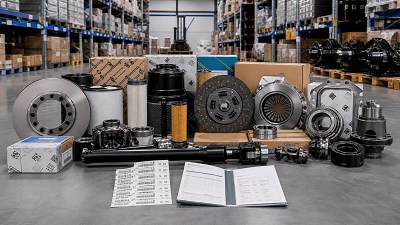
More useful indicators include material grade, dimensional accuracy, surface finish, and traceable product markings.
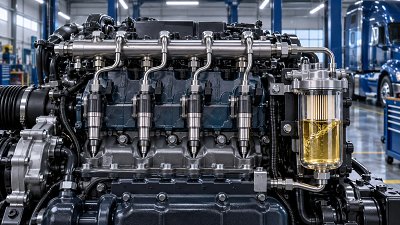
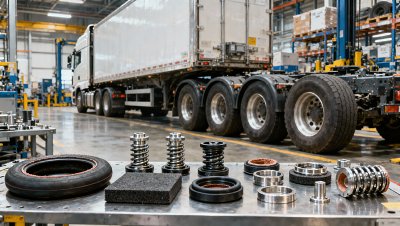
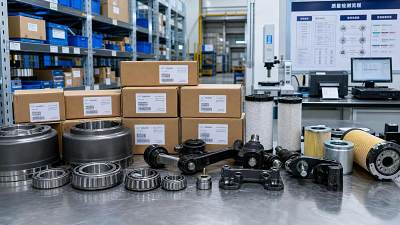
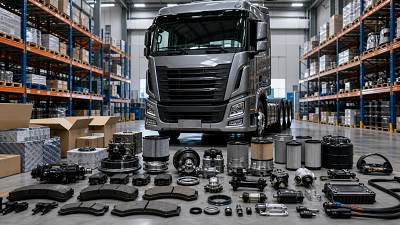
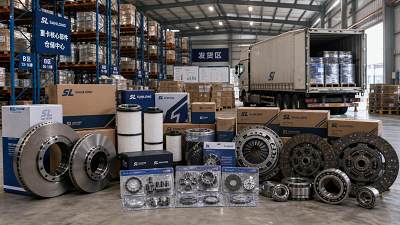
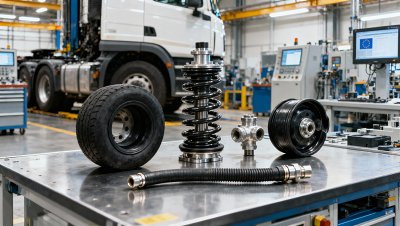
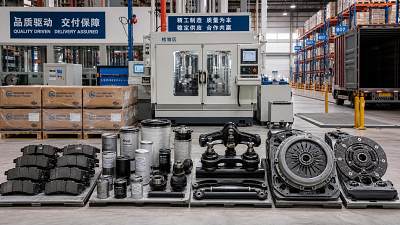
For example, brake components, suspension parts, filters, and bearings all reveal quality differently.
A clean finish helps, but it should never replace technical proof.
- Check whether the part number, batch code, and manufacturing origin are clearly marked.
- Ask for material specifications, hardness data, or coating details where relevant.
- Review tolerance requirements for parts that affect fit, sealing, rotation, or alignment.
- Confirm whether packaging protects against moisture, dust, and transport damage.
If a supplier cannot provide these basics quickly, that is already a warning sign.
Reliable truck parts suppliers usually keep technical files ready because repeated export buyers ask the same questions.
A quick quality screening table
Before moving to price discussions, it helps to run a simple comparison.
Are certifications and test reports enough to judge truck parts quality?
They are important, but they are not enough on their own.
A certificate may confirm that a factory follows a management system.
It does not automatically prove that every truck part in every shipment meets the same standard.
The better approach is to combine documents with physical and commercial checks.
For critical truck parts, ask for recent inspection reports tied to the exact product category, not generic factory certificates.
If possible, compare the report date, laboratory source, and test method.
Needle-bearing tests, brake lining friction data, seal aging tests, and corrosion resistance checks all serve different purposes.
One common mistake is accepting a polished PDF without checking whether it matches the actual truck parts being quoted.
Another is ignoring regional compliance needs for export destinations.
In cross-border sourcing, that gap can delay customs clearance or create warranty disputes later.
How do fit, application, and working conditions change the quality decision?
A good truck part is not simply the strongest one.
It is the part that matches the vehicle model, duty cycle, road condition, and maintenance pattern.
This is where many sourcing errors happen.
For long-haul logistics fleets, service life and fuel efficiency may be the main focus.
For mining or construction transport, impact resistance and contamination control may matter more.
The same truck parts category can perform very differently across those environments.
- Brake parts should be reviewed for heat stability and stopping performance under full load.
- Suspension parts should be checked for fatigue resistance on rough roads.
- Filters should match dust levels, fuel quality, and service intervals.
- Seals and hoses should be evaluated against temperature range and fluid compatibility.
In actual sourcing, an apparently lower-priced option often becomes expensive when application conditions were not defined clearly at the start.
That is why fitment data and operating context should be reviewed together, not separately.
What should you ask a supplier before trusting repeat orders?
Repeat purchasing depends on consistency, not just one successful sample.
A supplier may provide a strong initial sample, then switch raw materials or subcontract production later.
So the real test is process control.
Useful questions usually focus on traceability, quality control steps, and change management.
- Can each batch of truck parts be traced to raw materials and production dates?
- What in-process inspections are performed before final packing?
- Will the supplier notify buyers before changing material source or design details?
- How are defect claims documented, investigated, and closed?
- Can they support pre-shipment inspection or third-party verification?
The answers reveal much more than a catalog ever will.
This is also where a specialized B2B ecosystem becomes useful.
A platform focused on the heavy truck supply chain can make supplier comparison faster by combining product scope, company visibility, and industry references.
When truck parts are sourced internationally, access to directories, trade insight, and category depth can improve shortlisting quality before any negotiation starts.
Where do buyers usually make the wrong call on truck parts?
Most mistakes come from incomplete comparison, not from lack of effort.
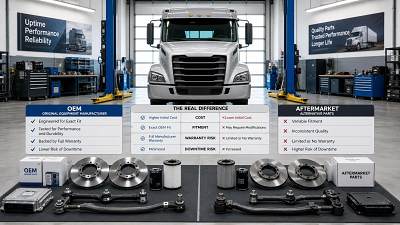
The most common error is selecting truck parts by unit price without calculating downtime risk, warranty exposure, and replacement frequency.
Another mistake is assuming that aftermarket and OEM-equivalent labels mean the same thing everywhere.
They do not.
Quality problems also appear when sample approval is done informally.
If no written benchmark exists, later batches become harder to dispute.
These checks take time, but they usually save much more time later.
What is the smartest way to make a final decision?
The smartest decision combines technical fit, supplier reliability, and commercial practicality.
In other words, judge truck parts as operating assets, not just order lines.
A practical final review often includes five points.
- Confirm the part matches vehicle model, load profile, and service environment.
- Verify product-specific documents, not only factory-level claims.
- Compare samples or batch records for consistency.
- Review after-sales handling, defect response, and supply continuity.
- Use trusted industry resources to compare suppliers and market signals.
For global sourcing, that last step matters more each year.
A dedicated heavy truck industry platform can help narrow the field by bringing together truck parts categories, supplier information, and relevant market insight.
That does not replace technical verification, but it can make the decision process more transparent and efficient.
If the next purchase matters to uptime, start by listing the exact application, the critical quality checkpoints, and the acceptable risk level.
Once those standards are clear, comparing truck parts becomes far easier, and far more reliable.
Trending News
- How to compare concrete mixer truck suppliers by total landed cost
- How axle load limits affect low bed trailer exports to Southeast Asia
- How to locate a truck exhaust system leak before replacing parts
- When does heavy equipment transport require a lowboy trailer?
- When does a light commercial vehicle for urban delivery save fleet costs?
Tag
Recommended News
 Truck Parts IndustryWhat causes a truck injector to fail prematurely?Truck injector failure can stem from fuel contamination, water, wiring faults, heat, or incorrect installation. Discover practical diagnostic steps to prevent repeat repairs.
 Truck Parts IndustryEU REACH Rule Takes Effect for Truck Rubber PartsEU REACH Rule takes effect for truck rubber parts exported to the EU. Learn how SCIP reporting, SVHC declarations, and supply chain compliance now impact truck manufacturers and suppliers.
 Truck Parts IndustryHow to Evaluate Commercial Vehicle Parts With Eco-Friendly Materials for Durability and ComplianceCommercial vehicle parts with eco-friendly materials require more than green claims. Learn how to assess durability, compliance, and supplier reliability for smarter sourcing.
 Truck Parts IndustryHow to Evaluate a Truck Parts Supplier Beyond Unit PriceTruck parts supplier selection should go beyond unit price. Learn how to assess quality, traceability, compliance, delivery, and support to reduce fleet risk and total cost.
 Truck Parts IndustryVietnam to Require QR Traceability Labels on Imported Heavy-Truck PartsVietnam to Require QR Traceability Labels on Imported Heavy-Truck Parts from Aug 1, 2026. Learn scope, VNQR-2025 rules, VITRAC links, and how to avoid port refusal and fines.
 Truck Parts IndustryHow to Evaluate a Truck Spare Parts Supplier for Long-Term Cost ControlTruck spare parts supplier selection affects far more than price. Learn how to compare quality, delivery, traceability, and hidden costs to protect fleet uptime and control long-term expenses.
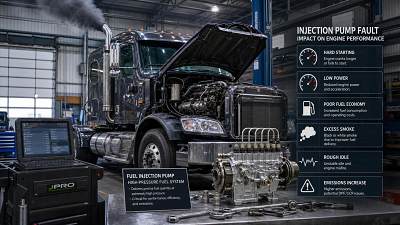
 Truck Parts IndustryFuel Injection Pump Failure Signs and What They Mean for Engine PerformanceFuel injection pump failure signs can quickly reduce truck power, raise fuel use, and trigger hard starts. Learn what each symptom means and when to act before costly downtime.
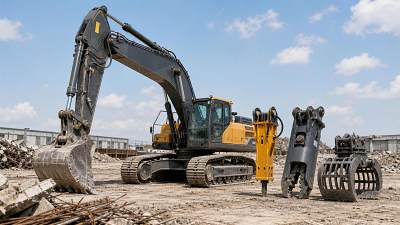
 Truck Parts IndustryExcavator Attachment Selection for Demolition and Site PrepExcavator attachment selection for demolition and site prep: compare breakers, grapples, crushers, and buckets to boost productivity, safety, and ROI.
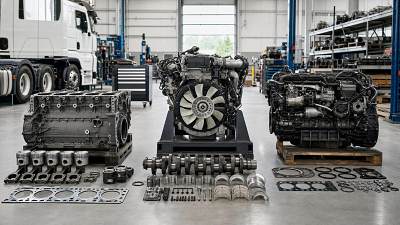
 Truck Parts IndustryTruck Engine Overhaul or Replacement: Which Costs Less Long Term?Truck engine overhaul or replacement? Compare long-term cost, downtime, fuel efficiency, and reliability to choose the smarter option for your fleet.
 Truck Parts IndustryHow to Choose Excavator Parts That Last LongerExcavator parts buying guide: learn how to choose excavator parts that last longer by comparing fit, material quality, operating conditions, and supplier reliability.
 Truck Parts IndustryAre Eco-Friendly Commercial Vehicle Parts Durable Enough for Daily Use?Commercial vehicle parts with eco-friendly materials can be durable for daily use—if tested right. Explore where they perform best, key risks, and smarter sourcing insights.
 Truck Parts IndustryTruck Parts OEM vs Aftermarket: Cost, Fit, and Warranty RisksTruck parts OEM vs aftermarket: compare true cost, fit accuracy, and warranty risks to reduce downtime, avoid disputes, and make smarter fleet sourcing decisions.
 Truck Parts IndustryTruck Spare Parts Buying Guide: How to Reduce Downtime and Fitment RiskTruck spare parts buying guide for fleet maintenance teams: learn how to reduce downtime, avoid fitment risk, verify suppliers, and make smarter sourcing decisions.
 Truck Parts IndustryHow to Evaluate a Truck Parts Supplier Beyond PriceTruck parts supplier selection should go beyond price. Learn how to compare quality, delivery, service, and total cost to reduce risk and keep fleets running efficiently.
 Truck Parts IndustryHeavy Truck Parts for Construction: Signs of a Reliable ManufacturerHeavy truck parts manufacturer for construction: learn how to identify reliable suppliers through quality control, traceability, testing, and support to reduce downtime and improve fleet safety.
 Truck Parts IndustryHow to Compare Truck Spare Parts Suppliers on Quality and Lead TimeTruck spare parts supplier comparison starts with quality and lead time. Learn how to assess consistency, delivery reliability, and sourcing fit for smarter purchases.
 Truck Parts IndustryEU REACH Sets PAH Limit for Heavy Truck Rubber PartsEU REACH sets a new PAH limit for heavy truck rubber parts, affecting brake hoses, bushings, and export compliance. Learn what suppliers must prepare now to avoid testing delays and customs risks.
 Truck Parts IndustryWhat to Check in a Truck Chassis Supplier Before Fleet ExpansionTruck chassis supplier selection can make or break fleet expansion. Learn what to check on quality, production, delivery, support, and total cost before requesting a quote.
 Truck Parts IndustryCold Storage Truck Parts That Matter Most for Temperature ControlCommercial vehicle parts for cold storage determine real temperature stability. Discover the key truck components that reduce spoilage, improve efficiency, and protect sensitive cargo.
 Truck Parts IndustryHow to Evaluate a Heavy Truck Parts Manufacturer for Long-Term Supply StabilityHeavy truck parts manufacturer selection starts with supply stability. Learn how to assess quality, capacity, lead times, and risk signals for smarter long-term sourcing.
 Truck Parts IndustryEU EPR Rules Extend to Commercial TrailersEU EPR rules now extend to commercial trailers, bringing new registration, reporting, and fee duties from 2027. See how exporters can prepare early to avoid customs delays.
 Truck Parts IndustryTruck Suspension Problems: Signs, Causes, and Fix OptionsTruck suspension issues can lead to tire wear, poor handling, and costly downtime. Learn the key signs, root causes, and best fix options for different truck applications.
 Truck Parts IndustryHow to Choose a Heavy Truck Parts Manufacturer for Construction FleetsHeavy truck parts manufacturer for construction selection starts with uptime, quality, and delivery. Learn how to compare suppliers, reduce fleet risk, and choose with confidence.
 Truck Parts IndustryUS Sets AEBS Rule for Imported Commercial TrailersUS sets AEBS rule for imported commercial trailers starting Oct. 1, 2026. Learn FMVSS No. 127A, SAE J2929, and key compliance steps to avoid CBP entry denial.
 Truck Parts IndustryHow to Choose Commercial Vehicle Parts That Reduce DowntimeCommercial vehicle parts selection can make or break fleet uptime. Learn how to choose parts that improve fit, quality, supply reliability, and lower total downtime cost.