Heavy Truck Parts for Construction: Which Specs Matter Most
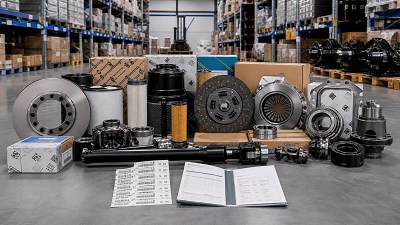
When sourcing components for demanding job sites, technical evaluators need more than a basic catalog—they need the right specs. A reliable heavy truck parts manufacturer for construction should provide clear data on load capacity, material strength, wear resistance, compatibility, and service life. This guide highlights the specifications that matter most when selecting parts for durability, safety, and long-term performance in construction operations.
Construction Fleets Are Changing, and Parts Specifications Are Under More Scrutiny
Across road transport equipment and construction logistics, the operating environment for heavy trucks has become more demanding over the last few years. Fleets that once used standard-duty replacement components are now working under mixed conditions: short-haul site circulation, overloaded ground contact, stop-start movement, dust exposure, water intrusion, and frequent impact from uneven terrain. For technical evaluators, this means the old approach of selecting parts by model compatibility alone is no longer enough.
A heavy truck parts manufacturer for construction is now expected to provide deeper technical documentation. Buyers increasingly ask for hardness range, fatigue resistance, heat treatment details, seal performance, corrosion protection, dimensional tolerance, and recommended inspection intervals. On many projects, the acceptable service life of key wear parts is discussed in operating hours or mileage bands such as 20,000–60,000 km, 500–1,500 engine hours, or 6–18 months depending on duty cycle.
This shift is also tied to project cost pressure. A low-cost component that causes one unplanned stop on a concrete, mining, or infrastructure site can create downstream losses in labor, loading schedules, and equipment utilization. As a result, technical teams are giving more weight to total operating value rather than unit price alone, especially for suspension parts, braking assemblies, drivetrain components, steering elements, and body-related wear items.
Key market signals influencing specification review
Several industry signals are pushing this change. First, heavier payload expectations are increasing stress on axles, leaf springs, hubs, and chassis connections. Second, procurement teams are under pressure to reduce downtime through predictable maintenance cycles. Third, global sourcing has expanded supplier choice, but it has also made specification verification more important because similar-looking parts may differ greatly in metallurgy, processing, or endurance.
- Construction routes often combine paved roads, gravel surfaces, mud, and temporary ramps within the same 8–12 hour working cycle.
- Replacement decisions are increasingly linked to service interval targets, not just immediate failure response.
- Cross-border sourcing requires clearer drawings, part numbers, material declarations, and packaging standards to avoid mismatch.
For buyers using a global B2B platform, this trend creates both opportunity and responsibility. There are more suppliers to compare, but technical evaluation needs to be disciplined. The best heavy truck parts manufacturer for construction will usually stand out not through broad claims, but through complete specifications, traceable production details, and practical guidance on where a part fits within real job-site workloads.
The Most Important Specs Are No Longer Generic—They Must Match Construction Duty Cycles
In construction applications, “fit” is only the starting point. What matters more is whether the part can tolerate vibration, shock loading, contamination, thermal cycling, and maintenance gaps. A heavy truck parts manufacturer for construction should therefore present specifications in duty-based terms. For example, a bushing or brake component used in long-distance highway transport may perform very differently when exposed to daily dust ingress, low-speed braking frequency, and repeated load shifts on site.
Technical evaluators usually focus on five specification groups: mechanical strength, wear life, environmental resistance, assembly compatibility, and maintenance predictability. These groups apply across core categories such as engine-related parts, transmission parts, axle parts, braking systems, steering systems, cab mounts, electrical connectors, and hydraulic interfaces. The right assessment method is to link each specification to a likely field failure mode.
The table below summarizes how specification priorities change when heavy trucks are used in construction rather than more stable road transport conditions.
This comparison shows why technical documents should describe not only dimensions but also operating limits. A part may match the drawing and still underperform if its wear resistance, seal structure, or material grade is not suitable for site duty. That is why a heavy truck parts manufacturer for construction should be able to explain expected performance in terms of load cycles, contamination exposure, and replacement interval behavior.
The specification areas technical teams now rank highest
1. Load capacity and fatigue margin
Static load rating is useful, but dynamic fatigue performance matters more on construction routes. Evaluators should ask whether the part was designed for repeated impact, variable loading, and axle articulation. In many applications, a fatigue-related failure appears before obvious wear, particularly in spring assemblies, brackets, U-bolts, pins, and connecting hardware.
2. Material hardness and surface treatment
Hardness ranges, coating thickness, and anti-corrosion treatment affect both service life and maintenance frequency. In wet, dusty, or cement-heavy environments, poor surface protection can shorten usable life by several months. Common decision points include whether the component has adequate anti-rust protection for 6–12 months of storage and whether working surfaces resist abrasion under continuous contamination.
3. Tolerance control and interchangeability
Construction fleets often use mixed brands or region-specific truck variants. Even a 1–2 mm dimensional deviation in mounting points, seal grooves, or threaded interfaces can create installation delays. A heavy truck parts manufacturer for construction should therefore support parts drawings, cross-reference verification, and batch consistency review before shipment.
What Is Driving the Shift Toward Higher-Spec Construction Truck Parts?
The move toward stricter specifications is not driven by one factor alone. It comes from a combination of operating intensity, supply chain globalization, lifecycle cost management, and broader expectations around reliability. Technical evaluators are now part of a purchasing process that includes operations, maintenance, safety, and finance, so the quality of specification review has wider business impact than before.
Another important change is the rising complexity of fleet composition. Construction companies may run dump trucks, tractor units, mixers, municipal engineering trucks, trailers, and site-support vehicles together. That creates demand for standardized sourcing while still requiring application-specific parts. As a result, buyers are more likely to favor suppliers that can support multi-category procurement with unified technical documentation.
The following table outlines the main forces behind current specification upgrades and what they mean in practical sourcing terms.
For procurement teams, these drivers mean a simple low-price comparison is no longer sufficient. The better question is whether the supplier can help reduce variation across batches, shorten technical confirmation time, and support part selection for different construction scenarios. A qualified heavy truck parts manufacturer for construction usually adds value by translating product specifications into application guidance.
Why this matters more for technical evaluators than for general buyers
Technical evaluators are responsible for filtering risk before an order is placed. If the wrong bushing compound, brake lining grade, or bearing specification is approved, the failure appears later in operations, not in the quotation stage. That is why many teams now use a 5-point or 7-point review method covering material, dimensions, operating environment, maintenance interval, replacement history, and supplier responsiveness.
This is also where digital B2B platforms become useful. Instead of depending on fragmented communication, evaluators can compare multiple suppliers, review product categories across truck chassis, trailers, complete trucks, construction machinery, and spare parts, and narrow options using specification depth rather than only price visibility. In a market with large variation, structured comparison saves both time and field risk.
How Different Stakeholders Are Affected by Spec Quality in Construction Parts
The impact of specification quality is not limited to the technical department. It affects maintenance schedules, inventory planning, machine availability, operator safety, and supplier relationship management. When parts are selected with poor duty matching, the problem often spreads through several departments before the root cause is identified.
For example, if a hub seal does not match the contamination level of the site, maintenance may face repeated replacements within 2–4 months. If brake wear data is unclear, operations may either replace too early and increase cost, or replace too late and increase safety exposure. If dimensional tolerance is inconsistent, warehouse teams may hold more backup stock to compensate for installation uncertainty.
The practical effect on each stakeholder group can be summarized as follows.
This is why a heavy truck parts manufacturer for construction should be evaluated not only on catalog range, but also on communication quality. The ability to answer questions about fitment logic, material grade options, and recommended replacement thresholds can significantly reduce internal decision friction for buyers.
Common pain points that indicate weak specification control
- Parts arrive with correct model labels but inconsistent dimensions between batches.
- Service life varies widely between vehicles operating on similar routes.
- Material or coating information is missing from the quotation package.
- Installation teams need rework because drawings, threads, or mounting interfaces are unclear.
- No guidance is available on storage conditions, sealing protection, or inspection timing.
When these signs appear, the issue is rarely just procurement. It usually means the supplier is not yet providing the level of technical support construction fleets need. For higher-risk components, it is often worth conducting a trial order, dimensional check, and field feedback review over one maintenance cycle before committing to a larger volume.
What Technical Evaluators Should Check Next When Comparing Suppliers
As demand shifts toward tougher and more transparent specifications, technical evaluators need a practical comparison framework. The goal is not to overcomplicate sourcing, but to identify which suppliers can support long-term construction use with lower uncertainty. A heavy truck parts manufacturer for construction should be reviewed across product data, responsiveness, consistency, and application understanding.
In many sourcing programs, an efficient process uses three stages. Stage one is document screening within 3–5 working days, focusing on drawings, material description, and compatibility confirmation. Stage two is sample or pilot evaluation over a defined operating period such as 30–90 days, depending on the part category. Stage three is batch review covering packaging, labeling, lead time, and after-sales response.
The checklist below can help structure supplier comparison without losing sight of field realities.
A practical evaluation checklist
- Confirm application duty: identify whether the truck works on quarry haul, municipal works, concrete transport, earthmoving support, or mixed road-site routes.
- Verify critical specs: request load rating, material information, tolerance data, surface treatment details, and expected service interval guidance.
- Check compatibility depth: compare OEM references, drawings, mounting interfaces, and any region-specific truck configuration differences.
- Assess consistency controls: ask how batches are identified and how dimensional or material variation is managed.
- Review logistics readiness: confirm packaging for corrosion prevention, typical lead time ranges such as 15–45 days, and spare documentation for customs or inspection needs.
- Plan feedback loops: define what field data will be collected after installation, such as wear pattern, seal condition, brake response, or abnormal noise.
Why platforms matter in this stage
For international buyers, a professional industry platform can shorten this process by centralizing supplier discovery across truck chassis, complete trucks, trailers, construction machinery, and spare parts. Instead of searching supplier by supplier, evaluators can compare broader product portfolios, identify reliable heavy truck parts manufacturer for construction options, and request technical confirmation from multiple candidates in parallel.
That broader visibility also supports better long-term planning. If the same platform gives access to market insights, buying guides, brand directories, and category-level sourcing information, technical teams can make decisions that align with both immediate replacement needs and future fleet expansion. In a fragmented global supply environment, informed comparison is a strategic advantage.
Why Choose Us for Global Construction Truck Parts Sourcing
The Global Heavy Truck Industry Platform is built for buyers who need more than a product list. We connect manufacturers, suppliers, distributors, and buyers across the commercial vehicle and heavy equipment supply chain, making it easier to identify a heavy truck parts manufacturer for construction that can meet technical, operational, and sourcing requirements. Our focus is on efficient discovery, transparent comparison, and practical support for cross-border trade.
Through one professional B2B environment, you can explore categories including truck chassis and cab, complete trucks, light trucks, construction machinery, trailers and semi-trailers, and spare parts. This helps technical evaluators compare related systems instead of isolated products, especially when sourcing for fleets that operate across logistics transport, mining, infrastructure construction, and municipal engineering. That wider context improves decision quality and reduces mismatch risk.
If your team is currently reviewing suppliers, we can support the next step with more targeted sourcing communication. You can contact us to discuss parameter confirmation, application matching, supplier comparison, delivery cycle expectations, customization possibilities, certification-related questions, sample support, and quotation alignment. If you want to better judge how current market changes affect your own fleet or project procurement, start by sharing the part category, truck model, operating condition, and expected service life range you need to evaluate.
Trending News
- How to compare concrete mixer truck suppliers by total landed cost
- How axle load limits affect low bed trailer exports to Southeast Asia
- How to locate a truck exhaust system leak before replacing parts
- When does heavy equipment transport require a lowboy trailer?
- When does a light commercial vehicle for urban delivery save fleet costs?
Tag
Recommended News
 Truck Parts IndustryWhat causes a truck injector to fail prematurely?Truck injector failure can stem from fuel contamination, water, wiring faults, heat, or incorrect installation. Discover practical diagnostic steps to prevent repeat repairs.
 Truck Parts IndustryEU REACH Rule Takes Effect for Truck Rubber PartsEU REACH Rule takes effect for truck rubber parts exported to the EU. Learn how SCIP reporting, SVHC declarations, and supply chain compliance now impact truck manufacturers and suppliers.
 Truck Parts IndustryHow to Evaluate Commercial Vehicle Parts With Eco-Friendly Materials for Durability and ComplianceCommercial vehicle parts with eco-friendly materials require more than green claims. Learn how to assess durability, compliance, and supplier reliability for smarter sourcing.
 Truck Parts IndustryHow to Evaluate a Truck Parts Supplier Beyond Unit PriceTruck parts supplier selection should go beyond unit price. Learn how to assess quality, traceability, compliance, delivery, and support to reduce fleet risk and total cost.
 Truck Parts IndustryVietnam to Require QR Traceability Labels on Imported Heavy-Truck PartsVietnam to Require QR Traceability Labels on Imported Heavy-Truck Parts from Aug 1, 2026. Learn scope, VNQR-2025 rules, VITRAC links, and how to avoid port refusal and fines.
 Truck Parts IndustryHow to Evaluate a Truck Spare Parts Supplier for Long-Term Cost ControlTruck spare parts supplier selection affects far more than price. Learn how to compare quality, delivery, traceability, and hidden costs to protect fleet uptime and control long-term expenses.
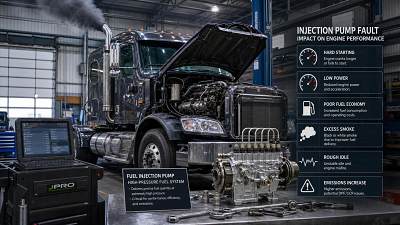
 Truck Parts IndustryFuel Injection Pump Failure Signs and What They Mean for Engine PerformanceFuel injection pump failure signs can quickly reduce truck power, raise fuel use, and trigger hard starts. Learn what each symptom means and when to act before costly downtime.
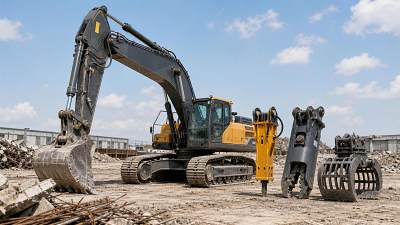
 Truck Parts IndustryExcavator Attachment Selection for Demolition and Site PrepExcavator attachment selection for demolition and site prep: compare breakers, grapples, crushers, and buckets to boost productivity, safety, and ROI.
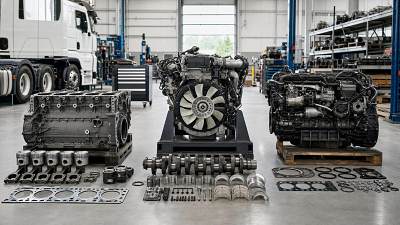
 Truck Parts IndustryTruck Engine Overhaul or Replacement: Which Costs Less Long Term?Truck engine overhaul or replacement? Compare long-term cost, downtime, fuel efficiency, and reliability to choose the smarter option for your fleet.
 Truck Parts IndustryHow to Choose Excavator Parts That Last LongerExcavator parts buying guide: learn how to choose excavator parts that last longer by comparing fit, material quality, operating conditions, and supplier reliability.
 Truck Parts IndustryAre Eco-Friendly Commercial Vehicle Parts Durable Enough for Daily Use?Commercial vehicle parts with eco-friendly materials can be durable for daily use—if tested right. Explore where they perform best, key risks, and smarter sourcing insights.
 Truck Parts IndustryTruck Parts OEM vs Aftermarket: Cost, Fit, and Warranty RisksTruck parts OEM vs aftermarket: compare true cost, fit accuracy, and warranty risks to reduce downtime, avoid disputes, and make smarter fleet sourcing decisions.
 Truck Parts IndustryTruck Spare Parts Buying Guide: How to Reduce Downtime and Fitment RiskTruck spare parts buying guide for fleet maintenance teams: learn how to reduce downtime, avoid fitment risk, verify suppliers, and make smarter sourcing decisions.
 Truck Parts IndustryHow to Evaluate a Truck Parts Supplier Beyond PriceTruck parts supplier selection should go beyond price. Learn how to compare quality, delivery, service, and total cost to reduce risk and keep fleets running efficiently.
 Truck Parts IndustryHeavy Truck Parts for Construction: Signs of a Reliable ManufacturerHeavy truck parts manufacturer for construction: learn how to identify reliable suppliers through quality control, traceability, testing, and support to reduce downtime and improve fleet safety.
 Truck Parts IndustryHow to Compare Truck Spare Parts Suppliers on Quality and Lead TimeTruck spare parts supplier comparison starts with quality and lead time. Learn how to assess consistency, delivery reliability, and sourcing fit for smarter purchases.
 Truck Parts IndustryEU REACH Sets PAH Limit for Heavy Truck Rubber PartsEU REACH sets a new PAH limit for heavy truck rubber parts, affecting brake hoses, bushings, and export compliance. Learn what suppliers must prepare now to avoid testing delays and customs risks.
 Truck Parts IndustryWhat to Check in a Truck Chassis Supplier Before Fleet ExpansionTruck chassis supplier selection can make or break fleet expansion. Learn what to check on quality, production, delivery, support, and total cost before requesting a quote.
 Truck Parts IndustryCold Storage Truck Parts That Matter Most for Temperature ControlCommercial vehicle parts for cold storage determine real temperature stability. Discover the key truck components that reduce spoilage, improve efficiency, and protect sensitive cargo.
 Truck Parts IndustryHow to Evaluate a Heavy Truck Parts Manufacturer for Long-Term Supply StabilityHeavy truck parts manufacturer selection starts with supply stability. Learn how to assess quality, capacity, lead times, and risk signals for smarter long-term sourcing.
 Truck Parts IndustryEU EPR Rules Extend to Commercial TrailersEU EPR rules now extend to commercial trailers, bringing new registration, reporting, and fee duties from 2027. See how exporters can prepare early to avoid customs delays.
 Truck Parts IndustryTruck Suspension Problems: Signs, Causes, and Fix OptionsTruck suspension issues can lead to tire wear, poor handling, and costly downtime. Learn the key signs, root causes, and best fix options for different truck applications.
 Truck Parts IndustryHow to Choose a Heavy Truck Parts Manufacturer for Construction FleetsHeavy truck parts manufacturer for construction selection starts with uptime, quality, and delivery. Learn how to compare suppliers, reduce fleet risk, and choose with confidence.
 Truck Parts IndustryUS Sets AEBS Rule for Imported Commercial TrailersUS sets AEBS rule for imported commercial trailers starting Oct. 1, 2026. Learn FMVSS No. 127A, SAE J2929, and key compliance steps to avoid CBP entry denial.
 Truck Parts IndustryHow to Choose Commercial Vehicle Parts That Reduce DowntimeCommercial vehicle parts selection can make or break fleet uptime. Learn how to choose parts that improve fit, quality, supply reliability, and lower total downtime cost.