Logging Truck Safety Risks and Terrain Performance Guide
Why logging truck safety depends on route reality
Logging truck performance is rarely decided by horsepower alone.
In forest transport, safety comes from how the vehicle matches slope, surface, load movement, and braking demand.
That is why one logging truck can perform reliably on compact haul roads, yet struggle on wet grades or narrow switchbacks.
In practical operations, the biggest risks usually appear when terrain assumptions are too optimistic.
A route that looks manageable in dry weather may become a rollover or traction problem after rain, frost, or surface breakup.
For heavy transport platforms that connect truck brands, chassis suppliers, trailer specialists, and spare parts sources, this difference matters.
Equipment comparison becomes more meaningful when the logging truck is judged by actual terrain conditions, not just catalog specifications.
A useful evaluation therefore starts with the route profile, loading method, and maintenance reality behind each operation.
Different forest routes create different risk patterns
Not all logging truck jobs face the same pressure points.
Short-haul forest extraction often stresses suspension articulation, tire grip, and low-speed stability.
Longer transfer runs between harvest areas and mills shift attention toward brake heat, driveline durability, and fuel efficiency.
Mixed-use operations are even more demanding.
The same logging truck may need to climb rough access roads, then transition onto faster regional roads with a full timber load.
In that situation, load restraint, steering response, axle distribution, and retarder performance all need balanced attention.
A heavy truck industry marketplace can help narrow options, but the decision still depends on how these route types combine in daily use.
Steep extraction roads demand control before speed
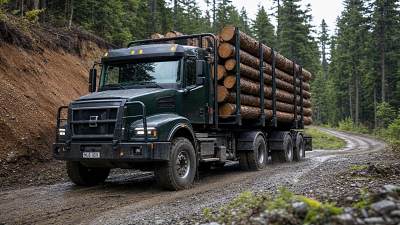
On steep and uneven forest roads, rollover risk usually starts with lateral instability rather than outright overload.
Logs stacked high can shift the center of gravity, especially when road shoulders soften or ruts force uneven wheel travel.
In these conditions, a logging truck needs predictable suspension behavior, dependable differential locks, and braking that stays progressive on descent.
What matters here is not maximum payload on paper.
The better question is how the truck behaves when a loaded rear section crosses washouts, loose gravel, or cambered turns.
Longer haul routes expose hidden durability gaps
When the logging truck runs repeated medium or long distances, heat management becomes a larger issue.
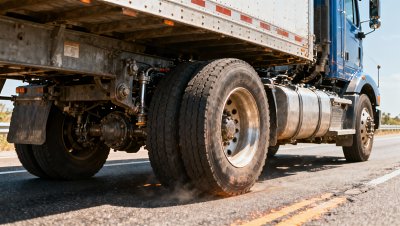
Brake fade, hub temperature, and tire wear often reveal weaknesses that short site tests miss.
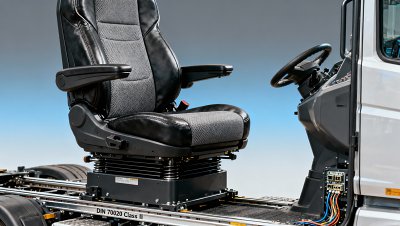
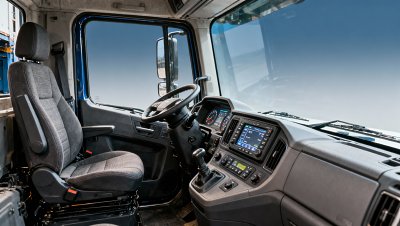
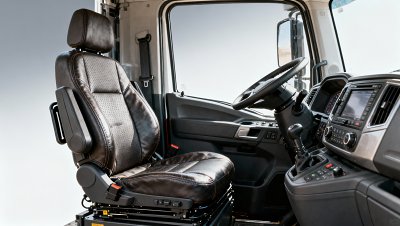
This is also where cab ergonomics and vibration control start affecting consistency.
A truck that is technically capable off-road may still underperform if driver fatigue increases braking delay or steering corrections over long cycles.
Where terrain performance should be judged more carefully
Terrain capability is often oversimplified as ground clearance and engine output.
In real logging truck work, that view is too narrow.
The route surface changes constantly, and each change affects traction, braking, and frame stress differently.
This kind of comparison prevents a common mistake.
Many teams compare two logging truck models as if all off-road duty were the same.
Yet a truck built for rough traction may still need different brake and load support choices for repeated downhill transport.
Load security changes with timber length and road behavior
Load security is not just a compliance item.
For a logging truck, it directly affects roll stability, axle stress, and stopping distance.
Long timber on uneven roads can create dynamic movement even when the gross weight stays within legal limits.
That is why bunk design, stake strength, and tie-down access deserve as much attention as engine or transmission selection.
On shorter logs, the concern is often distribution consistency.
On longer stems, the concern shifts toward swing, flex, and cornering behavior over broken ground.
In actual use, safer setups often come from reducing avoidable movement rather than chasing the highest legal payload.
- Check whether load length changes turning behavior on narrow forest exits.
- Confirm stake and bunk spacing against common timber assortments.
- Review tie-down access in muddy or frozen working conditions.
- Compare legal payload with stable payload under real road camber.
What often gets misjudged before a logging truck is selected
One frequent misjudgment is relying too heavily on headline specifications.
A logging truck may advertise strong torque and high capacity, yet still be poorly matched to a route with unstable descents.
Another issue is treating dry-season and wet-season performance as the same buying case.
In forestry transport, seasonal change can alter braking distance, tire life, and average cycle time more than many expect.
Maintenance access is also underestimated.
If replacement parts, axle service, or brake inspections are difficult in remote regions, downtime can outweigh any initial savings.
This is where an international heavy truck platform adds practical value.
Comparing suppliers, spare parts support, chassis options, and industry guidance in one place helps reduce selection blind spots.
Still, the final filter should remain operational fit, not supplier visibility alone.
Compliance should be tied to usage, not paperwork only
Certification matters, but safe logging truck use depends on how compliance works under load, terrain, and service intervals.
Brake systems, lighting protection, reflective marking, and axle ratings should all be reviewed against route reality.
A truck that meets regulations in one region may still require configuration changes for another climate or road authority.
A practical way to compare logging truck options
A better comparison method starts with operating sequences, not brochures.
Map the route by gradient, surface type, turning restrictions, average load length, and service support distance.
Then match each factor to the logging truck configuration under review.
This approach creates a more realistic shortlist.
It also makes supplier comparison on a B2B truck platform more useful, because specifications are read within a working context.
Turning risk awareness into better transport decisions
The safest logging truck choice is usually the one that stays consistent across the most demanding route conditions.
That means judging stability on side slopes, brake control on descents, load behavior on broken ground, and serviceability in remote locations.
In actual operations, strong terrain performance is less about one standout feature and more about balanced compatibility.
A reliable decision process starts by defining route types, seasonal changes, timber dimensions, and maintenance limits.
From there, compare logging truck configurations, supplier support depth, and compliance details against those conditions.
Using a global heavy truck industry platform can simplify this work by bringing product data, brand references, and supply chain visibility together.
The next useful step is to build a route-based checklist, rank the highest safety risks, and verify which logging truck setup truly fits the terrain instead of only fitting the specification sheet.
Trending News
- How to compare concrete mixer truck suppliers by total landed cost
- How axle load limits affect low bed trailer exports to Southeast Asia
- How to locate a truck exhaust system leak before replacing parts
- When does heavy equipment transport require a lowboy trailer?
- When does a light commercial vehicle for urban delivery save fleet costs?
Tag
Recommended News
 Truck Driver IndustryLogging Truck Safety Risks and Terrain Performance GuideLogging truck safety starts with real terrain. Discover how route slope, load stability, braking, and service support affect performance and help you choose the right truck with confidence.
 Truck Driver IndustryWhy truck tire heat buildup is still missed in summer operationsTruck tire heat buildup in summer is often missed despite truck cooling system and truck wheel checks. Learn how truck steering system, truck exhaust system, and sourcing choices affect fleet safety, uptime, and cost.
 Truck Driver IndustryLogistics truck cab ergonomics: How seat design affects driver fatigue on 12-hour shiftsOptimize logistics truck cab ergonomics with certified ergonomic seats—reducing driver fatigue, cutting truck maintenance costs, and enhancing performance for truck lowbed, off road, military & concrete applications.
 Truck Driver IndustryTruck excavator productivity: how 5° cab tilt affects operator fatigue on 10-hour shiftsDiscover how truck excavator cab tilt boosts productivity—5° tilt cuts operator fatigue by 37% on 10-hour shifts. Ideal for truck dumper, logging, spreader & steel transport. Optimize ergonomics, safety & ROI.
 Truck Driver IndustryMixer truck drum wear patterns: what they reveal about operator habitsDiscover how mixer truck drum wear reveals operator habits—and optimize procurement for lowbed trailer, truck van, fuel tank truck & more. Get data-driven insights now!
 Truck Driver IndustryHeavy duty trucks for sale in Canada: how cold-weather cab upgrades affect driver retentionHeavy duty trucks for sale in Canada with certified cold-weather cabs boost driver retention—compare OEM specs, TCO savings & trusted bulldozer manufacturer partnerships.
 Truck Driver IndustryLogging truck cab design still lags behind driver fatigue researchlogging truck cab design lags behind fatigue research—explore ergonomic truck parts for logging, dump, garbage, water & concrete pump trucks.
 Truck Driver IndustryCargo truck cab ergonomics: Why driver fatigue spikes on long-haul routesOptimize cargo truck cab ergonomics to slash driver fatigue & boost fleet ROI—explore certified truck parts, heavy truck, cement tanker, mining truck & more.
 Truck Driver IndustryHeavy duty trucks for sale in South Africa — how cab ergonomics affect operator fatigue on long haulsHeavy duty trucks for sale in South Africa — discover how ergonomic cabs reduce fatigue, boost safety & cut TCO. Verified ISO-certified bulldozer & excavator manufacturers included.