Truck Chassis Supplier in Asia: Key Specs That Affect Body Integration
Selecting a truck chassis supplier in Asia is rarely a simple sourcing decision. When a chassis must carry a tank, mixer, crane, reefer box, or municipal body, integration quality shapes payload balance, uptime, and service life. In today’s land transport equipment market, where logistics fleets, construction operators, and infrastructure contractors expect higher utilization, the technical fit between chassis and body has become a front-end engineering issue rather than a post-purchase adjustment.
That is why the topic deserves closer attention. A suitable platform does more than meet axle capacity on paper. It must align with body dimensions, center of gravity, PTO needs, mounting strategy, local road limits, and maintenance conditions. For buyers comparing a truck chassis supplier in Asia across multiple brands and production bases, the right specification sheet can prevent expensive redesign, weak load distribution, and avoidable downtime later.
Why body integration starts with chassis architecture
In practical terms, body integration means matching the base vehicle to the intended working body without forcing structural compromises. A rigid cargo box and a vacuum tanker may share gross vehicle weight, yet demand very different frame behavior and equipment interfaces.
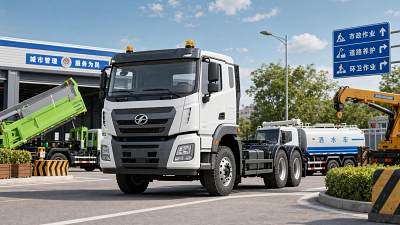
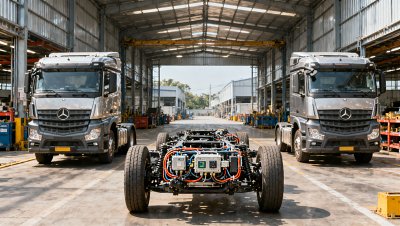
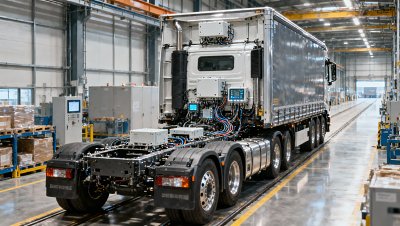
A truck chassis supplier in Asia typically offers several frame lengths, wheelbase options, suspension packages, and cab layouts. Those variations are not cosmetic. They determine available body length, rear overhang, turning radius, load transfer, and installation space for pumps, outriggers, hydraulic tanks, or refrigeration units.
The industry’s current focus on application-specific trucks has made these details more important. Fleets no longer want a general-purpose chassis that needs heavy modification. They prefer a closer factory match that reduces fabrication risk and speeds commissioning.
Key specifications that affect fitment and long-term performance
When evaluating a truck chassis supplier in Asia, several specifications deserve attention early. These items influence not only whether the body fits, but also how the vehicle behaves under daily operating stress.
Frame dimensions and section design
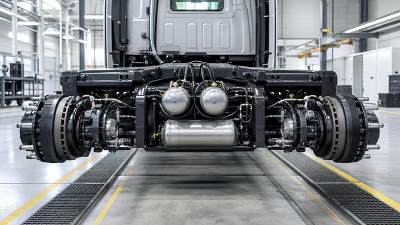
Frame width, rail height, material grade, and crossmember arrangement shape the integration baseline. A body builder needs accurate dimensional data to position subframes, brackets, tanks, and auxiliary systems without interference.
More importantly, frame strength and flex characteristics must match the application. A chassis for urban distribution may not tolerate the torsional demands of off-road tipping or concrete transport, even if gross ratings look acceptable.
Wheelbase, axle spacing, and overhang
Wheelbase affects body length, axle loading, and maneuverability at the same time. Longer is not always better. A long wheelbase can help body volume, but it may create poor breakover angle, tighter loading restrictions, or uneven weight distribution.
Rear overhang deserves close checking. Excessive overhang can overstress the rear frame and shift too much mass behind the drive axle. That matters for refuse bodies, cranes, tail lifts, and hook-lift equipment.
Axle configuration and capacity reserve
A truck chassis supplier in Asia may present 4x2, 6x4, 6x2, 8x4, or more specialized layouts. The correct choice depends on legal axle loads, road profile, traction demands, and how the body places mass during operation.
Nominal axle ratings alone are not enough. Useful evaluation also considers dynamic loading, braking behavior, and reserve capacity under partial loading, sloshing liquids, or shifting aggregates.
Suspension type and frame movement
Leaf spring, air suspension, and reinforced mixed setups each create different integration consequences. Air suspension improves ride quality for fragile cargo and some municipal applications, but it changes mounting strategy and height control requirements.
For mixer trucks, dump trucks, or rough-site service units, chassis movement under load becomes a structural issue. The body and subframe must tolerate frame twist without cracking welds or misaligning equipment.
Powertrain and PTO compatibility
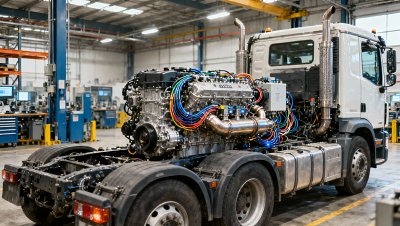
Body integration often depends on engine torque curves, transmission ratios, and PTO interfaces. A chassis that physically fits the body may still fail the application if hydraulic flow, idle stability, or transmission PTO provision is unsuitable.
This is common in cranes, tankers, sweepers, and pump trucks. The body requires not just mounting space, but stable power delivery and clean interface documentation.
Mounting points, electrical architecture, and available space
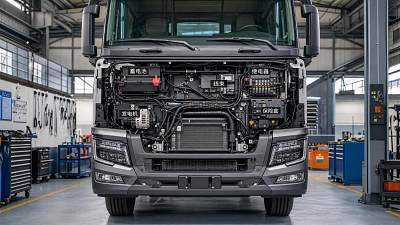
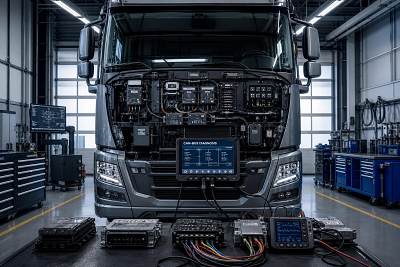
Modern bodies need more than steel rails. They require predictable mounting holes, battery placement, exhaust routing, wiring access, CAN-related interfaces, and room for toolboxes, outriggers, or treatment modules.
If these details are unclear, fabrication time increases quickly. That is one reason experienced buyers ask a truck chassis supplier in Asia for body-builder manuals, dimensional drawings, and interface schematics before final selection.
How application type changes the ideal chassis choice
The best chassis is always application-dependent. A specification that works well for long-haul refrigerated logistics may be inefficient for municipal service or mining support. Looking at usage patterns helps narrow the decision faster.
This application view is useful when comparing suppliers across Asian manufacturing hubs. The same supplier may be strong in highway tractor platforms yet less mature in body-builder support for vocational trucks.
What the market now expects from a truck chassis supplier in Asia
Price remains important, but technical transparency is increasingly part of supplier qualification. Buyers expect accurate drawings, homologation support, optional axle packages, emission compliance information, and stable export documentation.
This shift is tied to broader changes in the heavy truck sector. Global logistics growth, infrastructure spending, and industrial transport demand have expanded the role of Asian supply networks. At the same time, cross-border buyers need faster ways to compare chassis platforms, cab variants, complete trucks, trailers, and related spare parts.
That is where industry platforms have practical value. A digital marketplace focused on the global commercial vehicle chain can shorten early research by bringing together supplier data, product categories, brand references, market insights, and buying guides in one place.
For a technical review, this helps in two ways. It improves supplier screening before negotiation, and it makes it easier to compare whether a truck chassis supplier in Asia supports the required body integration depth, not just the base vehicle sale.
A practical checklist for technical comparison
A structured review usually reveals differences that brochures hide. Before moving to pricing or shipment planning, it helps to verify the following points.
- Confirm frame section drawings, hole patterns, and crossmember positions.
- Check axle load distribution with the intended body, fluids, and accessories installed.
- Review PTO options, hydraulic power needs, and electrical interface availability.
- Measure clear space for subframe, stabilizers, batteries, fuel tanks, and exhaust routing.
- Verify local road regulations, bridge formula limits, and emission or homologation requirements.
- Ask for body-builder manuals, export service terms, and spare parts continuity.
It is also useful to request reference projects. A truck chassis supplier in Asia with proven installations in tankers, tippers, mixers, or municipal trucks is easier to assess than one offering only generic specification sheets.
From specification review to better sourcing decisions
Body integration problems often originate long before assembly starts. They begin when wheelbase is chosen without load simulation, when PTO demands are guessed, or when frame flexibility is treated as a minor issue. The result may be legal overload on one axle, unstable handling, or costly rework at the body shop.
A more reliable approach is to define the body application first, convert that into a technical requirement list, and then evaluate each truck chassis supplier in Asia against those conditions. That sequence keeps the discussion focused on operational fit rather than headline price alone.
For organizations using international sourcing channels, platforms that connect chassis manufacturers, component suppliers, distributors, and industry data can make the next step clearer. They help narrow options, compare configurations, and identify which suppliers are prepared for real integration work.
A solid decision usually starts with a simple discipline: map the body, weight, duty cycle, and interface needs first, then test every chassis candidate against that map. In a market crowded with options, that is often the fastest path to a better-fit truck platform and a more predictable deployment outcome.
Trending News
- How to compare concrete mixer truck suppliers by total landed cost
- How axle load limits affect low bed trailer exports to Southeast Asia
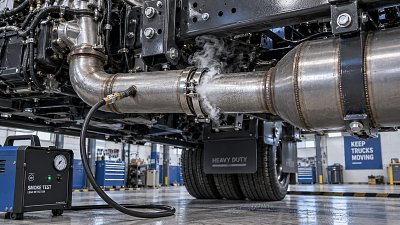
- How to locate a truck exhaust system leak before replacing parts
- When does heavy equipment transport require a lowboy trailer?
- When does a light commercial vehicle for urban delivery save fleet costs?
Tag
Recommended News
 Truck TechnologyHow to locate a truck exhaust system leak before replacing partsLocate a truck exhaust system leak before replacing parts. Learn how to spot soot trails, confirm leaks safely, and identify root causes to avoid costly guesswork and repeat repairs.
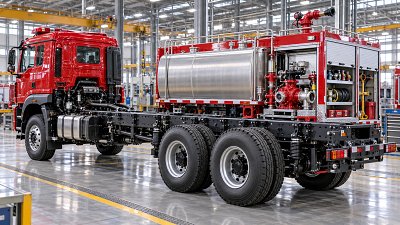
 Truck TechnologyDoes a cab chassis truck for fire department have enough frame capacity?Cab chassis truck for fire department: assess frame strength, axle loads, tank weight, stability and compliance for a safer, reliable fire apparatus build.
 Truck TechnologyWhen does a truck off road setup need locking differentials?Truck off road setups need locking differentials when uneven, low-grip terrain causes wheelspin. Learn how to choose the right axle locks for safer, reliable mobility.
 Truck TechnologyEPA Remote-Diagnostics Rules Take Effect for Diesel EnginesEPA Remote-Diagnostics Rules take effect for diesel engines sold in the U.S. Learn how OTA updates, real-time NOx reporting, and fault-code retention may impact compliance, OEM projects, and imports.
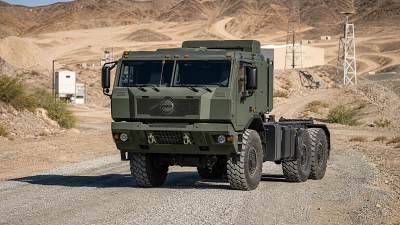
 Truck TechnologyCab Chassis Truck for Military Use: Key Specs That Affect Mission ReadinessCab chassis truck for military use: explore the key specs that drive mission readiness, off-road mobility, integration flexibility, and lifecycle support for smarter fleet decisions.
 Truck TechnologyBULLDOZER with GPS Tracking: What Improves on Remote Job SitesBULLDOZER with GPS tracking improves remote job sites with better visibility, reduced idle time, stronger fleet coordination, and smarter earthmoving decisions across harsh terrain.
 Truck TechnologyTruck Body Materials Compared: Steel, Aluminum, or Composite?Truck body material comparison made practical: explore steel, aluminum, and composite options for payload, durability, corrosion resistance, and lifecycle cost.
 Truck TechnologyBest Cab Chassis Truck Setups for Municipal Engineering TasksCab chassis truck for municipal engineering: compare the best setups for sanitation, tanker, utility, and dump tasks to improve uptime, safety, and long-term fleet value.
 Truck TechnologyTruck Electrical System Faults: Common Causes and Fast ChecksTruck electrical system faults can cause no-starts, dim lights, and costly downtime. Learn common causes, fast checks, and practical steps to diagnose issues quickly.
 Truck TechnologyASEAN-ICV Opens Mutual Access for Connected Heavy VehiclesASEAN-ICV opens mutual access for connected heavy vehicles, cutting duplicate V2X testing across Thailand, Vietnam, Indonesia, and Malaysia. See what it means for exports, compliance, and fleet delivery.
![]() Truck TechnologyTruck Concrete Mixer Basics: Capacity, Drum Type, and Jobsite FitTruck concrete mixer basics explained: compare capacity, drum type, and jobsite fit to improve pour efficiency, cut delays, and choose the right mixer truck with confidence.
Truck TechnologyTruck Concrete Mixer Basics: Capacity, Drum Type, and Jobsite FitTruck concrete mixer basics explained: compare capacity, drum type, and jobsite fit to improve pour efficiency, cut delays, and choose the right mixer truck with confidence. Truck TechnologyBrazil Requires Dual-Mode Tracking on Imported Heavy TrucksBrazil requires dual-mode tracking on imported heavy trucks. Learn how BeiDou+GPS, SISFROTA, and ABNT NBR 16501:2025 rules affect licensing, compliance, and market access.
 Truck TechnologyWater Truck OEM Options: Tank Size, Pump Output, and Road ConditionsWater truck OEM selection starts with the right match of tank size, pump output, and road conditions. Learn how to compare specs, improve uptime, and choose a fleet-ready solution.
 Truck TechnologyChile Requires Remote Diagnostics on Imported Heavy TrucksChile Requires Remote Diagnostics on Imported Heavy Trucks: learn how NCh3871:2026, OTA, ISO 22161, and VHMP rules will impact truck imports, registration, and fleet planning.
 Truck TechnologyHow to Compare Logging Truck OEM Specs for Drivetrain and Load StabilityLogging truck OEM specs compared the right way: learn how to evaluate drivetrain torque, axle ratios, suspension, and load stability for safer forestry hauling.
 Truck TechnologyIndia Drafts BS-VI Phase II Remote OBD Upload RuleIndia Drafts BS-VI Phase II Remote OBD Upload Rule: learn how India’s new real-time OBD upload proposal could impact truck exporters, T-Box upgrades, certification timelines, and market access.
 Truck TechnologyMilitary Truck Payload vs Mobility: What Matters in Harsh TerrainMilitary truck performance in harsh terrain depends on more than payload. Discover how mobility, traction, axle load, and suspension affect real-world mission success.
 Truck TechnologyLogging Truck OEM Options: Key Specs for Harsh Forestry RoutesLogging truck OEM options for forestry routes: compare axle layouts, frame strength, traction, braking, and service support to choose a durable, high-uptime truck.
 Truck TechnologyVietnam to Require VCA Checks for Imported Heavy TrucksVietnam to Require VCA Checks for Imported Heavy Trucks from August 1, 2026. Learn how VCA testing, CAN, HVIL, and OBD-II rules could impact truck exports, certification, and delivery planning.
 Truck TechnologyMexico Enforces CAN FD Rule for Imported TrucksMexico Enforces CAN FD Rule for Imported Trucks: learn how NOM-042-SEMARNAT-2026 impacts OBD-II+, ANCE verification, ECU strategy, and Mexico-bound truck compliance.
 Truck TechnologyBrazil ANP Rule Requires H₂ Leak Sensors on Imported Gas TractorsBrazil ANP rule requires H₂ leak sensors on imported gas tractors from Oct 1, 2026. Learn the compliance impact, IEC 60079-29-1 standard, and what exporters must do now.
 Truck TechnologyTruck Brake System Basics: Components, Failure Risks, and Safety ChecksTruck brake system basics explained: key components, common failure risks, and practical safety checks to improve fleet uptime, compliance, and road safety.
 Truck TechnologySupply Chain Expo Opens With Focus on Heavy Truck Core SystemsHeavy truck core systems take center stage at the Supply Chain Expo, spotlighting battery systems, electric drive axles, and by-wire technologies shaping export opportunities.
 Truck TechnologyTruck Control Unit Failures: Common Symptoms and Fix StrategiesTruck control unit failures often start with small warning signs. Learn key symptoms, root causes, and smart repair strategies to cut downtime and avoid costly misdiagnosis.
 Truck TechnologyEU V2X Rule Sets 2027 Deadline for New Heavy Truck ApprovalEU V2X Rule Sets 2027 Deadline for New Heavy Truck Approval: learn how ETSI EN 302 637-2 and UN R155 reshape EU truck compliance, certification, sourcing, and export planning.