What Advanced Technology Means in Heavy Truck Chassis Design
In heavy truck engineering, chassis design has become a key benchmark for performance, durability, and operational efficiency. For technical evaluators, understanding what advanced technology means in this field is essential when comparing suppliers and product capabilities. A heavy truck chassis manufacturer with advanced technology can deliver stronger structural integrity, better load distribution, and improved adaptability for demanding transport and construction applications.
For technical evaluators, the core question is not whether a chassis looks modern, but whether its engineering choices translate into measurable advantages in strength, fatigue life, safety, integration, and lifecycle cost. In practice, advanced technology in chassis design means a combination of material science, structural simulation, manufacturing precision, modular architecture, and digital validation.
When buyers search for a heavy truck chassis manufacturer with advanced technology, they usually want evidence. They need to know how a supplier designs frame rails, crossmembers, suspension interfaces, and mounting points, and how those decisions affect payload stability, durability under harsh road conditions, and compatibility with different upper-body applications.
This is why chassis evaluation should focus less on marketing language and more on technical substance. The most useful assessment points include frame structure, steel grade selection, welding consistency, corrosion protection, weight optimization, electronic integration, and the supplier’s ability to support application-specific customization without weakening the platform.
What “advanced technology” really means in heavy truck chassis design
In this sector, advanced technology is not a single feature. It is a system-level capability that improves how the chassis is conceived, tested, built, and adapted for real operating conditions. A technically advanced chassis is engineered for performance under load, not just for catalog specifications.
The first layer is digital engineering. Leading manufacturers use finite element analysis, load-path simulation, fatigue prediction, and torsional stiffness modeling to optimize frame geometry before physical prototypes are built. This reduces trial-and-error development and helps engineers identify stress concentrations early.
The second layer is material and structural optimization. Higher-strength steels, tailored thickness strategies, and carefully designed reinforcement zones make it possible to reduce unnecessary weight while preserving rigidity and durability. The goal is not simply to make a chassis lighter, but to improve strength-to-weight efficiency.
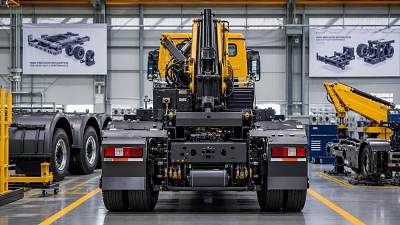
The third layer is manufacturing control. Precision hole positioning, robotic welding, dimensional consistency, and controlled heat input all influence whether the final chassis performs as intended. Even a well-designed frame can lose value if production quality introduces misalignment or variable weld integrity.
The fourth layer is application adaptability. An advanced chassis platform should support multiple wheelbases, axle layouts, body configurations, and regional compliance requirements without creating engineering compromises. This matters greatly in logistics, construction, mining, and municipal transport applications.
Why technical evaluators care most about structural integrity
Among all chassis criteria, structural integrity is usually the first priority because it affects safety, uptime, maintenance frequency, and residual value. A heavy truck may operate in overloaded, uneven, or high-vibration environments, so the frame must maintain alignment and resist fatigue over time.
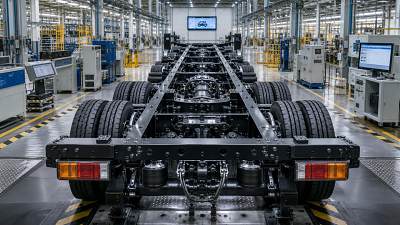
Advanced chassis design improves structural integrity by controlling how loads move through the frame. Instead of allowing local stress peaks around suspension brackets, fifth-wheel mounts, or body attachment points, good engineering spreads force more evenly across rails and crossmembers.
Technical evaluators should pay attention to rail section design, flange geometry, reinforcement methods, and crossmember connection styles. These details reveal whether the manufacturer is solving real-world stress problems or simply increasing material thickness as a crude durability measure.
A capable heavy truck chassis manufacturer with advanced technology will often provide fatigue test data, simulation reports, or durability validation from specific duty cycles. This kind of evidence is more useful than broad claims about toughness because it links design logic to operating performance.
Another important point is torsional behavior. Trucks used in construction, mixed-road transport, and off-road logistics often experience frame twist. A chassis that is too flexible may suffer alignment issues, while one that is too rigid may transfer excessive stress to mounted equipment. Advanced design balances both.
How material selection affects performance, payload, and service life
Material choice is one of the clearest signs of technical sophistication. Advanced chassis makers do not merely choose stronger steel; they match material properties to specific zones of the frame. Different sections may require different combinations of yield strength, toughness, formability, and weldability.
High-strength steel can help reduce overall chassis weight, which may improve payload efficiency or fuel economy. However, if the material is difficult to process or not properly matched to welding methods, it can introduce manufacturing risk. Advanced technology means knowing where high-strength material adds real value.
Evaluators should also ask how the supplier manages cold forming, hole making, thermal distortion, and coating adhesion. These production details affect whether the theoretical benefits of the material are preserved in the final chassis. Material performance is not only a laboratory issue.
Service life is influenced by more than static strength. Repeated vibration, overload exposure, and regional climate can gradually damage a frame if fatigue resistance and corrosion protection are not addressed. This is why advanced material strategy must work together with protective finishing and structural design.
In practical sourcing discussions, suppliers that can explain why they selected a given material grade for a specific axle configuration or application usually demonstrate stronger engineering maturity than those offering generic claims about premium steel.
Why manufacturing precision matters as much as design
Technical evaluators often focus on drawings and specifications, but manufacturing execution is equally important. The best design can fail in service if welding is inconsistent, hole alignment varies, or frame straightness is poorly controlled. Advanced technology includes process stability, not just product design.
Robotic welding, automated fixturing, laser cutting, and digital dimensional inspection all help improve repeatability. These tools reduce variation between units, which is essential for fleet operators and body builders who need predictable installation interfaces and maintenance outcomes.
Weld quality deserves special attention because the chassis is a fatigue-sensitive structure. Excessive heat input, undercut, poor penetration, or uncontrolled sequence can create stress risers and reduce durability. A strong supplier should be able to describe weld procedures and quality assurance methods clearly.
Manufacturing precision also affects axle alignment, suspension geometry, and steering behavior. Small deviations at the chassis level can influence tire wear, handling stability, and driveline performance. For technical evaluators, process capability is therefore a direct part of performance assessment.
When comparing suppliers, it is useful to ask about tolerance standards, inspection frequency, traceability, and whether critical dimensions are monitored inline. A manufacturer with advanced technology typically has more transparent control systems and can provide more consistent product documentation.
How modular design improves adaptability without sacrificing reliability
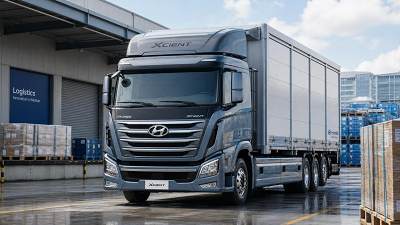
Modern heavy truck platforms must serve multiple applications, from long-haul freight to dump transport, mixers, cranes, municipal service vehicles, and specialized industrial carriers. Advanced chassis design supports this diversity through modular architecture rather than one-size-fits-all compromise.
Modularity means the frame can accommodate different wheelbases, axle arrangements, suspension options, and body interfaces using standardized engineering logic. This reduces redesign time while preserving structural integrity around critical mounting and load-bearing areas.
For technical evaluators, the value of modularity is practical. It helps confirm whether a supplier can support future configuration changes, local compliance needs, or customer-specific body integration without introducing reliability problems or ad hoc reinforcements.
However, modularity only creates value when it is engineered carefully. Poorly planned flexibility can lead to excessive hole patterns, uneven stiffness, and unclear load transfer paths. An advanced chassis platform maintains disciplined interface design so adaptation does not weaken the frame.
This is especially relevant for international B2B sourcing. Buyers often need chassis platforms that can be localized for road regulations, body-builder standards, and operating environments across different regions. A modular but validated platform shortens deployment cycles and reduces technical uncertainty.
What role electronics and smart integration now play in chassis value
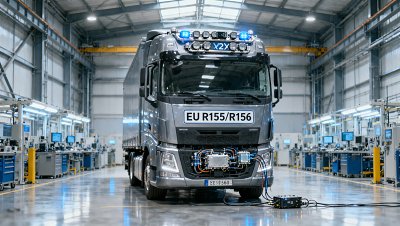
Advanced heavy truck chassis design is no longer only mechanical. Increasingly, the chassis must support braking electronics, suspension controls, telematics, power distribution, and sensor integration. This requires cleaner packaging, better harness routing, and more deliberate interface planning.
From an evaluation perspective, integrated electronic readiness can reduce installation complexity and improve diagnostic efficiency. It also supports advanced safety functions such as electronic braking coordination, axle load monitoring, and stability-related system integration.
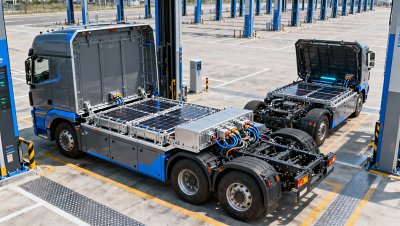
For electric and hybrid commercial vehicles, chassis technology becomes even more strategic. Engineers must allocate space for battery systems, high-voltage routing, thermal components, and protective structures while maintaining weight balance and service access.
A heavy truck chassis manufacturer with advanced technology should therefore be able to explain not only mechanical strength, but also how the chassis supports future vehicle architecture. This is important for buyers planning long-term product portfolios or mixed-fleet technology transitions.
Even in conventional diesel applications, smart integration matters. Better routing, mounting standardization, and access planning can lower maintenance time and reduce damage risk during service, especially in demanding fleet environments where uptime is tightly managed.
How to assess whether a supplier’s technology claims are credible
For technical evaluators, the most useful approach is evidence-based comparison. Instead of asking whether a manufacturer is advanced, ask which validation methods, production controls, and application references support that claim. Credibility comes from traceable engineering decisions.
Start with design capability. Does the supplier use simulation for fatigue, stiffness, and load concentration analysis? Can they explain how structural changes were validated? Do they offer data for specific operating conditions, such as construction haulage or long-distance logistics?
Then review production capability. Look for information on welding automation, jig accuracy, dimensional inspection, coating processes, and quality traceability. A supplier with strong technology usually shows consistency between engineering documentation and factory execution.
Next, examine application experience. A technically capable manufacturer should understand how chassis requirements differ for tractors, cargo trucks, dump trucks, and special-purpose vehicles. Their recommendations should reflect duty cycles, road quality, payload distribution, and regulatory differences.
It is also valuable to review after-sales support and engineering responsiveness. Advanced technology has limited value if the supplier cannot support field feedback, mounting guidance, spare parts continuity, or adaptation for customer-specific equipment. Technical maturity includes support capability.
Which evaluation criteria matter most for purchasing decisions
When a technical evaluator supports sourcing or supplier selection, the decision should balance engineering quality with application fit. The most advanced chassis is not automatically the best choice if its design assumptions do not match the actual operating environment.
Key criteria usually include frame durability, weight efficiency, corrosion resistance, axle and suspension compatibility, body-builder integration, serviceability, and production consistency. Depending on the project, regional certification and delivery flexibility may also be critical.
Total lifecycle value often matters more than purchase price. A chassis with better structural performance and manufacturing accuracy can reduce downtime, maintenance events, body installation issues, and long-term fatigue failures. These benefits may justify a higher initial cost.
For international buyers using a digital B2B platform, another important factor is supplier transparency. Clear technical specifications, documented testing, configurable product options, and direct engineering communication reduce sourcing risk and speed up evaluation.
This is where an industry-focused marketplace becomes useful. By comparing manufacturers, configurations, and technical resources in one place, buyers can identify which suppliers genuinely offer advanced chassis capabilities and which only present broad promotional language.
Conclusion: advanced chassis technology should be judged by measurable engineering value
In heavy truck chassis design, advanced technology is not about appearance or isolated features. It is the result of better structural engineering, smarter material use, controlled manufacturing, modular adaptability, and integration readiness for modern vehicle systems.
For technical evaluators, the most important takeaway is that meaningful innovation must be measurable. It should improve durability, load management, compatibility, safety, and operating efficiency in ways that can be supported by data, process evidence, and application experience.
When evaluating a heavy truck chassis manufacturer with advanced technology, focus on proof: simulation capability, fatigue validation, production precision, material strategy, and customization discipline. These indicators reveal whether the supplier can deliver dependable long-term value.
Ultimately, the right chassis partner is one that combines design intelligence with manufacturing consistency and real-world application understanding. That combination gives buyers greater confidence in product performance and helps ensure successful sourcing decisions across global commercial vehicle markets.
Trending News
- How to compare concrete mixer truck suppliers by total landed cost
- How axle load limits affect low bed trailer exports to Southeast Asia
- How to locate a truck exhaust system leak before replacing parts
- When does heavy equipment transport require a lowboy trailer?
- When does a light commercial vehicle for urban delivery save fleet costs?
Tag
Recommended News
 Technology & InnovationConstruction Machinery OEM: Key Specs That Affect Integration QualityConstruction machinery OEM selection starts with specs. Learn how dimensions, hydraulics, electrical interfaces, and documentation shape integration quality, safety, and uptime.
 Technology & InnovationHow Truck Body Design Affects Payload and Fuel EfficiencyTruck body design directly affects payload, fuel efficiency, and operating cost. Learn how the right truck body boosts performance, reduces waste, and improves fleet value.
 Technology & InnovationHydraulic Pump Selection Mistakes That Lead to DowntimeHydraulic pump selection mistakes can quietly trigger costly downtime in transport equipment. Learn what to verify before buying and choose with more confidence.
 Technology & InnovationManzhouli Smart Sealing Cuts TIR-Rail Clearance to 3.2 HoursManzhouli Smart Sealing cuts TIR-rail clearance to 3.2 hours, boosting visibility and delivery certainty for China-Europe cargo. See what it means for exporters and forwarders.
 Technology & InnovationConstruction Machinery OEM vs ODM: Key Differences That Affect QualityConstruction machinery OEM vs ODM explained: discover how design control, parts consistency, and lifecycle quality affect performance, sourcing risk, and smarter buying decisions.
 Technology & InnovationBULLDOZER with GPS Tracking: Benefits for Jobsite ControlBULLDOZER with GPS tracking improves jobsite control with better grading accuracy, fleet coordination, and uptime. See how it reduces rework and boosts project efficiency.
 Technology & InnovationGlobal Heavy-Duty Autonomous Trucks Near CommercializationHeavy-duty autonomous trucks are nearing commercialization — 200+ L4 vehicles deployed in Saudi & Chilean mines, delivering 120,000+ km fault-free haulage.
 Technology & InnovationWhen to Use an Excavator With Long Reach Boom on SiteEXCAVATOR with long reach boom guide: learn when it adds real value for dredging, demolition, slopes, and drainage jobs to improve safety, access, and site efficiency.
 Technology & InnovationGlobal Heavy-Duty Autonomous Truck Testing Reaches Commercial Inflection PointHeavy-duty autonomous truck testing hits commercial inflection point: 1M km L4 mining ops in Saudi Arabia & Chile — key for OEMs, mining logistics & global off-road transport.
 Technology & InnovationWhat Advanced Technology Means in Heavy Truck Chassis DesignDiscover how a heavy truck chassis manufacturer with advanced technology improves strength, durability, payload efficiency, and integration for demanding transport needs.
 Technology & InnovationChina Adds Tractor-Trailers' Battery-Swap Systems to NEV Bus Subsidy SchemeBattery-swap systems for tractor-trailers now qualify for China’s NEV bus subsidy—up to ¥32,000 per system. Key for logistics, mining & port electrification.
 Technology & InnovationPortable Construction Machinery Supplier: Where Mobility Improves Jobsite OutputConstruction machinery supplier with portable options helps contractors cut mobilization time, improve transport efficiency, and boost jobsite output across road, municipal, and multi-site projects.
 Technology & InnovationChina Adds Heavy-Duty Tractor Battery-Swap Systems to EV Bus Subsidy SchemeHeavy-duty tractor battery-swap systems now qualify for China’s 2026 EV bus subsidy—30% off, up to ¥280,000. Act before Dec 31!
 Technology & InnovationDo Energy-Saving Excavators Lower Fuel Use in Daily Jobsite Operations?Excavator manufacturer with energy-saving features: discover how smarter hydraulics, auto idle, and telematics can cut daily fuel use, improve uptime, and lower jobsite operating costs.
 Technology & InnovationL4 Autonomous Trucks Launch on Tianjin Port–Xiong’an RouteL4 autonomous trucks launch on Tianjin Port–Xiong’an route—first routine platooned operations in China’s strategic logistics corridor. Watch EU & Gulf certification unfold.
 Technology & InnovationAre Energy-Saving Excavators Worth It for Long-Term Operations?Excavator manufacturer with energy-saving features: discover if lower fuel use, reduced downtime, and stronger long-term ROI make these machines the smart choice for demanding operations.
 Technology & InnovationSouth China Pioneer Studio Wins Youth May 4th Award for Smart Truck CertificationSmart truck certification breakthrough: South China Pioneer Studio wins Youth May 4th Award for EU R155/R156 compliance — a game-changer for global陆路运输设备 exports.
 Technology & InnovationL4 Autonomous Container Trucks Begin Trial on Tianjin Port–Xiong'an CorridorL4 autonomous container trucks begin trial on Tianjin Port–Xiong'an Corridor—key milestone for cross-border logistics, heavy-equipment transport & smart intermodal supply chains.
 Technology & InnovationQuick Installation Excavators: Do They Reduce Setup Time on Real Sites?Excavator manufacturer with quick installation: discover whether fast-deploy excavators truly cut real-site setup time, lower labor costs, and improve uptime before you buy.
 Technology & InnovationModular Flatbed Trailers: When Design Flexibility Improves UtilizationFind out how a flatbed trailer supplier with modular design helps fleets boost utilization, adapt to varied loads, cut idle assets, and improve long-term ROI.
 Technology & InnovationPortable Construction Machinery: Where Flexible Equipment Saves TimeConstruction machinery supplier with portable options helps cut relocation time, improve transport efficiency, and keep projects moving faster across changing job sites.
 Technology & InnovationSemi Trailer Manufacturer with Lightweight Design: Is Lower Weight Worth It?Semi trailer manufacturer with lightweight design: discover when lower weight boosts payload, fuel savings, and fleet ROI—and when durability, compliance, and repair costs matter more.
![]() Technology & InnovationWhy Quick Installation Matters When Choosing an Excavator ManufacturerExcavator manufacturer with quick installation: discover how faster setup cuts downtime, simplifies maintenance, improves reliability, and keeps heavy equipment projects on schedule.
Technology & InnovationWhy Quick Installation Matters When Choosing an Excavator ManufacturerExcavator manufacturer with quick installation: discover how faster setup cuts downtime, simplifies maintenance, improves reliability, and keeps heavy equipment projects on schedule. Technology & InnovationHow Modular Design Changes the Value of a Flatbed Trailer SupplierFlatbed trailer supplier with modular design: discover how modular platforms cut lifecycle costs, boost fleet flexibility, and improve ROI for logistics, construction, and industrial buyers.
 Technology & InnovationHow Portable Construction Machinery for Mining Helps Remote Projects Move FasterConstruction machinery for mining helps remote projects move faster with easier transport, quick setup, and flexible deployment. Learn how to cut delays and improve site efficiency.