Choosing a Truck Chassis Supplier for Trailer Manufacturing Needs
Selecting the right truck chassis supplier for trailer manufacturing is a critical step for procurement professionals seeking reliable performance, cost efficiency, and long-term supply stability. In a competitive global market, understanding supplier capabilities, product quality, compliance standards, and after-sales support can help buyers reduce risk and build stronger sourcing strategies for trailer production.
Why does the truck chassis supplier matter so much in trailer manufacturing?
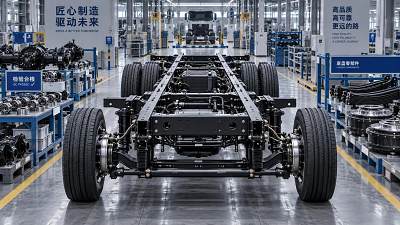
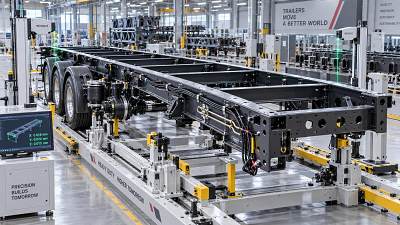
For trailer manufacturers, the chassis is not just a structural base. It affects payload distribution, axle integration, durability, body compatibility, maintenance frequency, and lifecycle cost. Choosing a truck chassis supplier for trailer manufacturing therefore has a direct influence on production consistency and downstream customer satisfaction.
Procurement teams often work under pressure from delivery deadlines, budget constraints, and varying technical requirements across export markets. A weak supplier can create hidden problems such as dimensional mismatch, irregular steel quality, incomplete documentation, or unstable lead times. These issues usually appear late, when correction costs are highest.
In the road transport equipment industry, trailer manufacturers also face different operating conditions. A chassis for regional logistics differs from one used in mining roads, municipal hauling, or infrastructure projects. That is why supplier evaluation must go beyond price and include engineering fit, quality systems, and service capability.
- A suitable supplier helps reduce rework during trailer assembly and shortens production cycles.
- A capable supplier supports documentation, inspection, and compliance requirements for cross-border business.
- A stable supplier relationship improves spare parts access and future model continuity.
What should procurement teams evaluate before choosing a truck chassis supplier for trailer manufacturing?
A practical sourcing decision starts with a clear evaluation framework. Buyers should compare suppliers across technical, commercial, operational, and compliance dimensions. This approach is especially useful when multiple chassis configurations are being assessed for different trailer programs.
Core evaluation dimensions
The table below summarizes key checkpoints that procurement professionals can use when screening a truck chassis supplier for trailer manufacturing across domestic and international sourcing projects.
This matrix helps procurement teams move discussions away from single-point price comparisons. In trailer manufacturing, a low unit price can become expensive if chassis inconsistency causes fitting errors, warranty claims, or delayed customer acceptance.
Questions worth asking early
- Can the supplier provide repeatable specifications for frame height, cross-member arrangement, and axle position?
- How does the supplier manage variation across batches for welding, drilling, and bracket installation?
- What is the standard lead time, and what causes the most common delivery delays?
- Is technical support available when trailer body integration requires adjustment?
Which technical parameters have the biggest impact on trailer production?
When selecting a truck chassis supplier for trailer manufacturing, procurement decisions should be aligned with engineering requirements. The most important parameters are not always the most visible ones. Several small specification mismatches can create serious assembly inefficiencies.
Parameters that deserve close review
The following table highlights common chassis parameters and why they matter in different trailer manufacturing scenarios.
For procurement personnel, the key lesson is simple: technical alignment should be verified before order placement, not after the chassis reaches the assembly line. Early coordination between sourcing and engineering teams saves time, labor, and warranty exposure.
How do application scenarios change supplier selection?
Not every truck chassis supplier for trailer manufacturing is equally suitable across applications. Logistics fleets, construction hauling, municipal operations, and mining transport require different balances between payload, durability, maintenance access, and road adaptability.
Common use cases in road transport equipment
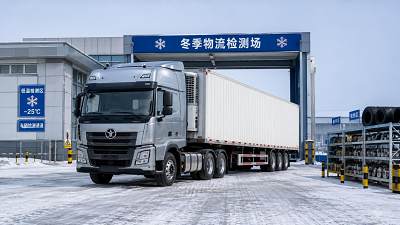
- Long-haul logistics trailers usually prioritize fuel-efficient configurations, stable tracking, and component standardization for easier maintenance across large fleets.
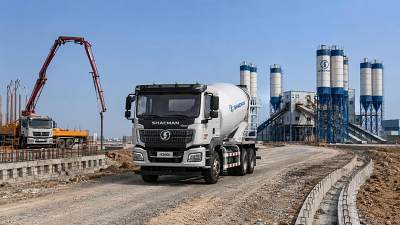
- Construction and infrastructure trailers often need reinforced frame structures, stronger suspension, and higher tolerance for rough roads and uneven loading.
- Municipal and engineering support units may value compact layouts, easier maneuverability, and service-friendly access to consumable parts.
- Mining-related trailer applications typically require severe-duty chassis solutions with better protection against vibration, dust, and high shock loads.
Buyers should ask suppliers to explain how their chassis options perform under real operating conditions. A specification sheet may look acceptable, but service life can vary significantly between paved highway use and heavy off-road environments.
Price vs total cost: what do many buyers overlook?
Procurement teams often receive pressure to lower unit prices, especially in competitive trailer markets. However, the better question is not which supplier quotes the lowest figure, but which truck chassis supplier for trailer manufacturing delivers the most predictable total cost over the contract period.
Cost items beyond the initial quotation
- Rework cost caused by inaccurate mounting dimensions or inconsistent bracket positions.
- Production delay cost when batch delivery is late or incomplete.
- Warranty and field service cost due to frame fatigue, coating issues, or poor component matching.
- Inventory cost when spare parts or replacement assemblies are not standardized.
- Compliance cost if documents must be reissued or technical files are incomplete for export customers.
A lower-priced supplier can still be the right choice if process control, documentation, and delivery performance are reliable. But without those safeguards, the apparent savings may disappear quickly during trailer production and after-sales support.
What compliance and documentation should buyers confirm?
Compliance expectations differ by market, yet documentation discipline is essential everywhere. When sourcing from a truck chassis supplier for trailer manufacturing, buyers should confirm what records are available before committing to production volumes.
Useful compliance checkpoints
- Material certificates and incoming inspection records for structural components.
- Dimensional inspection reports for critical mounting and interface points.
- Welding process control records where structural joints are safety-relevant.
- Surface treatment and corrosion protection details for climates with heavy moisture or chemical exposure.
- Export shipping documents, packing details, and traceability information for customs clearance and receiving inspections.
If the target market has additional roadworthiness, load, or safety requirements, procurement should align early with engineering and compliance teams. This prevents the common mistake of approving a chassis that fits production needs but lacks market-ready documentation.
How can a B2B platform improve supplier screening and sourcing efficiency?
For procurement professionals, one of the biggest challenges is not finding a supplier, but identifying a suitable supplier quickly and comparing options with enough technical depth. This is where a specialized industry platform creates real value.
The Global Heavy Truck Industry Platform connects manufacturers, suppliers, distributors, and buyers across the commercial vehicle and heavy equipment supply chain. For buyers looking for a truck chassis supplier for trailer manufacturing, this reduces fragmentation and improves visibility across multiple sourcing options.
Advantages for procurement teams
- Access to a wide product range covering truck chassis, trailers, complete trucks, construction machinery, and spare parts within one industry-focused environment.
- Faster supplier comparison through centralized product discovery, market information, and buying references.
- Better sourcing judgment through industry insights, brand directories, and professional buying guides tailored to heavy transport equipment.
- Improved support for cross-border trade by using multilingual information services and a globally connected supplier network.
This kind of platform is especially useful when buyers need to compare technical fit, lead time, application suitability, and supplier responsiveness across several regions. It helps reduce decision blind spots that often happen in fragmented offline sourcing.
FAQ: practical questions buyers ask about truck chassis supplier selection
How do I shortlist a truck chassis supplier for trailer manufacturing efficiently?
Start with three filters: technical compatibility, delivery capability, and documentation readiness. Then compare batch consistency, support response, and application experience. A short pilot order or sample evaluation can also reveal whether the supplier can support stable trailer assembly.
What is the most common procurement mistake?
The most common mistake is focusing on quoted price before confirming interface details and process control. In trailer manufacturing, small dimensional differences can increase rework and disrupt production schedules more than buyers initially expect.
Which scenarios require stronger chassis specifications?
Rough-road construction transport, municipal heavy-duty operations, and mining-related hauling usually require more robust frame design, suspension support, and corrosion protection. Highway logistics applications may prioritize weight control and maintenance efficiency instead.
How long is a typical lead time?
Lead time depends on configuration complexity, component availability, order quantity, and export arrangements. Buyers should not rely on a generic estimate. It is better to request a production schedule breakdown covering manufacturing, inspection, packing, and shipment preparation.
What should be included in supplier communication before quotation approval?
Buyers should confirm key dimensions, axle and suspension requirements, target payload, application environment, documentation needs, delivery window, and spare parts expectations. This prevents the quotation from being based on assumptions that later create commercial disputes.
Why choose us for truck chassis sourcing and trailer manufacturing support?
If you are looking for a truck chassis supplier for trailer manufacturing, the Global Heavy Truck Industry Platform offers a more efficient way to source, compare, and evaluate options within the commercial vehicle and heavy equipment sector. Instead of searching through disconnected channels, procurement teams can work from a focused industry marketplace supported by product resources, supplier visibility, and market intelligence.
We support buyers who need practical answers, not generic catalog browsing. You can use the platform to clarify chassis parameters, compare supplier capabilities, review application fit, and strengthen sourcing decisions for logistics transport, infrastructure projects, mining operations, and municipal engineering needs.
Contact us to discuss
- Parameter confirmation for frame size, axle layout, suspension, and mounting interfaces
- Product selection based on trailer type, load requirements, and operating conditions
- Lead time planning for scheduled production and export delivery coordination
- Customized sourcing solutions for specialized trailer manufacturing projects
- Documentation and certification discussion based on target market requirements
- Quotation communication and supplier comparison for more confident procurement decisions
When procurement accuracy matters, a specialized platform can save time, reduce sourcing risk, and help you identify suppliers that match both technical and commercial requirements. Reach out with your chassis specifications, trailer application, expected order volume, and delivery target to start a more informed sourcing process.
Trending News
- How to compare concrete mixer truck suppliers by total landed cost
- How axle load limits affect low bed trailer exports to Southeast Asia
- How to locate a truck exhaust system leak before replacing parts
- When does heavy equipment transport require a lowboy trailer?
- When does a light commercial vehicle for urban delivery save fleet costs?
Tag
Recommended News
 Buying GuideHow to compare concrete mixer truck suppliers by total landed costCompare truck cement mixer supplier quotes by total landed cost, including freight, duties, and delivery. Uncover hidden charges and choose the best-value truck for your fleet.
 Buying GuideWhen does heavy equipment transport require a lowboy trailer?Does your heavy equipment need a lowboy trailer? Discover how loaded height, weight distribution, loading access, and route limits determine the right choice for safe transport.
 Buying GuideHow to choose an off road truck for steep and unstable job sitesChoose the right off road truck for steep, unstable job sites. Compare traction, braking, stability, clearance, payload, and route-test essentials.
 Buying GuideHow to match crane truck lifting capacity to your jobsite loadsCrane truck capacity planning made clear: calculate gross load, radius, rigging, outriggers, and ground conditions to select safer, job-ready lifting equipment.
 Buying GuideHow to match lowbed trailer deck height to your hauling equipmentLowbed trailer deck height guide: match equipment clearance, ramp geometry, axle loads, tractor fit, and route limits for safer, more efficient hauling.
 Buying GuideWhat to verify before choosing a delivery truck supplier for school transportationDelivery truck supplier for school transportation: verify route fit, payload, safety, compliance, service support, and total cost before choosing a reliable partner.
 Buying GuideWhat an excavator manufacturer catalog should show before you compare modelsExcavator manufacturer catalog guide: verify supplier identity, configurations, hydraulics, compliance, parts support, and delivery readiness before comparing models.
 Buying GuideWhat to check before appointing a bulldozer distributorBulldozer distributor selection guide: evaluate service, parts availability, warranty, pricing, compliance, and lifecycle value to reduce downtime and protect fleet investment.
 Buying GuideWhat to verify before choosing a truck cement mixer supplierTruck cement mixer supplier checklist: verify chassis fit, drum quality, hydraulics, compliance, spare parts, and after-sales support before you buy.
 Buying GuideHow to verify a truck spare parts supplier before placing a bulk orderTruck spare parts supplier verification made practical: learn how to check part specifications, factory control, test records, samples, pricing, and delivery capability before placing a bulk order.
 Buying GuideWhat size truck container is right for a typical freight load?Truck container sizing made simple: compare payload, volume, pallet layouts, route access, and loading needs to choose the most efficient freight solution.
 Buying GuideWhat drives semi trailer price differences between similar models?Semi trailer price differences come down to frame materials, axles, suspension, coating, and configuration. Compare specifications line by line to choose lasting value.
 Buying GuideHow to compare excavator manufacturer price lists before requesting quotesCompare an excavator manufacturer price list with confidence. Learn to normalize configurations, calculate landed costs, assess options and service, and create stronger RFQs.
 Buying GuideHow to choose a mixer truck drum capacity for your concrete pourMixer truck capacity guide: match drum size to pour rate, legal payload, site access, and delivery cycles for efficient, reliable concrete placement.
 Buying GuideHow to size a bulldozer for construction site grading workBulldozer for construction sizing guide: match weight, blade, traction, grade control, and transport needs to improve grading productivity and costs.
 Buying GuideHow to assess a truck cement manufacturer’s build quality before orderingTruck cement manufacturer build quality: assess tank steel, welding, chassis integration, pneumatic systems, factory QC, and inspection evidence before ordering.
 Buying GuideWhen does a truck trailer OEM make sense for private-label fleets?Truck trailer OEM programs help private-label fleets cut lifecycle costs, standardize operations, and improve uptime. Learn when customization delivers real commercial value.
 Buying GuideWhat to verify before choosing a water truck OEM for your fleetWater truck OEM selection guide: verify chassis compatibility, tank quality, pump performance, compliance, and service support to build a safer, more reliable fleet.
 Buying GuideHow to size a cab chassis truck for a fire department apparatusCab chassis truck for fire department sizing guide: balance GVWR, axle loads, wheelbase, water tank placement, and mission needs for safer apparatus design.
 Buying GuideWhat to verify before choosing a truck chassis supplierChoose the right truck chassis supplier with a practical checklist for application fit, axle ratings, body integration, quality control, delivery reliability, and after-sales support.
 Buying GuideHow to choose a logging truck for steep and rough forest roadsLogging truck selection for steep, rough forest roads: compare traction, braking, gearing, chassis strength, tires, and supplier support for safer, more reliable hauling.
 Buying GuideHow to choose a flatbed trailer deck length for oversized loadsFlatbed trailer deck length guide for oversized loads: balance cargo support, axle weight, securement space, overhang, and route access for safer transport.
 Buying GuideHow to assess a truck chassis supplier for trailer manufacturingTruck chassis supplier for trailer manufacturing: learn how to assess technical fit, quality control, engineering support, and delivery reliability for smarter sourcing.
 Buying GuideIs the SHACMAN H3000 6×4 Cement Mixer suitable for large projects?SHACMAN H3000 6×4 Cement Mixer: assess payload, cycle time, traction, and service support to see if it can keep large concrete projects moving efficiently.
 Buying GuideHow to evaluate heavy duty trucks for sale in Russia before buyingHeavy duty trucks for sale in Russia: learn how to compare specifications, winter readiness, service support, supplier reliability, and total ownership costs before buying.