Construction Machinery OEM: Key Specs That Affect Integration Quality
Selecting a construction machinery OEM has become a technical decision with direct consequences for integration quality across road transport, site operations, and fleet safety. In heavy-duty applications, mismatched dimensions, unstable hydraulic performance, weak electrical compatibility, or undocumented material changes can create delays long before a machine enters service. For companies working across trucks, trailers, municipal engineering, mining support, and infrastructure delivery, the real question is not only who can build the equipment, but who can build it to fit the system around it.
Why integration quality matters more now
Construction machinery is increasingly expected to connect with transport platforms, telematics systems, safety controls, and standardized maintenance routines.
That shift changes how a construction machinery OEM should be evaluated.
A machine may meet output targets on paper, yet still fail during installation, certification, or daily use.
This is especially relevant in land transport equipment, where truck chassis, body structures, lifting systems, trailers, and auxiliary equipment often need precise coordination.
Global sourcing has also widened supplier choice.
That creates opportunity, but it also raises the cost of poor specification control.
On international B2B platforms serving the heavy truck and equipment market, buyers can compare more options than before.
The value now depends on comparing the right technical details, not only catalog range or unit price.
What a construction machinery OEM should deliver beyond production capacity
An OEM in this context is not simply a fabricator.
It is a manufacturing partner responsible for repeatable engineering, controlled materials, validated interfaces, and consistent documentation.
For integration quality, three abilities matter most.
- Translating application requirements into stable technical specifications.
- Manufacturing to those specifications without uncontrolled variation.
- Providing evidence that the delivered equipment matches the approved design.
When any of these elements is weak, integration teams usually absorb the risk.
That risk appears as fit-up problems, rewiring, hose rerouting, mounting plate rework, software alarms, or unclear compliance records.
The specifications that usually decide integration success
Not every parameter has the same operational impact.
Some specifications determine whether the machine can actually be installed, operated, and maintained within the target vehicle system.
Dimensional and mounting accuracy
This is often the first integration checkpoint.
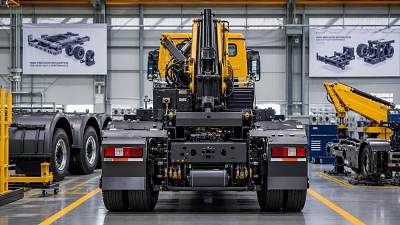
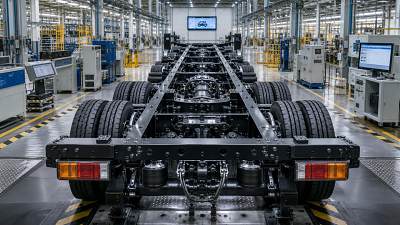
Overall length, mounting center distance, hole position tolerance, frame interface geometry, and clearance envelopes must match the receiving structure.
A construction machinery OEM that cannot control dimensional consistency creates cumulative installation error.
That problem becomes more severe on truck-mounted equipment, where chassis space is limited and axle load distribution matters.
Hydraulic compatibility
Hydraulic mismatch does not always appear during factory inspection.
It often appears later as overheating, unstable cycle times, pressure drop, seal failure, or unsafe actuator response.
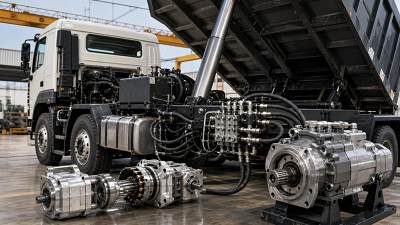
Flow rate, operating pressure, hose routing, fitting standards, filtration level, oil cleanliness, and thermal performance must be reviewed as one system.
Electrical and control interfaces
Modern construction equipment increasingly depends on sensors, controllers, interlocks, CAN communication, and remote diagnostics.
Voltage rating alone is not enough.
Connector type, harness protection, grounding logic, signal protocol, fault reporting, and emergency stop behavior all affect safe integration.
Structural materials and welding quality
Material grade substitution is one of the most underestimated risks in OEM sourcing.
Even small changes in steel grade, thickness, or reinforcement layout can alter fatigue performance.
For a construction machinery OEM, traceable weld procedures, qualified welders, NDT where needed, and stable heat input control are more meaningful than generic strength claims.
Surface treatment and corrosion protection
Transport and construction equipment often faces mud, road salt, water spray, impact abrasion, and chemical exposure.
Coating system, pretreatment method, film thickness, and repairability affect service life and inspection results.
Where these issues show up in real operating scenarios
The same machine can perform differently depending on where it is used.
That is why OEM specification review should be linked to operating context.
Truck-mounted cranes need reliable interface control between lifting functions and vehicle stability systems.
Concrete transport equipment must manage vibration, continuous duty, and predictable hose or pipeline routing.
Municipal service vehicles depend on compact layouts, easy maintenance access, and safe control logic in urban conditions.
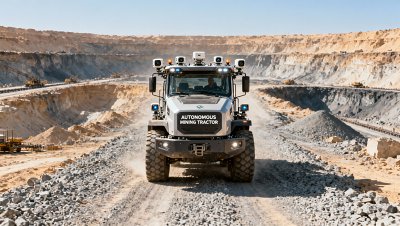
Mining and infrastructure support equipment faces harsh dust, shock loading, long operating cycles, and remote service constraints.
In each case, integration quality is shaped by operating loads, service intervals, environmental exposure, and regulatory expectations.
Documentation is part of the product
A capable construction machinery OEM should provide more than a finished unit and a general brochure.
Integration quality depends heavily on what is documented, revision-controlled, and delivered with the equipment.
- General arrangement drawings with revision history.
- Material certificates and critical component traceability.
- Hydraulic and electrical schematics aligned with the shipped configuration.
- Test reports for pressure, function, load, or safety interlock verification.
- Inspection criteria for receiving, installation, and commissioning.
Without this package, even a well-built machine becomes harder to validate and maintain.
The hidden cost appears during audits, warranty cases, field modification, and accident investigation.
How to compare suppliers in a crowded market
Online sourcing has made it easier to identify a construction machinery OEM across different regions and product categories.
That convenience is useful only when technical comparison is structured.
Platforms focused on heavy trucks, trailers, construction machinery, and spare parts can support that process by centralizing supplier profiles, product data, market insight, and buying references.
Still, the decision should come down to evidence.
A practical comparison usually includes the following points.
- Whether drawings match delivered production, not only prototypes.
- Whether critical bought-out components come from controlled sources.
- Whether design changes are formally approved and traceable.
- Whether compliance claims are backed by records and test evidence.
- Whether after-sales support includes technical clarification, not only spare parts supply.
A workable review approach before placing orders
Good integration results usually begin before the purchase order is issued.
A short internal review matrix can prevent expensive downstream correction.
Start with the target operating scenario, then map every critical interface.
List dimensional, hydraulic, structural, electrical, and regulatory requirements in measurable terms.
Ask the construction machinery OEM to respond against that list, item by item.
Where uncertainty remains, sample inspection, pilot integration, or factory audit often provides more value than price negotiation.
This approach is especially useful when equipment will be paired with truck chassis, trailers, or fleet systems from multiple brands.
What to do next
The strongest construction machinery OEM relationships are built on specification discipline, not assumption.
Before comparing quotations, define the interfaces that can affect installation, stability, safety, maintenance, and compliance.
Then review suppliers through drawings, test records, component traceability, and change control capability.
In a global heavy truck and equipment marketplace, access to more suppliers is useful, but clarity in technical judgment is what protects integration quality.
That is the basis for selecting equipment that fits the transport system, performs reliably in the field, and stands up to inspection over time.
Trending News
- How to compare concrete mixer truck suppliers by total landed cost
- How axle load limits affect low bed trailer exports to Southeast Asia
- How to locate a truck exhaust system leak before replacing parts
- When does heavy equipment transport require a lowboy trailer?
- When does a light commercial vehicle for urban delivery save fleet costs?
Tag
Recommended News
 Technology & InnovationConstruction Machinery OEM: Key Specs That Affect Integration QualityConstruction machinery OEM selection starts with specs. Learn how dimensions, hydraulics, electrical interfaces, and documentation shape integration quality, safety, and uptime.
 Technology & InnovationHow Truck Body Design Affects Payload and Fuel EfficiencyTruck body design directly affects payload, fuel efficiency, and operating cost. Learn how the right truck body boosts performance, reduces waste, and improves fleet value.
 Technology & InnovationHydraulic Pump Selection Mistakes That Lead to DowntimeHydraulic pump selection mistakes can quietly trigger costly downtime in transport equipment. Learn what to verify before buying and choose with more confidence.
 Technology & InnovationManzhouli Smart Sealing Cuts TIR-Rail Clearance to 3.2 HoursManzhouli Smart Sealing cuts TIR-rail clearance to 3.2 hours, boosting visibility and delivery certainty for China-Europe cargo. See what it means for exporters and forwarders.
 Technology & InnovationConstruction Machinery OEM vs ODM: Key Differences That Affect QualityConstruction machinery OEM vs ODM explained: discover how design control, parts consistency, and lifecycle quality affect performance, sourcing risk, and smarter buying decisions.
 Technology & InnovationBULLDOZER with GPS Tracking: Benefits for Jobsite ControlBULLDOZER with GPS tracking improves jobsite control with better grading accuracy, fleet coordination, and uptime. See how it reduces rework and boosts project efficiency.
 Technology & InnovationGlobal Heavy-Duty Autonomous Trucks Near CommercializationHeavy-duty autonomous trucks are nearing commercialization — 200+ L4 vehicles deployed in Saudi & Chilean mines, delivering 120,000+ km fault-free haulage.
 Technology & InnovationWhen to Use an Excavator With Long Reach Boom on SiteEXCAVATOR with long reach boom guide: learn when it adds real value for dredging, demolition, slopes, and drainage jobs to improve safety, access, and site efficiency.
 Technology & InnovationGlobal Heavy-Duty Autonomous Truck Testing Reaches Commercial Inflection PointHeavy-duty autonomous truck testing hits commercial inflection point: 1M km L4 mining ops in Saudi Arabia & Chile — key for OEMs, mining logistics & global off-road transport.
 Technology & InnovationWhat Advanced Technology Means in Heavy Truck Chassis DesignDiscover how a heavy truck chassis manufacturer with advanced technology improves strength, durability, payload efficiency, and integration for demanding transport needs.
 Technology & InnovationChina Adds Tractor-Trailers' Battery-Swap Systems to NEV Bus Subsidy SchemeBattery-swap systems for tractor-trailers now qualify for China’s NEV bus subsidy—up to ¥32,000 per system. Key for logistics, mining & port electrification.
 Technology & InnovationPortable Construction Machinery Supplier: Where Mobility Improves Jobsite OutputConstruction machinery supplier with portable options helps contractors cut mobilization time, improve transport efficiency, and boost jobsite output across road, municipal, and multi-site projects.
 Technology & InnovationChina Adds Heavy-Duty Tractor Battery-Swap Systems to EV Bus Subsidy SchemeHeavy-duty tractor battery-swap systems now qualify for China’s 2026 EV bus subsidy—30% off, up to ¥280,000. Act before Dec 31!
 Technology & InnovationDo Energy-Saving Excavators Lower Fuel Use in Daily Jobsite Operations?Excavator manufacturer with energy-saving features: discover how smarter hydraulics, auto idle, and telematics can cut daily fuel use, improve uptime, and lower jobsite operating costs.
 Technology & InnovationL4 Autonomous Trucks Launch on Tianjin Port–Xiong’an RouteL4 autonomous trucks launch on Tianjin Port–Xiong’an route—first routine platooned operations in China’s strategic logistics corridor. Watch EU & Gulf certification unfold.
 Technology & InnovationAre Energy-Saving Excavators Worth It for Long-Term Operations?Excavator manufacturer with energy-saving features: discover if lower fuel use, reduced downtime, and stronger long-term ROI make these machines the smart choice for demanding operations.
 Technology & InnovationSouth China Pioneer Studio Wins Youth May 4th Award for Smart Truck CertificationSmart truck certification breakthrough: South China Pioneer Studio wins Youth May 4th Award for EU R155/R156 compliance — a game-changer for global陆路运输设备 exports.
 Technology & InnovationL4 Autonomous Container Trucks Begin Trial on Tianjin Port–Xiong'an CorridorL4 autonomous container trucks begin trial on Tianjin Port–Xiong'an Corridor—key milestone for cross-border logistics, heavy-equipment transport & smart intermodal supply chains.
 Technology & InnovationQuick Installation Excavators: Do They Reduce Setup Time on Real Sites?Excavator manufacturer with quick installation: discover whether fast-deploy excavators truly cut real-site setup time, lower labor costs, and improve uptime before you buy.
 Technology & InnovationModular Flatbed Trailers: When Design Flexibility Improves UtilizationFind out how a flatbed trailer supplier with modular design helps fleets boost utilization, adapt to varied loads, cut idle assets, and improve long-term ROI.
 Technology & InnovationPortable Construction Machinery: Where Flexible Equipment Saves TimeConstruction machinery supplier with portable options helps cut relocation time, improve transport efficiency, and keep projects moving faster across changing job sites.
 Technology & InnovationSemi Trailer Manufacturer with Lightweight Design: Is Lower Weight Worth It?Semi trailer manufacturer with lightweight design: discover when lower weight boosts payload, fuel savings, and fleet ROI—and when durability, compliance, and repair costs matter more.
![]() Technology & InnovationWhy Quick Installation Matters When Choosing an Excavator ManufacturerExcavator manufacturer with quick installation: discover how faster setup cuts downtime, simplifies maintenance, improves reliability, and keeps heavy equipment projects on schedule.
Technology & InnovationWhy Quick Installation Matters When Choosing an Excavator ManufacturerExcavator manufacturer with quick installation: discover how faster setup cuts downtime, simplifies maintenance, improves reliability, and keeps heavy equipment projects on schedule. Technology & InnovationHow Modular Design Changes the Value of a Flatbed Trailer SupplierFlatbed trailer supplier with modular design: discover how modular platforms cut lifecycle costs, boost fleet flexibility, and improve ROI for logistics, construction, and industrial buyers.
 Technology & InnovationHow Portable Construction Machinery for Mining Helps Remote Projects Move FasterConstruction machinery for mining helps remote projects move faster with easier transport, quick setup, and flexible deployment. Learn how to cut delays and improve site efficiency.