China Enacts Unified L3 Truck Rule on June 10
China’s new interim road transport rules for L3 intelligent connected vehicles took effect on June 10, 2026, creating a unified compliance signal for L3 autonomous heavy trucks. The change matters not only because it formally assigns accident liability during activated autonomous driving to the vehicle owner or operator rather than the driver, but also because it requires automakers to pre-install V2X communication modules connected directly to a national regulatory platform. For truck manufacturers, exporters, operators, suppliers, and compliance teams, the development is less about a single policy headline and more about how product configuration, export documentation, local adaptation planning, and delivery readiness may now need to be reassessed.
What the rule now makes explicit
According to the information provided, the Ministry of Transport, the Ministry of Industry and Information Technology, and the Ministry of Public Security jointly issued the Interim Measures for Road Transport Management of Intelligent Connected Vehicles (L3), which formally entered into force on 2026-06-10.
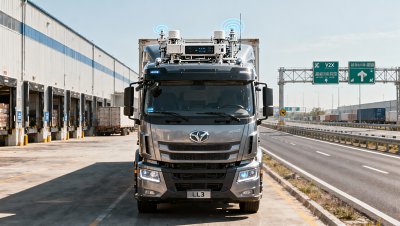
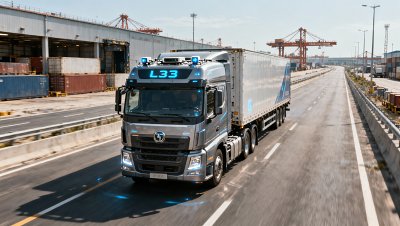
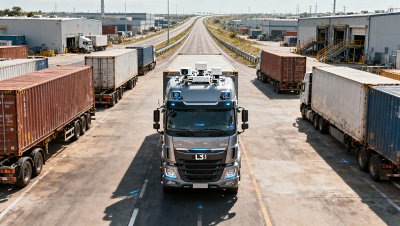
The measures for the first time clarify that when an L3 autonomous heavy truck is operating with its autonomous driving function activated and an accident occurs, the liable party is the vehicle owner or operator rather than the driver.
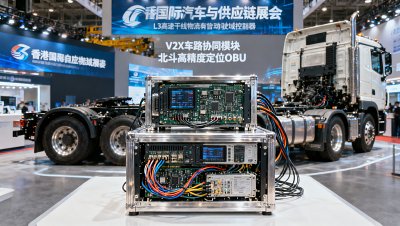
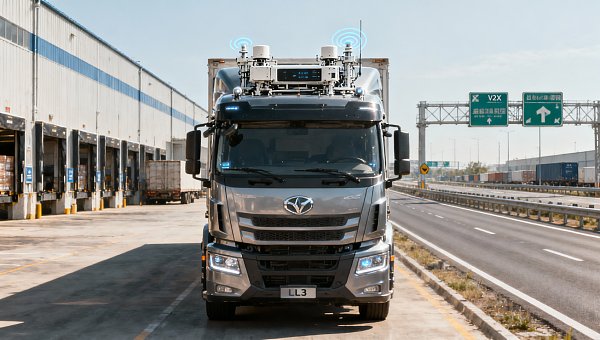
The same measures also require automakers to pre-install V2X communication modules and connect them directly to a national-level regulatory platform.
Based on the input provided, this rule directly affects the hardware and software configuration standards for Chinese L3 heavy truck exports, as well as the design of overseas localization and adaptation plans.
Where the operational pressure is likely to appear
Export configuration is no longer only a product issue
From an industry perspective, exporters of L3 heavy trucks may be affected first because the rule ties market access expectations more closely to embedded hardware and connectivity architecture. The practical pressure point is likely to sit in specification alignment, technical documentation, and delivery scope, especially where exported vehicles are designed from a common platform but adapted for different destinations.
What deserves closer attention is whether product packs, technical files, and customer-facing specifications clearly reflect the mandatory V2X pre-installation requirement and the associated regulatory connectivity logic described in the rule.
Operators and fleet-side buyers face a new liability frame
The explicit allocation of accident liability to the vehicle owner or operator during activated autonomous driving changes the compliance focus for fleet operators and procurement teams. The impact is not limited to vehicle selection; it may also affect contract review, internal risk allocation, acceptance criteria, traceability expectations, and post-delivery operating procedures.
Analysis shows that for buyers and operators, the issue is not only whether a truck can run L3 functions, but whether the supporting documentation and operational controls are adequate under the new legal framing.
Component and systems suppliers may face tighter integration demands
Suppliers involved in communication modules, connected systems, and related electronic or software integration may also be affected because the rule moves V2X from a potential feature discussion into a mandatory pre-installation requirement within this policy context. This can influence procurement specifications, validation scope, interface responsibilities, and delivery coordination across the supply chain.
Observably, suppliers may need to pay closer attention to how their components are described in technical submissions, compliance files, and handover records linked to the final vehicle configuration.
What companies should review now
Recheck compliance files against the new mandatory baseline
Companies involved in manufacturing, export, or procurement should review whether current technical documents, product specifications, and compliance materials properly reflect the now-explicit requirements on liability framing and V2X pre-installation. Where internal or customer documentation still treats such items as optional, that mismatch could become a practical issue in review or delivery discussions.
Track how execution language appears in tenders and delivery documents
The input does not provide detailed enforcement procedures, so it would be premature to treat implementation outcomes as fully settled. Even so, companies should closely monitor how the rule is echoed in tender specifications, purchase contracts, inspection checkpoints, and acceptance documentation, because these are often the first places where broad regulatory language becomes operational.
Reassess overseas localization plans carefully
Because the provided summary explicitly states that the rule affects overseas localization and adaptation planning, exporters should revisit whether China-bound or China-origin L3 truck platforms are being engineered with sufficient flexibility in software and hardware architecture. Analysis shows that the central issue is not to assume one design will automatically fit every market, but to identify where domestic regulatory connectivity requirements may influence export variants and project planning.
Prepare for stronger traceability expectations after delivery
With liability attached to the owner or operator during activated autonomous driving, after-sales, service, and compliance teams should pay closer attention to records, technical handover materials, and quality traceability arrangements. The available information does not define a full enforcement path, but it clearly raises the importance of being able to show what was installed, how the vehicle was configured, and what compliance basis supported delivery.
Why this reads as a concrete execution signal
Analysis shows that this development is better understood as a rule implementation milestone rather than a general policy discussion. The reason is that the measures are already in force and they make two operational points explicit: who bears responsibility during activated L3 driving and what connectivity hardware must be pre-installed.
At the same time, it is also more appropriate to understand this as a starting point for further observation, not as the final word on every compliance detail. The input does not include detailed enforcement guidance, testing pathways, procurement interpretations, or cross-market adaptation standards. For that reason, industry participants still need to watch how regulators, buyers, and project documents translate the rule into day-to-day requirements.
How the market is likely to read this change for now
In practical terms, the June 10 effective date signals that L3 autonomous heavy truck compliance in China is moving into a more structured stage. The most immediate significance lies in the formalization of liability allocation and the conversion of V2X connectivity into a stated pre-installation requirement.
A neutral reading is that this is neither a complete endpoint nor a purely symbolic notice. It is more appropriate to understand the change as an implemented rule with direct implications for specification management, export configuration, operational compliance, and localization planning, while leaving room for continued observation of execution details and market response.
Basis of this article and what still needs verification
This article is generated from the user-provided news title, event date, and event summary. It is based on the provided description of the Interim Measures for Road Transport Management of Intelligent Connected Vehicles (L3), its effective date of 2026-06-10, the clarified liability allocation for accidents during activated autonomous driving, the mandatory pre-installation of V2X modules, and the stated effect on export configuration and overseas adaptation planning.
For developments of this type, relevant source categories typically include official regulatory notices, releases from supervisory authorities, trade or transport administration information, industry association updates, standard-related documents, and reporting by authoritative media. No specific official source link was provided in the input, so the exact official link still needs to be verified on an ongoing basis.
What still warrants follow-up includes detailed implementation language, certification or compliance interpretation, tender document changes, market feedback, and how enterprises actually execute the rule in procurement, delivery, after-sales, and export project planning.
Trending News
- How to compare concrete mixer truck suppliers by total landed cost
- How axle load limits affect low bed trailer exports to Southeast Asia
- How to locate a truck exhaust system leak before replacing parts
- When does heavy equipment transport require a lowboy trailer?
- When does a light commercial vehicle for urban delivery save fleet costs?
Tag
Recommended News
 Autonomous TrucksHong Kong Expo Highlights New Export Checks for L3+ Truck SystemsHong Kong Expo highlights new export checks for L3+ truck systems, from compliance files to delivery readiness. See what overseas fleet buyers and Tier 1 integrators may require next.
 Autonomous TrucksChina Enacts Unified L3 Truck Rule on June 10China Enacts Unified L3 Truck Rule on June 10: learn how the new L3 autonomous truck rule, V2X mandate, and liability shift reshape compliance, exports, and fleet risk.
 Autonomous TrucksChina Sets Unified Rules for L3 Autonomous TrucksChina sets unified rules for L3 autonomous trucks, defining accident liability within ODD conditions. Explore what it means for truck makers, fleets, compliance, and export growth.
 Autonomous TrucksNational Rule for L3 Autonomous Trucks Takes EffectNational Rule for L3 Autonomous Trucks takes effect nationwide, clarifying liability, insurance, compliance, and supplier risk. Learn what fleets, buyers, and operators must review now.
 Autonomous TrucksCodelco's L4 Mining Truck Tender Requires ISO 34502 ValidationCodelco's L4 mining truck tender mandates ISO 34502 validation — the first global operational use of this standard. Discover compliance insights, supplier impacts, and strategic actions for陆路运输设备 exporters and OEMs.
 Autonomous TrucksLuKai Alpha 125 Mining Transport Robot Enters Mass DeliveryLuKai Alpha 125 mining transport robot enters mass delivery — GNSS-denied, KAZMINE-2026 certified autonomous haulage for copper mines in Kazakhstan.
 Autonomous TrucksL4 Autonomous Container Tractor Chassis Emerges as New Export Vehicle for China's Smart Shipping StrategyL4 autonomous container tractor chassis: China's new export-ready smart shipping solution for global logistics—modular, UN R156-precompliant, and infrastructure-adaptive.
 Autonomous TrucksLuKai Alpha 125 Mining Robot Enters Mass DeliveryLuKai Alpha 125 mining robot — L4 autonomous haulage, 90-ton payload, GNSS-free navigation — now in mass delivery for global mines.
 Autonomous TrucksLuKai Alpha 125 Autonomous Mining Truck Enters Mass DeliveryLuKai Alpha 125 autonomous mining truck enters mass delivery — L4-level, 90-ton payload, −40°C certified. First units deployed in Kazakhstan copper mine.
 Autonomous TrucksBeijing to Open L4 Smart Truck Platoon Test Roads in Q3 2026L4 smart truck platoon testing lanes launching Q3 2026 on Beijing’s JingTai & JingXiong Expressways — key opportunity for V2X, platoon algorithms & smart logistics exporters.
 Autonomous TrucksBeijing to Open L4 Smart Truck Platooning Test on Jingxiong Expressway in 2026L4 smart truck platooning tests launch on Jingxiong Expressway in 2026—key opportunity for global transport tech integrators and fleet operators to validate C-V2X + BeiDou compliance.
 Autonomous TrucksPony.ai Launches Europe's First Commercial Robotaxi Service in CroatiaPony.ai launches Europe's first commercial Robotaxi service in Croatia, showcasing China's L4 autonomous driving tech meeting EU safety standards. A milestone for AV, logistics & transport industries.
 Autonomous TrucksInner Mongolia Pilot Zone Launches Cross-Border Autonomous Transport ChannelInner Mongolia's cross-border autonomous transport channel launches, revolutionizing logistics with smart vehicle tech. Key for automotive, logistics, and trade sectors under China-Mongolia-Russia Economic Corridor.
 Autonomous TrucksNeolix L4 Autonomous Delivery Vehicle Debuts at AMR Expo, Accelerating Global Smart LogisticsNeolix's L4 autonomous delivery vehicle debuts at AMR Expo, featuring temperature control & V2X tech. Approved for road tests in UAE, Singapore & Germany, revolutionizing global smart logistics for last-mile delivery.
 Autonomous TrucksNeolix L4 Autonomous Delivery Vehicle Debuts at AMR Expo, Accelerating 'Last Mile' SolutionsNeolix's L4 autonomous delivery vehicle debuts at AMR Expo, revolutionizing last-mile solutions with CE pre-assessment & UN-R155 certification. Discover how this smart logistics innovation cuts costs 15-20% for e-commerce and cross-border trade.
 Autonomous TrucksInner Mongolia Free Trade Zone Approved, Exploring Cross-Border Autonomous TransportChina's Inner Mongolia Free Trade Zone approval boosts autonomous cross-border transport, creating opportunities for L4 truck makers and Eurasian logistics. Explore policy impacts on smart freight and trade routes.
 Autonomous TrucksInner Mongolia Free Trade Zone Approved, Exploring Cross-Border Autonomous TransportChina's Inner Mongolia Free Trade Zone approved for autonomous cross-border transport, boosting smart logistics & Eurasian trade. Explore key impacts on autonomous driving, freight efficiency, and tech partnerships.
 Autonomous TrucksBeijing-Xiongan Commuter Express Launches with L4 Autonomous ShuttlesDiscover how the Beijing-Xiongan Commuter Express with L4 autonomous shuttles revolutionizes smart mobility. Learn about China's advanced AV technology and export potential for global buyers in transit solutions.
 Autonomous TrucksWhat autonomous driving readiness levels are supported by current GPS-tracked bulldozer platforms?BULLDOZER with GPS tracking supports Level 1–2 autonomy for precision pipeline & infrastructure work. Explore EXCAVATOR for pipeline installation, heavy truck chassis supplier for heavy haulage, and more on The Global Heavy Truck Industry Platform.