LuKai Alpha 125 Mining Transport Robot Enters Mass Delivery
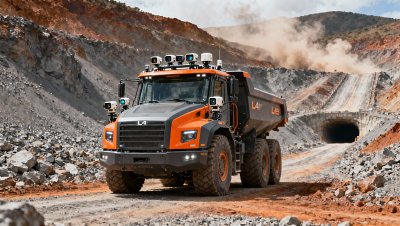
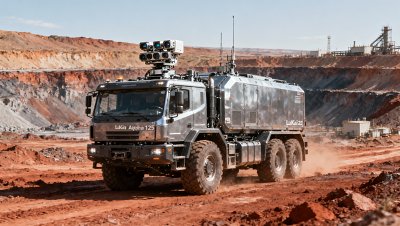
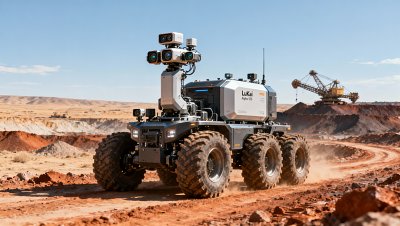
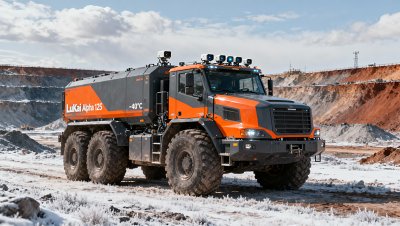
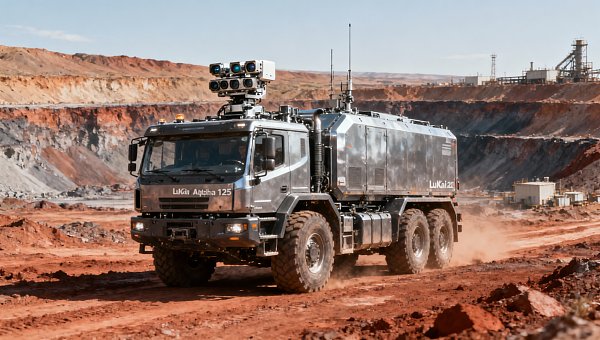
On May 13, 2026, LuKai Intelligent Driving announced the first batch of mass-produced Alpha 125 mining transport robots had been completed and shipped to a large copper mine in Kazakhstan. This milestone signals implications for global mining equipment trade, autonomous system integration services, and heavy-vehicle OEM supply chains — particularly where GNSS-denied operation, regulatory compliance in emerging markets, and 24/7 unmanned logistics are operational priorities.
Event Overview
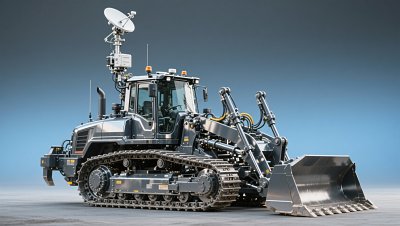
On May 13, 2026, LuKai Intelligent Driving confirmed the Alpha 125 mining transport robot entered mass production and began delivery. The initial order was dispatched to a major copper mining site in Kazakhstan. The vehicle features a domestically sourced heavy-duty truck chassis and LuKai’s fully in-house L4 autonomous driving system. It is certified for operation in GNSS-denied environments and has passed the Kazakhstan Mining Safety Certification (KAZMINE-2026).
Industries Affected by This Development
International Mining Equipment Exporters
These companies may face intensified competition in mid-to-high-end autonomous haulage tenders, especially in Central Asian and resource-rich developing markets. The Alpha 125’s KAZMINE-2026 certification sets a new local compliance benchmark — suggesting future procurement processes may require equivalent or comparable third-party safety validation for non-domestic systems.
OEM Suppliers of Heavy-Duty Chassis and Powertrains
Domestic Chinese chassis suppliers now appear integrated into a vertically aligned autonomous mining solution. This could shift sourcing preferences among robotics integrators toward chassis platforms with pre-validated mechanical interfaces for sensor mounting, power distribution, and thermal management — not just payload capacity or durability.
Autonomous System Integration Service Providers
Firms offering localization, certification support, or fleet management software for mining autonomy may see increased demand for GNSS-free navigation validation services — especially those familiar with CIS-region regulatory frameworks. KAZMINE-2026 compliance implies testing protocols covering underground or pit-edge signal degradation scenarios, which differs from standard ISO 26262 or SAE J3016 pathways.
Mining Operations & Contract Haulage Contractors
Operators evaluating long-term autonomous haulage contracts may begin weighting vendor capability on regulatory readiness in target jurisdictions more heavily than on technical specifications alone. The Alpha 125’s deployment indicates that full-stack autonomy + local certification can be delivered within 12–18 months of project award — compressing typical integration timelines previously observed with tier-one OEM partnerships.
What Relevant Enterprises or Practitioners Should Focus On Now
Monitor official updates on KAZMINE-2026 implementation guidance
The KAZMINE-2026 framework appears newly introduced; its scope (e.g., whether it applies to retrofit kits vs. purpose-built vehicles, or includes cybersecurity requirements) remains undefined publicly. Entities active in Kazakhstan or neighboring jurisdictions should track announcements from the Committee for Industrial Development and Industrial Safety under the Ministry of Industry and Construction of Kazakhstan.
Assess exposure to GNSS-reliant navigation solutions in current deployments
Operations using GPS- or GLONASS-dependent autonomy stacks — especially in deep-pit, tunnel, or high-latitude sites — should benchmark their existing positioning resilience against the Alpha 125’s stated GNSS-denied performance. This is not about immediate replacement, but about identifying near-term vulnerability points in current SLAs or maintenance agreements.
Distinguish between certification achievement and field-proven reliability
KAZMINE-2026 clearance confirms design compliance, not multi-year operational uptime or failure mode coverage. Procurement teams should avoid conflating regulatory approval with proven fleet availability metrics — particularly given the absence of published MTBF or incident reporting data for this product generation.
Review supply chain dependencies for localized service support
With deployment in Kazakhstan, post-sale technical support, spare parts logistics, and firmware update infrastructure become material execution risks. Companies considering similar deployments should audit whether their service networks include certified technicians, cold-chain-compatible component warehousing, and over-the-air update capabilities compliant with local telecom regulations.
Editorial Perspective / Industry Observation
Observably, this event functions less as a standalone product launch and more as a signal of maturing regional regulatory alignment for autonomous mining hardware. The combination of domestic chassis, full-stack software, and jurisdiction-specific certification suggests a replicable model — not just for Kazakhstan, but potentially for other CIS and Belt-and-Road partner countries with similar mining governance structures. Analysis shows that the commercial viability of such systems now hinges less on algorithmic novelty and more on cross-border certification portability and localized service scalability. From an industry perspective, this marks a transition phase: from R&D validation to regulated commercial deployment — where compliance velocity matters as much as technical capability.
It is currently more accurate to interpret this development as an early-stage market signal rather than a broad-based technology inflection point. Widespread adoption will depend on verifiable fleet performance data, repeat orders beyond the inaugural contract, and evidence of certification reciprocity across adjacent jurisdictions.
Conclusion
This delivery reflects a concrete step toward standardized, regulation-compliant autonomous haulage in resource-exporting economies — but one whose broader industry impact remains contingent on replication, service maturity, and transparency in operational outcomes. For now, it is best understood as a targeted capability demonstration in a specific regulatory and geographic context — not as evidence of imminent displacement of conventional mining logistics models.
Source Attribution
Main source: Official announcement by LuKai Intelligent Driving, dated May 13, 2026.
Points requiring ongoing observation: KAZMINE-2026 certification scope and applicability beyond this single vehicle model; public availability of operational performance data from the Kazakhstan deployment; confirmation of follow-on orders or expansion to additional jurisdictions.
Trending News
- How to compare concrete mixer truck suppliers by total landed cost
- How axle load limits affect low bed trailer exports to Southeast Asia
- How to locate a truck exhaust system leak before replacing parts
- When does heavy equipment transport require a lowboy trailer?
- When does a light commercial vehicle for urban delivery save fleet costs?
Tag
Recommended News
 Autonomous TrucksHong Kong Expo Highlights New Export Checks for L3+ Truck SystemsHong Kong Expo highlights new export checks for L3+ truck systems, from compliance files to delivery readiness. See what overseas fleet buyers and Tier 1 integrators may require next.
 Autonomous TrucksChina Enacts Unified L3 Truck Rule on June 10China Enacts Unified L3 Truck Rule on June 10: learn how the new L3 autonomous truck rule, V2X mandate, and liability shift reshape compliance, exports, and fleet risk.
 Autonomous TrucksChina Sets Unified Rules for L3 Autonomous TrucksChina sets unified rules for L3 autonomous trucks, defining accident liability within ODD conditions. Explore what it means for truck makers, fleets, compliance, and export growth.
 Autonomous TrucksNational Rule for L3 Autonomous Trucks Takes EffectNational Rule for L3 Autonomous Trucks takes effect nationwide, clarifying liability, insurance, compliance, and supplier risk. Learn what fleets, buyers, and operators must review now.
 Autonomous TrucksCodelco's L4 Mining Truck Tender Requires ISO 34502 ValidationCodelco's L4 mining truck tender mandates ISO 34502 validation — the first global operational use of this standard. Discover compliance insights, supplier impacts, and strategic actions for陆路运输设备 exporters and OEMs.
 Autonomous TrucksLuKai Alpha 125 Mining Transport Robot Enters Mass DeliveryLuKai Alpha 125 mining transport robot enters mass delivery — GNSS-denied, KAZMINE-2026 certified autonomous haulage for copper mines in Kazakhstan.
 Autonomous TrucksL4 Autonomous Container Tractor Chassis Emerges as New Export Vehicle for China's Smart Shipping StrategyL4 autonomous container tractor chassis: China's new export-ready smart shipping solution for global logistics—modular, UN R156-precompliant, and infrastructure-adaptive.
 Autonomous TrucksLuKai Alpha 125 Mining Robot Enters Mass DeliveryLuKai Alpha 125 mining robot — L4 autonomous haulage, 90-ton payload, GNSS-free navigation — now in mass delivery for global mines.
 Autonomous TrucksLuKai Alpha 125 Autonomous Mining Truck Enters Mass DeliveryLuKai Alpha 125 autonomous mining truck enters mass delivery — L4-level, 90-ton payload, −40°C certified. First units deployed in Kazakhstan copper mine.
 Autonomous TrucksBeijing to Open L4 Smart Truck Platoon Test Roads in Q3 2026L4 smart truck platoon testing lanes launching Q3 2026 on Beijing’s JingTai & JingXiong Expressways — key opportunity for V2X, platoon algorithms & smart logistics exporters.
 Autonomous TrucksBeijing to Open L4 Smart Truck Platooning Test on Jingxiong Expressway in 2026L4 smart truck platooning tests launch on Jingxiong Expressway in 2026—key opportunity for global transport tech integrators and fleet operators to validate C-V2X + BeiDou compliance.
 Autonomous TrucksPony.ai Launches Europe's First Commercial Robotaxi Service in CroatiaPony.ai launches Europe's first commercial Robotaxi service in Croatia, showcasing China's L4 autonomous driving tech meeting EU safety standards. A milestone for AV, logistics & transport industries.
 Autonomous TrucksInner Mongolia Pilot Zone Launches Cross-Border Autonomous Transport ChannelInner Mongolia's cross-border autonomous transport channel launches, revolutionizing logistics with smart vehicle tech. Key for automotive, logistics, and trade sectors under China-Mongolia-Russia Economic Corridor.
 Autonomous TrucksNeolix L4 Autonomous Delivery Vehicle Debuts at AMR Expo, Accelerating Global Smart LogisticsNeolix's L4 autonomous delivery vehicle debuts at AMR Expo, featuring temperature control & V2X tech. Approved for road tests in UAE, Singapore & Germany, revolutionizing global smart logistics for last-mile delivery.
 Autonomous TrucksNeolix L4 Autonomous Delivery Vehicle Debuts at AMR Expo, Accelerating 'Last Mile' SolutionsNeolix's L4 autonomous delivery vehicle debuts at AMR Expo, revolutionizing last-mile solutions with CE pre-assessment & UN-R155 certification. Discover how this smart logistics innovation cuts costs 15-20% for e-commerce and cross-border trade.
 Autonomous TrucksInner Mongolia Free Trade Zone Approved, Exploring Cross-Border Autonomous TransportChina's Inner Mongolia Free Trade Zone approval boosts autonomous cross-border transport, creating opportunities for L4 truck makers and Eurasian logistics. Explore policy impacts on smart freight and trade routes.
 Autonomous TrucksInner Mongolia Free Trade Zone Approved, Exploring Cross-Border Autonomous TransportChina's Inner Mongolia Free Trade Zone approved for autonomous cross-border transport, boosting smart logistics & Eurasian trade. Explore key impacts on autonomous driving, freight efficiency, and tech partnerships.
 Autonomous TrucksBeijing-Xiongan Commuter Express Launches with L4 Autonomous ShuttlesDiscover how the Beijing-Xiongan Commuter Express with L4 autonomous shuttles revolutionizes smart mobility. Learn about China's advanced AV technology and export potential for global buyers in transit solutions.
 Autonomous TrucksWhat autonomous driving readiness levels are supported by current GPS-tracked bulldozer platforms?BULLDOZER with GPS tracking supports Level 1–2 autonomy for precision pipeline & infrastructure work. Explore EXCAVATOR for pipeline installation, heavy truck chassis supplier for heavy haulage, and more on The Global Heavy Truck Industry Platform.