National Rule for L3 Autonomous Trucks Takes Effect
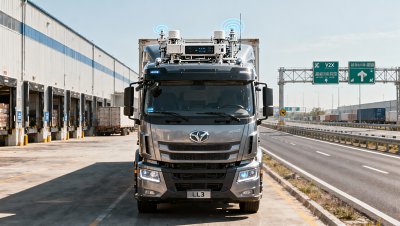
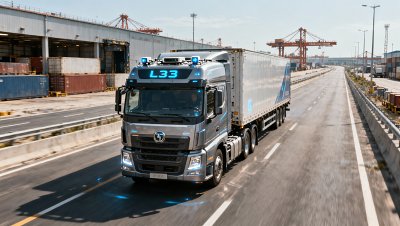
As of June 11, 2026, a nationwide operating rule for L3 autonomous heavy trucks has taken effect, turning a previously uncertain liability issue into a defined compliance condition for market participants. The change matters not only to vehicle owners and fleet managers, but also to system suppliers, insurers, cross-border operators, procurement teams, and overseas buyers, because responsibility allocation during autonomous system intervention now has a clearer legal basis and directly affects underwriting, due diligence, filing, contracting, and delivery risk review.
A Clearer Liability Baseline Enters Formal Operation
The confirmed development is that the Administrative Measures for the Operation of L3 Autonomous Intelligent Connected Heavy Trucks came into force nationwide on June 11, 2026.
The rule, in the form of a departmental regulation, for the first time clarifies accident liability when the autonomous driving system is engaged. Under the provided summary, the primary responsibility is borne by the vehicle owner or manager, while recourse against the system supplier remains possible.
The same summary indicates that this rule removes key obstacles for commercial insurance underwriting, cross-border operation filing, and overseas customer due diligence in procurement.
Where the Rule Change Is Most Likely to Be Felt
Insurance and operating risk review move onto firmer ground
From an industry perspective, insurers and fleet-side operating entities are likely to be among the first to feel the practical effect. The reason is straightforward: when liability during system intervention is no longer left undefined, underwriting review, policy design, and internal risk allocation can be assessed against a clearer responsibility framework. What deserves closer attention is whether companies now need more structured operating records, vehicle management documentation, and supplier liability arrangements to support coverage discussions and claims handling.
Cross-border filing and logistics planning gain a more usable compliance reference
For businesses involved in cross-border operations, the rule matters because filing and operational review often depend on whether responsibility boundaries are legible in advance. Analysis shows that a nationally unified rule can reduce uncertainty in documentation review, especially where transport operators, supply chain service providers, and project logistics teams need to show how operational responsibility is assigned. The immediate business effect is less about speed by default and more about having a clearer compliance narrative for filings and contractual review.
Overseas procurement and supplier screening become more document-driven
For overseas buyers and export-facing sales teams, the stated benefit in procurement due diligence is especially relevant. Observably, when accident responsibility and recourse pathways are expressly defined, procurement review can shift from abstract legal uncertainty toward concrete contract, system, and responsibility documents. That means technical documentation, supplier qualification files, liability allocation terms, and after-sales traceability materials may become more important in bid review and supplier onboarding.
System suppliers face greater follow-through pressure after delivery
Although the vehicle owner or manager bears primary responsibility under the rule summary, system suppliers are not outside the compliance picture because recourse remains possible. Analysis shows that this can sharpen attention on product documentation, interface records, service commitments, and evidence retention after delivery. The operational impact is likely to appear in contracting, warranty boundaries, technical support records, and quality traceability rather than in marketing claims alone.
What Companies Should Review Now
Check whether contracts match the new responsibility structure
Companies involved in operating, supplying, or procuring L3 autonomous heavy trucks should review whether contract language aligns with the rule’s stated allocation of primary responsibility and recourse. This is particularly relevant for supply agreements, service terms, procurement documents, and post-delivery support arrangements.
Prepare compliance files for insurance, filing, and buyer review
What deserves closer attention is document readiness. Based on the provided information, businesses may need to organize technical descriptions, operating responsibility records, supplier qualification materials, and other supporting files that can be used in insurance underwriting discussions, cross-border filing processes, and overseas customer due diligence. Since no further implementation detail is provided, this should be treated as a preparation priority rather than a confirmed checklist.
Watch for official wording and execution standards
Observably, the current development gives the market a formal rule baseline, but it does not by itself answer every execution question. Companies should continue monitoring how official wording is used in practice, how filing or review standards are expressed in transactional documents, and whether related compliance expectations become more specific in downstream procedures.
Reassess delivery and after-sales traceability expectations
Because recourse against system suppliers remains part of the framework, firms should pay attention to whether delivery packages, maintenance records, software-related documentation, and after-sales response mechanisms are adequate for later review. Analysis shows that traceability may matter not only for compliance discussions but also for procurement acceptance and post-incident responsibility handling.
Why This Looks Like an Execution Signal, Not Just a Policy Headline
Analysis shows that this development is more meaningful as a rule implementation signal than as a general technology statement. The key change is not simply that L3 autonomous heavy trucks are being discussed, but that a nationwide operating rule now defines the primary liability structure during system intervention in a formal regulatory form.
At the same time, it is more appropriate to understand this as a framework entering execution rather than a fully settled end state. Observably, the market still needs to watch how insurers, filing reviewers, procurement teams, and suppliers translate that framework into actual documentation standards, contract clauses, and operating expectations.
How the Market May Need to Read This Stage
The industry significance of this event lies in the move from uncertainty to a clearer operating rule for responsibility allocation. That shift can support more workable insurance review, cross-border filing preparation, and overseas procurement due diligence, but it does not eliminate the need for careful compliance follow-up.
A rational reading is that this is an already effective rule change with direct practical implications, while many execution details still need observation through market practice. For companies, the most appropriate response is to treat it as a real compliance development that affects documents, contracts, supplier review, and delivery risk management.
Basis of This Article and What Still Needs Verification
This article is generated from the user-provided news title, event date, and event summary. For developments of this type, commonly relevant source categories may include official announcements, releases from regulatory authorities, customs or trade administration information, industry association notices, standard-setting documents, and reporting by authoritative media.
No specific official source link was provided in the input, so the exact official publication path still requires follow-up verification. Observably, the items that still merit continued attention include implementation details, certification or compliance interpretation, changes in tender documentation, industry feedback, and how enterprises apply the rule in actual operations and procurement review.
Trending News
- How to assess a truck cement manufacturer’s build quality before ordering
- When does a truck trailer OEM make sense for private-label fleets?
- What to verify before choosing a water truck OEM for your fleet
- How to size a cab chassis truck for a fire department apparatus
- When does a truck off road setup need locking differentials?
Tag
Recommended News
 Autonomous TrucksHong Kong Expo Highlights New Export Checks for L3+ Truck SystemsHong Kong Expo highlights new export checks for L3+ truck systems, from compliance files to delivery readiness. See what overseas fleet buyers and Tier 1 integrators may require next.
 Autonomous TrucksChina Enacts Unified L3 Truck Rule on June 10China Enacts Unified L3 Truck Rule on June 10: learn how the new L3 autonomous truck rule, V2X mandate, and liability shift reshape compliance, exports, and fleet risk.
 Autonomous TrucksChina Sets Unified Rules for L3 Autonomous TrucksChina sets unified rules for L3 autonomous trucks, defining accident liability within ODD conditions. Explore what it means for truck makers, fleets, compliance, and export growth.
 Autonomous TrucksNational Rule for L3 Autonomous Trucks Takes EffectNational Rule for L3 Autonomous Trucks takes effect nationwide, clarifying liability, insurance, compliance, and supplier risk. Learn what fleets, buyers, and operators must review now.
 Autonomous TrucksCodelco's L4 Mining Truck Tender Requires ISO 34502 ValidationCodelco's L4 mining truck tender mandates ISO 34502 validation — the first global operational use of this standard. Discover compliance insights, supplier impacts, and strategic actions for陆路运输设备 exporters and OEMs.
 Autonomous TrucksLuKai Alpha 125 Mining Transport Robot Enters Mass DeliveryLuKai Alpha 125 mining transport robot enters mass delivery — GNSS-denied, KAZMINE-2026 certified autonomous haulage for copper mines in Kazakhstan.
 Autonomous TrucksL4 Autonomous Container Tractor Chassis Emerges as New Export Vehicle for China's Smart Shipping StrategyL4 autonomous container tractor chassis: China's new export-ready smart shipping solution for global logistics—modular, UN R156-precompliant, and infrastructure-adaptive.
 Autonomous TrucksLuKai Alpha 125 Mining Robot Enters Mass DeliveryLuKai Alpha 125 mining robot — L4 autonomous haulage, 90-ton payload, GNSS-free navigation — now in mass delivery for global mines.
 Autonomous TrucksLuKai Alpha 125 Autonomous Mining Truck Enters Mass DeliveryLuKai Alpha 125 autonomous mining truck enters mass delivery — L4-level, 90-ton payload, −40°C certified. First units deployed in Kazakhstan copper mine.
 Autonomous TrucksBeijing to Open L4 Smart Truck Platoon Test Roads in Q3 2026L4 smart truck platoon testing lanes launching Q3 2026 on Beijing’s JingTai & JingXiong Expressways — key opportunity for V2X, platoon algorithms & smart logistics exporters.
 Autonomous TrucksBeijing to Open L4 Smart Truck Platooning Test on Jingxiong Expressway in 2026L4 smart truck platooning tests launch on Jingxiong Expressway in 2026—key opportunity for global transport tech integrators and fleet operators to validate C-V2X + BeiDou compliance.
 Autonomous TrucksPony.ai Launches Europe's First Commercial Robotaxi Service in CroatiaPony.ai launches Europe's first commercial Robotaxi service in Croatia, showcasing China's L4 autonomous driving tech meeting EU safety standards. A milestone for AV, logistics & transport industries.
 Autonomous TrucksInner Mongolia Pilot Zone Launches Cross-Border Autonomous Transport ChannelInner Mongolia's cross-border autonomous transport channel launches, revolutionizing logistics with smart vehicle tech. Key for automotive, logistics, and trade sectors under China-Mongolia-Russia Economic Corridor.
 Autonomous TrucksNeolix L4 Autonomous Delivery Vehicle Debuts at AMR Expo, Accelerating Global Smart LogisticsNeolix's L4 autonomous delivery vehicle debuts at AMR Expo, featuring temperature control & V2X tech. Approved for road tests in UAE, Singapore & Germany, revolutionizing global smart logistics for last-mile delivery.
 Autonomous TrucksNeolix L4 Autonomous Delivery Vehicle Debuts at AMR Expo, Accelerating 'Last Mile' SolutionsNeolix's L4 autonomous delivery vehicle debuts at AMR Expo, revolutionizing last-mile solutions with CE pre-assessment & UN-R155 certification. Discover how this smart logistics innovation cuts costs 15-20% for e-commerce and cross-border trade.
 Autonomous TrucksInner Mongolia Free Trade Zone Approved, Exploring Cross-Border Autonomous TransportChina's Inner Mongolia Free Trade Zone approval boosts autonomous cross-border transport, creating opportunities for L4 truck makers and Eurasian logistics. Explore policy impacts on smart freight and trade routes.
 Autonomous TrucksInner Mongolia Free Trade Zone Approved, Exploring Cross-Border Autonomous TransportChina's Inner Mongolia Free Trade Zone approved for autonomous cross-border transport, boosting smart logistics & Eurasian trade. Explore key impacts on autonomous driving, freight efficiency, and tech partnerships.
 Autonomous TrucksBeijing-Xiongan Commuter Express Launches with L4 Autonomous ShuttlesDiscover how the Beijing-Xiongan Commuter Express with L4 autonomous shuttles revolutionizes smart mobility. Learn about China's advanced AV technology and export potential for global buyers in transit solutions.
 Autonomous TrucksWhat autonomous driving readiness levels are supported by current GPS-tracked bulldozer platforms?BULLDOZER with GPS tracking supports Level 1–2 autonomy for precision pipeline & infrastructure work. Explore EXCAVATOR for pipeline installation, heavy truck chassis supplier for heavy haulage, and more on The Global Heavy Truck Industry Platform.