Is the SHACMAN H3000 6×4 Cement Mixer suitable for large projects?
Is the SHACMAN H3000 6×4 Cement Mixer Suitable for Large Projects?
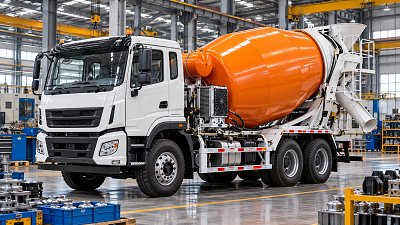
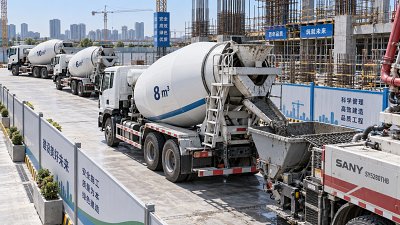
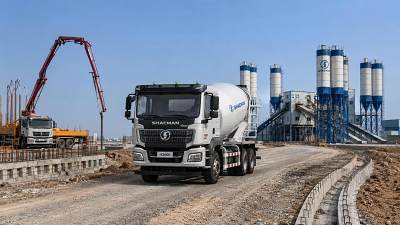
For project managers handling high-volume concrete work, choosing the right mixer truck can directly affect schedules, costs, and site productivity. The SHACMAN H3000 6×4 Cement Mixer is positioned for demanding construction applications, combining a heavy-duty truck chassis with concrete transport capability. The more useful question, however, is not whether the truck is “heavy-duty” in a brochure. It is whether the specified vehicle can maintain a predictable concrete supply rhythm on a particular project, with the available roads, batching plants, drivers, maintenance support, and local registration requirements.
For many infrastructure, commercial development, and municipal jobs, a 6×4 mixer is a sensible class of equipment. It generally offers a better balance of payload potential, traction, chassis durability, and operating cost than lighter axle configurations. But “large project” covers very different working conditions. A high-rise project with congested urban access is not the same as a highway package with long hauls, and neither behaves like a remote industrial site with rough temporary roads. The SHACMAN H3000 6×4 Cement Mixer can be suitable for large-scale work, provided the truck configuration and support plan are matched to the job rather than selected by model name alone.
Why the 6×4 layout matters on concrete projects
Concrete mixer trucks do not operate like ordinary freight vehicles. They carry a moving, time-sensitive load, often make repeated short cycles, spend long periods idling or crawling through a site, and may reverse onto uneven surfaces several times each shift. The vehicle is exposed to vibration, slurry, dust, washout water, and frequent stop-start operation. That is why the chassis deserves as much attention as the mixing drum.
A 6×4 arrangement typically places drive capability across two rear axles. In practical terms, this can be useful where a loaded mixer must enter partially prepared roads, wet construction zones, aggregate yards, bridge approaches, or large municipal worksites. It also distributes load more effectively than a simpler two-axle truck, although legal axle loads and gross vehicle limits remain decisive. A 6×4 truck is not a substitute for an off-road mixer or an articulated site solution, but it is often the more realistic choice where public-road travel and imperfect site access must coexist.
The SHACMAN H3000 platform is commonly considered by buyers looking for a conventional heavy-truck architecture rather than a highly specialized niche vehicle. That can be an advantage for contractors managing a mixed fleet. Cab familiarity, workshop processes, tire sourcing, filtration, and general chassis service may be easier to organize when the vehicle is based on a widely used truck platform. Still, the mixer body, hydraulic system, gearbox specification, axle ratios, and local parts availability need their own review. A strong truck base does not automatically make every mixer-bodied version equally suitable.
Where it is likely to fit well
The H3000 6×4 Cement Mixer is most credible for projects that need repeated delivery capacity rather than one-off concrete transport. This may include major residential developments, industrial facilities, road and bridge packages, urban infrastructure works, large precast operations, and municipal construction programs. In these settings, the truck’s value is usually measured by cycle consistency: leaving the plant on time, reaching the pour without undue delays, discharging safely, washing down, and returning for the next load.
It can also make sense for ready-mix producers serving several active sites from one or more batching plants. A 6×4 configuration is often a practical middle ground when delivery routes include both paved roads and unfinished access tracks. The extra driven axle capability may reduce the frequency of traction-related interruptions compared with a less robust road-oriented layout, especially after rain or during early site development.
For a contractor purchasing a small fleet, standardization is another reason to consider the model. Common chassis architecture can simplify driver familiarization and routine maintenance planning. That does not eliminate fleet-management complexity; concrete equipment still requires disciplined cleaning, drum inspection, hydraulic checks, and operator training. Yet purchasing several trucks around a consistent underlying platform can reduce the number of unrelated service procedures a workshop must manage.
The questions that determine suitability
The model designation alone does not answer the procurement question because export-market configurations can differ. Engine output, transmission choice, mixer drum capacity, hydraulic components, tire size, suspension arrangement, emissions configuration, and cab equipment may vary by supplier and destination. A project team should therefore evaluate the offered truck against the operating plan, not against a generic image or listing.
The legal-payload point is regularly underestimated. Buyers sometimes focus on nominal drum volume, then discover that the truck’s permitted loaded weight is constrained by local legislation, route conditions, or registration rules. Drum capacity, concrete density, truck tare weight, and axle distribution must be considered together. Procurement teams should ask for the exact chassis-and-body weight breakdown of the proposed unit and have it checked against the destination market’s rules before committing to a fleet quantity.
Large projects are won or lost on cycle time, not brochure capacity
On a continuous pour, the main risk is usually not that one mixer lacks theoretical capacity. It is that the delivery flow becomes uneven. A truck delayed at a gate, caught in city traffic, held at a congested pump, or waiting for a washout position can create a gap that affects crews, pumping equipment, and concrete quality management. A reliable mixer fleet is therefore planned around cycle time and contingency, not just the number of trucks on a purchase order.
When assessing the SHACMAN H3000 6×4 Cement Mixer, managers should map a normal operating day. Consider loading time at the batching plant, outbound journey, queuing at the project entrance, on-site maneuvering, discharge duration, washout, and return travel. Then identify the exceptions: rain, road closures, peak-hour traffic, night work, security checks, and breakdown recovery. A truck that looks economical on a simple distance calculation can become a poor operational fit if it cannot reliably complete the required number of cycles.
This is also where cab and driver factors become more than comfort issues. Long shifts in hot weather, repeated reversing, and frequent interaction with site personnel place real demands on operators. Visibility, mirror arrangement, camera options where offered, cab access, air-conditioning suitability, and the location of controls can influence fatigue and incident risk. These details should be inspected on the exact proposed vehicle, because trim levels and export specifications are not always identical.
Do not separate the truck from the mixer body
A recurring procurement mistake is to assess the truck manufacturer and the mixer body supplier as if they were unrelated decisions. On a concrete mixer, the integration matters. The power take-off arrangement, hydraulic pump, motor, reduction system, drum drive, water tank arrangement, chute design, controls, and subframe installation all affect daily usability and maintenance exposure.
Ask who is responsible when a fault sits between chassis and body systems. Is there one warranty contact, or will the fleet operator need to coordinate multiple parties? Are hydraulic and drum-drive spare parts stocked locally? Can the service team diagnose the body system as well as the truck? These are not administrative details. During a major pour, a mixer with a drum that will not rotate is operationally unavailable regardless of how healthy the engine may be.
The water system deserves practical attention as well. It supports cleaning and helps manage normal mixer operations, but it does not solve poor washout discipline. Contractors should ensure the site has controlled washout procedures, adequate water access, and staff responsibility for prompt cleaning. Hardened concrete buildup adds weight, reduces effective capacity, complicates balance, and can turn a manageable maintenance task into a costly intervention.
When a 6×4 H3000 may not be the right answer
There are situations where a SHACMAN H3000 6×4 Cement Mixer may be less suitable, even if the project itself is large. Extremely confined city-center jobs may prioritize a smaller footprint and tighter turning characteristics. Sites with soft ground, severe off-road terrain, or frequent deep-rut conditions may need a more specialized access strategy rather than expecting a road-based 6×4 mixer to solve every mobility problem. Very long delivery distances may require a broader review of batching-plant location, concrete mix design, dispatch control, and potentially intermediate supply planning.
The model may also be a weak choice where there is no credible service path. A lower acquisition price can be quickly outweighed by extended downtime if filters, brake components, electrical parts, hydraulic fittings, or body-specific spares must be imported for every repair. Before purchase, speak with the proposed supplier about recommended consumables, parts lists, service documentation, warranty boundaries, and realistic lead times. Vague assurances are not enough for a project that cannot pause its concrete schedule.
A more disciplined way to source the vehicle
International sourcing can widen the choice of chassis, mixer-body configurations, and supplier capabilities, but it also makes specification control more important. Platforms focused on the commercial vehicle and heavy equipment supply chain can help project teams compare manufacturers, distributors, product categories, and available industry information in one place. The Global Heavy Truck Industry Platform, for example, is designed to connect buyers with suppliers across complete trucks, truck chassis and cabs, construction machinery, trailers, and spare parts. For a fleet buyer, the useful value is not simply product discovery; it is the ability to compare possible supply and support routes before narrowing the shortlist.
A responsible request for quotation should describe the job, not merely request an H3000 mixer price. Include the destination country, intended drum size, expected daily operating hours, road conditions, altitude or climate where relevant, legal weight restrictions, emissions or registration requirements, preferred transmission arrangement, spare-parts package, and service expectations. If the project has unusual access conditions, provide them early. Suppliers can only propose a meaningful configuration when they understand what the vehicle will actually do.
It is worth comparing at least three layers of cost: purchase price, operating cost, and disruption cost. Fuel consumption, tires, preventive maintenance, driver retention, parts availability, and resale prospects all belong in the conversation. The disruption cost is harder to quantify, but it is often the one project managers feel most sharply when a pour window is lost or a pump crew is waiting for trucks.
The practical verdict
The SHACMAN H3000 6×4 Cement Mixer can be a suitable option for large projects where concrete must move reliably over a mix of public roads and developing construction access routes. Its 6×4 format is generally aligned with the traction, load distribution, and repeated-cycle demands associated with substantial construction work. It is particularly worth evaluating for contractors and ready-mix operators that need a durable, standardized heavy-truck-based mixer fleet.
But the decision should remain conditional. Confirm the exact vehicle specification, legal payload, drum-body integration, route constraints, service support, and dispatch model before treating it as the right fleet solution. Large projects rarely fail because someone chose the wrong badge on the grille. They run into trouble when the truck, plant, road, crew, and maintenance plan were never evaluated as one operating system.
Trending News
- What documents are needed to export a low bed trailer to Southeast Asia?
- What to verify before choosing a delivery truck supplier for school transportation
- What an excavator manufacturer catalog should show before you compare models
- What to check before appointing a bulldozer distributor
- How to verify supplier reliability when sourcing bulldozers overseas
Tag
Recommended News
 Buying GuideWhat to verify before choosing a delivery truck supplier for school transportationDelivery truck supplier for school transportation: verify route fit, payload, safety, compliance, service support, and total cost before choosing a reliable partner.
 Buying GuideWhat an excavator manufacturer catalog should show before you compare modelsExcavator manufacturer catalog guide: verify supplier identity, configurations, hydraulics, compliance, parts support, and delivery readiness before comparing models.
 Buying GuideWhat to check before appointing a bulldozer distributorBulldozer distributor selection guide: evaluate service, parts availability, warranty, pricing, compliance, and lifecycle value to reduce downtime and protect fleet investment.
 Buying GuideWhat to verify before choosing a truck cement mixer supplierTruck cement mixer supplier checklist: verify chassis fit, drum quality, hydraulics, compliance, spare parts, and after-sales support before you buy.
 Buying GuideHow to verify a truck spare parts supplier before placing a bulk orderTruck spare parts supplier verification made practical: learn how to check part specifications, factory control, test records, samples, pricing, and delivery capability before placing a bulk order.
 Buying GuideWhat size truck container is right for a typical freight load?Truck container sizing made simple: compare payload, volume, pallet layouts, route access, and loading needs to choose the most efficient freight solution.
 Buying GuideWhat drives semi trailer price differences between similar models?Semi trailer price differences come down to frame materials, axles, suspension, coating, and configuration. Compare specifications line by line to choose lasting value.
 Buying GuideHow to compare excavator manufacturer price lists before requesting quotesCompare an excavator manufacturer price list with confidence. Learn to normalize configurations, calculate landed costs, assess options and service, and create stronger RFQs.
 Buying GuideHow to choose a mixer truck drum capacity for your concrete pourMixer truck capacity guide: match drum size to pour rate, legal payload, site access, and delivery cycles for efficient, reliable concrete placement.
 Buying GuideHow to size a bulldozer for construction site grading workBulldozer for construction sizing guide: match weight, blade, traction, grade control, and transport needs to improve grading productivity and costs.
 Buying GuideHow to assess a truck cement manufacturer’s build quality before orderingTruck cement manufacturer build quality: assess tank steel, welding, chassis integration, pneumatic systems, factory QC, and inspection evidence before ordering.
 Buying GuideWhen does a truck trailer OEM make sense for private-label fleets?Truck trailer OEM programs help private-label fleets cut lifecycle costs, standardize operations, and improve uptime. Learn when customization delivers real commercial value.
 Buying GuideWhat to verify before choosing a water truck OEM for your fleetWater truck OEM selection guide: verify chassis compatibility, tank quality, pump performance, compliance, and service support to build a safer, more reliable fleet.
 Buying GuideHow to size a cab chassis truck for a fire department apparatusCab chassis truck for fire department sizing guide: balance GVWR, axle loads, wheelbase, water tank placement, and mission needs for safer apparatus design.
 Buying GuideWhat to verify before choosing a truck chassis supplierChoose the right truck chassis supplier with a practical checklist for application fit, axle ratings, body integration, quality control, delivery reliability, and after-sales support.
 Buying GuideHow to choose a logging truck for steep and rough forest roadsLogging truck selection for steep, rough forest roads: compare traction, braking, gearing, chassis strength, tires, and supplier support for safer, more reliable hauling.
 Buying GuideHow to choose a flatbed trailer deck length for oversized loadsFlatbed trailer deck length guide for oversized loads: balance cargo support, axle weight, securement space, overhang, and route access for safer transport.
 Buying GuideHow to assess a truck chassis supplier for trailer manufacturingTruck chassis supplier for trailer manufacturing: learn how to assess technical fit, quality control, engineering support, and delivery reliability for smarter sourcing.
 Buying GuideIs the SHACMAN H3000 6×4 Cement Mixer suitable for large projects?SHACMAN H3000 6×4 Cement Mixer: assess payload, cycle time, traction, and service support to see if it can keep large concrete projects moving efficiently.
 Buying GuideHow to evaluate heavy duty trucks for sale in Russia before buyingHeavy duty trucks for sale in Russia: learn how to compare specifications, winter readiness, service support, supplier reliability, and total ownership costs before buying.
 Buying GuideWhat to verify before choosing a logging truck producerChoose a logging truck producer with confidence: verify chassis strength, load security, compliance, service support, and delivery control for demanding forestry routes.
 Buying GuideHow to choose a truck excavator for confined construction sitesTruck excavator selection for confined sites: explore access, reach, stability, attachments, and safety factors to choose a productive, space-efficient solution.
 Buying GuideHow to choose a bulk trailer for high-volume aggregate haulingBulk trailer selection guide for high-volume aggregate hauling—optimize payload, body type, safety, compliance, and total cost for reliable fleet performance.
 Buying GuideHow to compare truck tire rolling resistance for lower fleet fuel costsTruck tire rolling resistance explained: compare test data, tread design, maintenance, and total cost to cut fleet fuel costs with confidence.
 Buying GuideHow to evaluate quality control before choosing a truck trailer OEMTruck trailer OEM quality control: learn how to assess design validation, welding, material traceability, testing, compliance, and factory audits before you buy.