How to assess a truck chassis supplier for trailer manufacturing
Selecting a truck chassis supplier for trailer manufacturing is not a simple exercise in comparing unit prices. A chassis that looks suitable on a quotation can create production delays, poor body integration, premature structural issues, or difficult service claims once it reaches the road. The supplier should be assessed as a long-term manufacturing partner: one that can consistently provide the right specification, documentation, quality evidence, delivery commitment, and technical response for the trailer program being built.
The most reliable decision starts with the trailer itself. Before evaluating suppliers, define the intended trailer type, operating conditions, target markets, axle arrangement, body weight, load distribution, coupling configuration, and expected service environment. A chassis for a regional curtain-side trailer has different priorities from one used for a tipper semi-trailer, tanker, lowbed, refrigerated unit, or heavy-haul application. Without a clear application brief, procurement teams may compare suppliers against an incomplete specification and select a chassis that is only suitable on paper.
Assess the chassis against the trailer design, not a generic specification
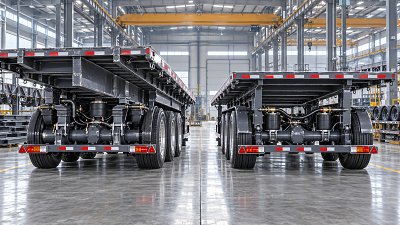
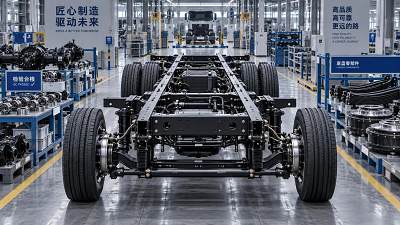
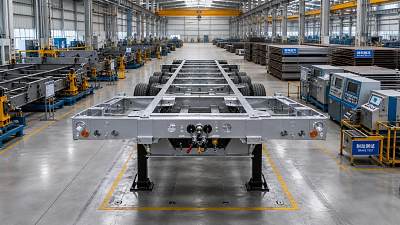
A truck or trailer chassis is a structural foundation, not an interchangeable commodity. Its frame dimensions, material grade, cross-member layout, mounting points, suspension interface, braking arrangement, electrical routing, and coupling position all affect how efficiently the trailer can be manufactured and how it performs in service.
Start by asking the supplier to respond to a technical requirement sheet rather than simply request their standard catalogue. The response should make clear which requirements are standard, which need engineering changes, and which cannot be supported. A supplier that answers every request with “customizable” but provides no drawings, calculation basis, or engineering review process should be treated cautiously.
For trailer manufacturing, the following compatibility points deserve close attention:
- Frame section and load path: The main rails and cross-members must suit the intended payload, deck structure, body mounts, and concentrated loads. This is particularly important where a trailer body transfers force into limited mounting areas.
- Wheelbase and axle spacing: These dimensions affect load distribution, turning behavior, tire wear, body layout, and compliance with local road-use rules.
- Suspension and axle interface: Check whether the chassis is designed around the axle and suspension package you plan to use, or whether modifications are needed.
- Fifth-wheel and kingpin arrangement: Coupling height, kingpin position, front overhang, and landing gear location must work as a system. Small dimensional mismatches can complicate body installation or create an unsuitable tractor-trailer combination.
- Brake and electrical integration: Confirm connector types, air line routing, valve locations, ABS or EBS provisions where applicable, and protected routing for wiring and hoses.
- Corrosion protection: The required coating approach depends on the operating environment. Cross-border transport, winter road exposure, coastal use, and corrosive cargo operations may require more than a standard painted finish.
A good supplier will ask questions about the trailer body, not only about chassis quantity. That is usually a sign that its technical team understands integration risk.
Look for evidence of manufacturing control
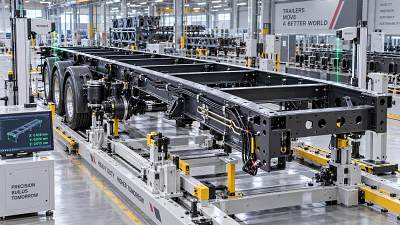
Factory capability matters, but the more useful question is whether the supplier can repeatedly produce the same chassis within agreed tolerances. A well-equipped plant does not automatically guarantee consistency. Procurement should focus on the controls behind cutting, drilling, welding, alignment, coating, assembly, and final inspection.
Ask for a practical explanation of how the supplier manages frame alignment and weld quality. Trailer chassis can be difficult to correct after body installation. If rails are not straight, mounting holes are inconsistent, or axle-related points are mislocated, the trailer manufacturer may need rework that consumes more time and cost than the initial price saving.
Useful supplier evidence includes process flow documents, incoming material controls, traceability practices, inspection records, welding qualifications where relevant, and examples of dimensional inspection reports. The goal is not to collect paperwork for its own sake. It is to determine whether a nonconforming frame will be identified before shipment rather than after it has entered the production line.
Separate quoted capacity from usable capacity
Many sourcing decisions fail because the stated load capacity is accepted without examining the operating assumptions behind it. A chassis may be structurally appropriate for one body and duty cycle but unsuitable once additional equipment, uneven loading, poor road surfaces, or repeated loading cycles are introduced.
Discuss the complete operating condition with the supplier. For example, a chassis used beneath a flatbed trailer with broadly distributed cargo faces different stresses from a chassis supporting equipment with concentrated wheel loads. A tipper trailer introduces repeated torsional forces during raising and unloading. A lowbed may require a different frame geometry to balance deck height and structural rigidity. A tanker application requires careful attention to mounting and load movement.
Do not evaluate payload in isolation. Consider gross combination weight, tare weight, body weight, auxiliary equipment, cargo distribution, route conditions, and the expected frequency of use. Where the trailer will operate over rough surfaces, construction sites, mines, or unpaved roads, a chassis designed for ordinary highway duty may not provide the durability margin needed for the application.
Evaluate engineering support before placing a production order
Technical support becomes most valuable when a design is changing, a prototype needs adjustment, or a service issue appears after delivery. A supplier that can provide drawings quickly, answer integration questions clearly, and manage approved revisions can reduce risk across the whole trailer manufacturing process.
Ask how the supplier handles technical communication. Can it provide general arrangement drawings, interface dimensions, component lists, and installation guidance in a usable format? Is there a defined contact for engineering questions? Can the supplier support a sample build or first-article inspection before full production begins?
For an established trailer model with a proven chassis configuration, standardization may be more valuable than customization. A stable, repeatable platform simplifies purchasing, inventory planning, assembly procedures, and spare-parts support. Custom engineering is more appropriate when the trailer has a distinct operating purpose or when the standard platform creates compromises in payload, body layout, or service life.
One common mistake is to treat drawings as a sales attachment rather than a controlled manufacturing document. The purchase order should identify the approved revision, critical dimensions, agreed components, finish requirements, and any special inspection conditions. This protects both the trailer manufacturer and the supplier from confusion when repeat orders are placed months later.
Test delivery reliability through the supplier’s process
Delivery performance should be assessed through evidence, not a promised lead time. Chassis delays can stop a trailer assembly line even when other components are available. The financial impact often comes from idle labor, missed shipment schedules, and work-in-progress congestion rather than from the chassis price itself.
Ask how the supplier plans production, manages material availability, handles peak demand, and communicates delays. A dependable partner should be able to explain its production stages and identify the point at which an order becomes fixed for specification, materials, and delivery. For repeat programs, discuss forecast sharing, batch sizes, safety stock for critical components, and the practical consequences of order changes.
International purchasing adds further considerations. Packaging must protect exposed interfaces, brake lines, wiring, coated surfaces, and loose components during loading and transit. Shipment documentation should match the supplied configuration, while the supplier should understand the export packing, labeling, and document discipline expected in cross-border trade. These details are less visible than frame design, but they can create costly receiving problems.
Use samples and supplier audits proportionately
A sample chassis is valuable when it is evaluated as a production trial, not merely inspected on arrival. Install the intended body, check fixture compatibility, verify mounting locations, assess routing for air and electrical systems, and record any adjustment needed during assembly. The trial should also confirm whether the chassis specification supports efficient access for maintenance items such as brakes, suspension components, landing gear, and electrical connections.
An audit is especially useful when the order is high value, technically demanding, or expected to become a repeat program. It does not need to become an exhaustive compliance exercise. Focus on the processes that directly affect the chassis you are buying: material handling, fabrication control, welding, inspection, revision control, packaging, and corrective-action handling.
For smaller or geographically distant sourcing projects, procurement teams can still reduce risk by requesting structured factory information, production photos tied to the order, inspection records, packing details, and a clear pre-shipment approval process. The objective is visibility into actual production, not simply more marketing material.
Compare suppliers on total manufacturing value
The lowest chassis quotation can be the most expensive choice if it causes fitting work, delayed assembly, inconsistent quality, higher warranty exposure, or difficulty obtaining replacement parts. Build a comparison that includes price, but give each supplier a score for technical fit, documented quality control, engineering response, lead-time credibility, commercial clarity, and after-sales support.
It is also useful to distinguish between a supplier that can provide a chassis and one that can support a trailer manufacturing program. The second type understands repeatability, approved specifications, line-side delivery needs, revision discipline, and the cost of inconsistency. That distinction becomes more important as production volume or technical complexity increases.
Digital sourcing platforms can help narrow the initial supplier list, particularly when a purchasing team needs to compare manufacturers across regions. The Global Heavy Truck Industry Platform brings together suppliers across truck chassis, trailers, commercial vehicles, and related parts, allowing buyers to review product categories and identify potential partners within the wider heavy-transport supply chain. It is most useful at the discovery stage when combined with a detailed technical evaluation, direct supplier communication, and a controlled sample or audit process.
Questions to resolve before issuing a purchase order
- Is the chassis specification fully matched to the intended trailer body and duty cycle?
- Which drawings and component configurations are approved for production?
- Which dimensions and assembly points are considered critical and inspected?
- What happens if a supplied chassis does not match the approved specification?
- How are engineering changes controlled across repeat orders?
- What packaging method protects the chassis and its installed systems in transit?
- Who provides technical support during prototype assembly and subsequent production?
- Can the supplier support the expected order rhythm without compromising consistency?
A capable chassis partner should make these questions easier to answer, not harder. The strongest purchasing decision is usually built around a defined application, an approved technical baseline, evidence of controlled production, and a supplier relationship that remains responsive after the first shipment leaves the factory.
Trending News
- What documents are needed to export a low bed trailer to Southeast Asia?
- What to verify before choosing a delivery truck supplier for school transportation
- What an excavator manufacturer catalog should show before you compare models
- What to check before appointing a bulldozer distributor
- How to verify supplier reliability when sourcing bulldozers overseas
Tag
Recommended News
 Buying GuideWhat to verify before choosing a delivery truck supplier for school transportationDelivery truck supplier for school transportation: verify route fit, payload, safety, compliance, service support, and total cost before choosing a reliable partner.
 Buying GuideWhat an excavator manufacturer catalog should show before you compare modelsExcavator manufacturer catalog guide: verify supplier identity, configurations, hydraulics, compliance, parts support, and delivery readiness before comparing models.
 Buying GuideWhat to check before appointing a bulldozer distributorBulldozer distributor selection guide: evaluate service, parts availability, warranty, pricing, compliance, and lifecycle value to reduce downtime and protect fleet investment.
 Buying GuideWhat to verify before choosing a truck cement mixer supplierTruck cement mixer supplier checklist: verify chassis fit, drum quality, hydraulics, compliance, spare parts, and after-sales support before you buy.
 Buying GuideHow to verify a truck spare parts supplier before placing a bulk orderTruck spare parts supplier verification made practical: learn how to check part specifications, factory control, test records, samples, pricing, and delivery capability before placing a bulk order.
 Buying GuideWhat size truck container is right for a typical freight load?Truck container sizing made simple: compare payload, volume, pallet layouts, route access, and loading needs to choose the most efficient freight solution.
 Buying GuideWhat drives semi trailer price differences between similar models?Semi trailer price differences come down to frame materials, axles, suspension, coating, and configuration. Compare specifications line by line to choose lasting value.
 Buying GuideHow to compare excavator manufacturer price lists before requesting quotesCompare an excavator manufacturer price list with confidence. Learn to normalize configurations, calculate landed costs, assess options and service, and create stronger RFQs.
 Buying GuideHow to choose a mixer truck drum capacity for your concrete pourMixer truck capacity guide: match drum size to pour rate, legal payload, site access, and delivery cycles for efficient, reliable concrete placement.
 Buying GuideHow to size a bulldozer for construction site grading workBulldozer for construction sizing guide: match weight, blade, traction, grade control, and transport needs to improve grading productivity and costs.
 Buying GuideHow to assess a truck cement manufacturer’s build quality before orderingTruck cement manufacturer build quality: assess tank steel, welding, chassis integration, pneumatic systems, factory QC, and inspection evidence before ordering.
 Buying GuideWhen does a truck trailer OEM make sense for private-label fleets?Truck trailer OEM programs help private-label fleets cut lifecycle costs, standardize operations, and improve uptime. Learn when customization delivers real commercial value.
 Buying GuideWhat to verify before choosing a water truck OEM for your fleetWater truck OEM selection guide: verify chassis compatibility, tank quality, pump performance, compliance, and service support to build a safer, more reliable fleet.
 Buying GuideHow to size a cab chassis truck for a fire department apparatusCab chassis truck for fire department sizing guide: balance GVWR, axle loads, wheelbase, water tank placement, and mission needs for safer apparatus design.
 Buying GuideWhat to verify before choosing a truck chassis supplierChoose the right truck chassis supplier with a practical checklist for application fit, axle ratings, body integration, quality control, delivery reliability, and after-sales support.
 Buying GuideHow to choose a logging truck for steep and rough forest roadsLogging truck selection for steep, rough forest roads: compare traction, braking, gearing, chassis strength, tires, and supplier support for safer, more reliable hauling.
 Buying GuideHow to choose a flatbed trailer deck length for oversized loadsFlatbed trailer deck length guide for oversized loads: balance cargo support, axle weight, securement space, overhang, and route access for safer transport.
 Buying GuideHow to assess a truck chassis supplier for trailer manufacturingTruck chassis supplier for trailer manufacturing: learn how to assess technical fit, quality control, engineering support, and delivery reliability for smarter sourcing.
 Buying GuideIs the SHACMAN H3000 6×4 Cement Mixer suitable for large projects?SHACMAN H3000 6×4 Cement Mixer: assess payload, cycle time, traction, and service support to see if it can keep large concrete projects moving efficiently.
 Buying GuideHow to evaluate heavy duty trucks for sale in Russia before buyingHeavy duty trucks for sale in Russia: learn how to compare specifications, winter readiness, service support, supplier reliability, and total ownership costs before buying.
 Buying GuideWhat to verify before choosing a logging truck producerChoose a logging truck producer with confidence: verify chassis strength, load security, compliance, service support, and delivery control for demanding forestry routes.
 Buying GuideHow to choose a truck excavator for confined construction sitesTruck excavator selection for confined sites: explore access, reach, stability, attachments, and safety factors to choose a productive, space-efficient solution.
 Buying GuideHow to choose a bulk trailer for high-volume aggregate haulingBulk trailer selection guide for high-volume aggregate hauling—optimize payload, body type, safety, compliance, and total cost for reliable fleet performance.
 Buying GuideHow to compare truck tire rolling resistance for lower fleet fuel costsTruck tire rolling resistance explained: compare test data, tread design, maintenance, and total cost to cut fleet fuel costs with confidence.
 Buying GuideHow to evaluate quality control before choosing a truck trailer OEMTruck trailer OEM quality control: learn how to assess design validation, welding, material traceability, testing, compliance, and factory audits before you buy.