How to Choose Commercial Vehicle Parts That Reduce Downtime
How to Choose Commercial Vehicle Parts That Reduce Downtime
Choosing the right commercial vehicle parts is not just a maintenance issue. It is a direct business decision that affects uptime, delivery performance, repair speed, and total operating cost.
When a truck stays off the road, costs rise fast. Labor schedules shift, deliveries get delayed, and customer confidence can weaken. That is why part selection deserves a more structured approach.
In real purchasing work, the lowest unit price rarely tells the full story. A cheaper component can create longer installation time, early failure, or poor fitment across different vehicle models.
The better strategy is to evaluate commercial vehicle parts through the lens of downtime risk. That means looking at compatibility, supplier reliability, lead time, certification, and after-sales support together.
This guide explains how to compare commercial vehicle parts more effectively, avoid costly sourcing mistakes, and build a parts plan that supports steady fleet operations.
Start with the Real Cause of Downtime
Before reviewing suppliers, define what downtime looks like in your operation. Some fleets lose time from frequent brake wear. Others struggle with electrical failures, suspension issues, or delayed replacement cycles.
This matters because not all commercial vehicle parts have the same business impact. A low-value seal can stop a high-value asset. A common filter can become critical if supply is unstable.
Look at maintenance records and ask three practical questions:
- Which parts fail most often?
- Which failures keep vehicles idle longest?
- Which parts are hardest to source quickly?
Once those patterns are visible, commercial vehicle parts can be ranked by operational risk rather than by price alone. That usually leads to better sourcing decisions.
Check Fitment Before You Compare Prices
Compatibility is one of the most common reasons for avoidable downtime. A part may look correct on paper, yet still create installation delays, performance issues, or repeat workshop visits.
For commercial vehicle parts, fitment should be verified against vehicle brand, model, year, engine configuration, axle type, and application environment. That is especially important in mixed fleets.
Do not rely only on generic descriptions. Ask suppliers for cross-reference numbers, technical drawings, dimensional data, and tested application records.
A good sourcing checklist for commercial vehicle parts should include:
- OEM number and interchange number verification
- Material specification and performance tolerance
- Installation notes for specific truck platforms
- Warranty scope and known usage limits
This step may seem slow at first. In practice, it reduces emergency orders, return disputes, and workshop bottlenecks later.
Focus on Quality Signals That Predict Service Life
Not all commercial vehicle parts marketed as heavy-duty deliver the same real-world durability. Product claims need to be backed by clear quality signals.
Start with manufacturing consistency. Ask where the part is produced, how batches are tracked, and what inspection process is used before shipment.
Then review available standards and testing records. Depending on the category, relevant references may include ISO systems, material reports, fatigue testing, corrosion testing, or pressure validation.
Useful quality questions include:
- Is the product tested under commercial load conditions?
- Can the supplier provide batch traceability?
- Are failure rates monitored and shared?
- Does packaging protect the part during long export transit?
The strongest commercial vehicle parts suppliers usually answer these questions quickly and with documents, not vague assurances.
Evaluate Suppliers Like Long-Term Risk Partners
A reliable part from an unreliable supplier still creates downtime. Delivery inconsistency, poor communication, and weak claims handling can disrupt maintenance planning just as much as product failure.
That is why supplier evaluation should go beyond product catalogs. It should include operating capability, export experience, and responsiveness under pressure.
When comparing commercial vehicle parts sources, review these points carefully:
- Inventory depth for fast-moving items
- Stable lead times across seasons
- Export documentation accuracy
- Response speed for technical questions
- Ability to support repeat orders consistently
From a market perspective, stronger suppliers are also more transparent. They share product data, factory information, and application references without hesitation.
Platforms that connect global buyers with verified manufacturers and distributors can make this step easier. They help compare commercial vehicle parts suppliers across product range, trade readiness, and industry specialization.
Balance Unit Price with Total Downtime Cost
Price matters, but downtime costs more. This is where many sourcing decisions go off track. A lower purchase price can hide a higher lifecycle cost.
For commercial vehicle parts, total value should include service life, installation speed, return frequency, warranty handling, and the cost of keeping spare stock.
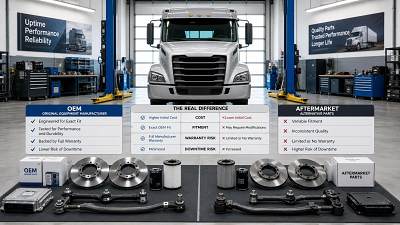
A simple comparison model can help:
When commercial vehicle parts are assessed this way, the best option is often not the cheapest one. It is the one that keeps trucks productive for longer.
Prioritize Availability for Critical Parts Categories
Some components deserve stronger stocking strategies because they fail often or stop operations immediately. Recent supply chain shifts have made this even more important.
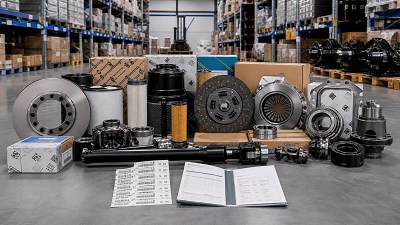
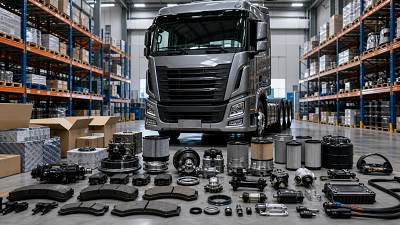
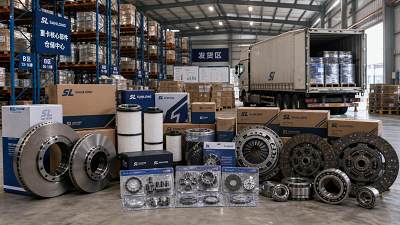
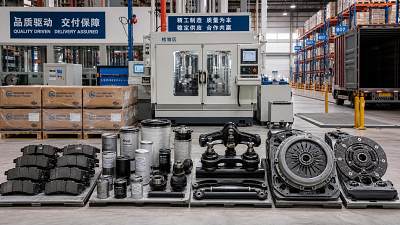
In many fleets, critical commercial vehicle parts include brake components, filters, bearings, suspension parts, clutch items, lighting systems, sensors, and selected engine accessories.
For these categories, buying strategy should combine product quality with replenishment speed. Even the best part cannot reduce downtime if it arrives too late.
A practical approach is to divide commercial vehicle parts into three levels:
- Critical parts that need local or near-stock availability
- Routine parts that can follow planned replenishment cycles
- Low-turn parts that can be ordered on demand
This framework supports better working capital control while protecting operational continuity.
Use Digital Sourcing Tools to Compare Faster
As product choices expand globally, digital sourcing has become more valuable. It shortens supplier discovery time and improves access to broader product data.
A specialized B2B marketplace for heavy trucks and equipment can help buyers compare commercial vehicle parts across multiple manufacturers, categories, and regions in one place.
This is especially useful when sourcing across truck chassis, complete trucks, trailers, construction machinery, and spare parts that serve different transport applications.
The value is not only product visibility. Better platforms also support supplier screening, market insight, and faster decision-making for commercial vehicle parts procurement.
In actual business, this means less time chasing incomplete quotes and more time evaluating fit, risk, and long-term supply stability.
Build a Smarter Decision Checklist
A strong buying process does not need to be complicated. It just needs to be consistent. Before confirming any order, run through a simple decision checklist.
- Confirm the part matches the exact vehicle application
- Review certifications, test records, and traceability
- Check lead time and current stock position
- Compare warranty terms and claims process
- Estimate lifecycle value, not only invoice price
- Assess the supplier’s consistency on repeat supply
This kind of discipline improves sourcing accuracy over time. It also makes commercial vehicle parts decisions easier to justify internally.
Final Thought
Reducing downtime starts long before a repair begins. It starts with choosing commercial vehicle parts that fit correctly, last longer, arrive on time, and come from dependable suppliers.
The most effective buying decisions connect technical detail with operational reality. When part quality, supply reliability, and lifecycle cost are evaluated together, fleet performance becomes more predictable.
For businesses sourcing across the global heavy truck ecosystem, a specialized industry platform can make that process more transparent and efficient. It helps identify trusted suppliers, compare commercial vehicle parts with greater confidence, and support more resilient maintenance planning.
The next smart step is to review your highest-risk parts categories, tighten evaluation standards, and align sourcing choices with uptime goals. That is how better parts decisions turn into stronger operations.
Trending News
- How to compare concrete mixer truck suppliers by total landed cost
- How axle load limits affect low bed trailer exports to Southeast Asia
- How to locate a truck exhaust system leak before replacing parts
- When does heavy equipment transport require a lowboy trailer?
- When does a light commercial vehicle for urban delivery save fleet costs?
Tag
Recommended News
 Truck Parts IndustryWhat causes a truck injector to fail prematurely?Truck injector failure can stem from fuel contamination, water, wiring faults, heat, or incorrect installation. Discover practical diagnostic steps to prevent repeat repairs.
 Truck Parts IndustryEU REACH Rule Takes Effect for Truck Rubber PartsEU REACH Rule takes effect for truck rubber parts exported to the EU. Learn how SCIP reporting, SVHC declarations, and supply chain compliance now impact truck manufacturers and suppliers.
 Truck Parts IndustryHow to Evaluate Commercial Vehicle Parts With Eco-Friendly Materials for Durability and ComplianceCommercial vehicle parts with eco-friendly materials require more than green claims. Learn how to assess durability, compliance, and supplier reliability for smarter sourcing.
 Truck Parts IndustryHow to Evaluate a Truck Parts Supplier Beyond Unit PriceTruck parts supplier selection should go beyond unit price. Learn how to assess quality, traceability, compliance, delivery, and support to reduce fleet risk and total cost.
 Truck Parts IndustryVietnam to Require QR Traceability Labels on Imported Heavy-Truck PartsVietnam to Require QR Traceability Labels on Imported Heavy-Truck Parts from Aug 1, 2026. Learn scope, VNQR-2025 rules, VITRAC links, and how to avoid port refusal and fines.
 Truck Parts IndustryHow to Evaluate a Truck Spare Parts Supplier for Long-Term Cost ControlTruck spare parts supplier selection affects far more than price. Learn how to compare quality, delivery, traceability, and hidden costs to protect fleet uptime and control long-term expenses.
 Truck Parts IndustryFuel Injection Pump Failure Signs and What They Mean for Engine PerformanceFuel injection pump failure signs can quickly reduce truck power, raise fuel use, and trigger hard starts. Learn what each symptom means and when to act before costly downtime.
 Truck Parts IndustryExcavator Attachment Selection for Demolition and Site PrepExcavator attachment selection for demolition and site prep: compare breakers, grapples, crushers, and buckets to boost productivity, safety, and ROI.
 Truck Parts IndustryTruck Engine Overhaul or Replacement: Which Costs Less Long Term?Truck engine overhaul or replacement? Compare long-term cost, downtime, fuel efficiency, and reliability to choose the smarter option for your fleet.
 Truck Parts IndustryHow to Choose Excavator Parts That Last LongerExcavator parts buying guide: learn how to choose excavator parts that last longer by comparing fit, material quality, operating conditions, and supplier reliability.
 Truck Parts IndustryAre Eco-Friendly Commercial Vehicle Parts Durable Enough for Daily Use?Commercial vehicle parts with eco-friendly materials can be durable for daily use—if tested right. Explore where they perform best, key risks, and smarter sourcing insights.
 Truck Parts IndustryTruck Parts OEM vs Aftermarket: Cost, Fit, and Warranty RisksTruck parts OEM vs aftermarket: compare true cost, fit accuracy, and warranty risks to reduce downtime, avoid disputes, and make smarter fleet sourcing decisions.
 Truck Parts IndustryTruck Spare Parts Buying Guide: How to Reduce Downtime and Fitment RiskTruck spare parts buying guide for fleet maintenance teams: learn how to reduce downtime, avoid fitment risk, verify suppliers, and make smarter sourcing decisions.
 Truck Parts IndustryHow to Evaluate a Truck Parts Supplier Beyond PriceTruck parts supplier selection should go beyond price. Learn how to compare quality, delivery, service, and total cost to reduce risk and keep fleets running efficiently.
 Truck Parts IndustryHeavy Truck Parts for Construction: Signs of a Reliable ManufacturerHeavy truck parts manufacturer for construction: learn how to identify reliable suppliers through quality control, traceability, testing, and support to reduce downtime and improve fleet safety.
 Truck Parts IndustryHow to Compare Truck Spare Parts Suppliers on Quality and Lead TimeTruck spare parts supplier comparison starts with quality and lead time. Learn how to assess consistency, delivery reliability, and sourcing fit for smarter purchases.
 Truck Parts IndustryEU REACH Sets PAH Limit for Heavy Truck Rubber PartsEU REACH sets a new PAH limit for heavy truck rubber parts, affecting brake hoses, bushings, and export compliance. Learn what suppliers must prepare now to avoid testing delays and customs risks.
 Truck Parts IndustryWhat to Check in a Truck Chassis Supplier Before Fleet ExpansionTruck chassis supplier selection can make or break fleet expansion. Learn what to check on quality, production, delivery, support, and total cost before requesting a quote.
 Truck Parts IndustryCold Storage Truck Parts That Matter Most for Temperature ControlCommercial vehicle parts for cold storage determine real temperature stability. Discover the key truck components that reduce spoilage, improve efficiency, and protect sensitive cargo.
 Truck Parts IndustryHow to Evaluate a Heavy Truck Parts Manufacturer for Long-Term Supply StabilityHeavy truck parts manufacturer selection starts with supply stability. Learn how to assess quality, capacity, lead times, and risk signals for smarter long-term sourcing.
 Truck Parts IndustryEU EPR Rules Extend to Commercial TrailersEU EPR rules now extend to commercial trailers, bringing new registration, reporting, and fee duties from 2027. See how exporters can prepare early to avoid customs delays.
 Truck Parts IndustryTruck Suspension Problems: Signs, Causes, and Fix OptionsTruck suspension issues can lead to tire wear, poor handling, and costly downtime. Learn the key signs, root causes, and best fix options for different truck applications.
 Truck Parts IndustryHow to Choose a Heavy Truck Parts Manufacturer for Construction FleetsHeavy truck parts manufacturer for construction selection starts with uptime, quality, and delivery. Learn how to compare suppliers, reduce fleet risk, and choose with confidence.
 Truck Parts IndustryUS Sets AEBS Rule for Imported Commercial TrailersUS sets AEBS rule for imported commercial trailers starting Oct. 1, 2026. Learn FMVSS No. 127A, SAE J2929, and key compliance steps to avoid CBP entry denial.
 Truck Parts IndustryHow to Choose Commercial Vehicle Parts That Reduce DowntimeCommercial vehicle parts selection can make or break fleet uptime. Learn how to choose parts that improve fit, quality, supply reliability, and lower total downtime cost.