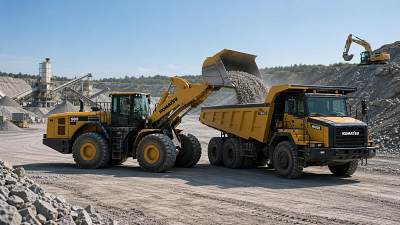
Truck Off Road Use Cases That Demand a Different Axle Setup
From rugged mining routes to remote construction sites, truck off road applications place unique demands on axle configuration, durability, and load control. Whether supporting an off road truck, truck tipper, truck trailer, or wheel loader operation, the right axle setup directly affects traction, stability, and operating cost. This guide explores the use cases where standard configurations fall short and why specialized solutions matter for buyers and industry professionals.
For information researchers, procurement teams, commercial evaluators, and distributors, axle selection is rarely a minor component decision. In off road transport equipment, the axle setup shapes payload distribution, suspension behavior, tire wear, drivetrain stress, and service intervals. A truck designed for paved highways may perform adequately on short mixed routes, but once gradients rise above 10%, haul roads remain loose for 8 to 12 months of the year, or loads become uneven, a different specification is often required.
On a global B2B sourcing platform focused on heavy trucks, trailers, construction machinery, and spare parts, understanding these differences helps buyers compare suppliers more accurately and avoid under-specification. The real question is not simply whether an axle is “strong enough,” but whether the complete configuration fits the terrain, duty cycle, maintenance environment, and total cost target of the operation.
Why Standard Axle Configurations Fail in Off Road Truck Duty
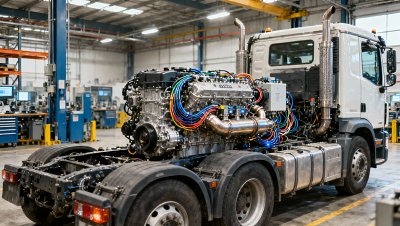
A standard road-going axle setup is usually engineered around predictable traction, stable load paths, and smoother shock input. Off road truck work is different. Repeated torsional stress, wheel articulation, sudden side loading, and irregular surface impact can push a normal axle housing, differential, or suspension package beyond its practical design range long before rated payload is reached.
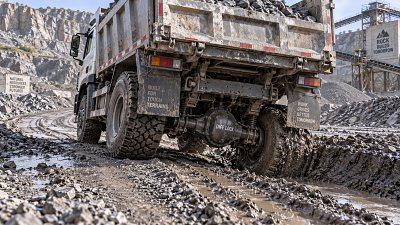
In many off road transport projects, failure does not come from a single overload event. It develops over 3 to 6 months of repetitive abuse. Common symptoms include cracked spring seats, accelerated bearing wear, axle wrap, uneven brake response, and overheating in hub reduction systems. For truck tipper fleets running quarry routes, these failures can reduce vehicle availability by 10% to 20% compared with a correctly specified off road axle arrangement.
Procurement teams also need to distinguish between nominal capacity and real operating capacity. A rear axle rated for a certain tonnage on-road may need a de-rating factor when the truck works on steep haul roads, loose stone surfaces, or muddy access points. In practice, buyers often consider terrain severity, average loaded speed, tire size, and suspension type together, rather than evaluating axle load rating alone.
Key stress factors in off road use
- High shock loads from rock edges, potholes, and uneven ramps that create impact spikes well above normal cruising forces.
- Continuous low-speed, high-torque operation, especially in mining and earthmoving support routes where drivetrain heat buildup is significant.
- Load shift during tipping, side slope travel, or trailer articulation, increasing stress on axle shafts, hubs, and suspension mounts.
- Water, slurry, and dust ingress, which can shorten seal life and contaminate lubricants within 500 to 1,000 working hours if protection is inadequate.
The table below compares common operating differences between road-biased and off road axle expectations. It is useful for buyers screening complete trucks, chassis, or spare axle assemblies from multiple international suppliers.
The practical takeaway is clear: when trucks spend a large share of operating hours beyond paved roads, axle design should be evaluated as a duty-specific system. Buyers comparing quotations on a B2B marketplace should request details on axle ratio, reduction type, housing design, brake package, and recommended use scenario instead of relying on payload figures alone.
Off Road Use Cases That Usually Require a Different Axle Setup
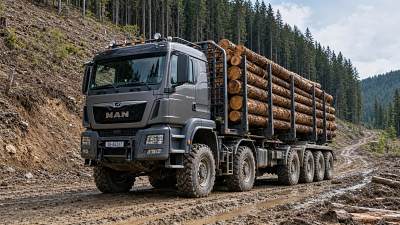
Not every unpaved route requires a heavy off road axle, but several applications consistently do. The most common are mining haul support, quarry and aggregate transport, forestry extraction, remote infrastructure construction, municipal landfill operation, and oilfield or energy-site logistics. In these environments, axle selection must support traction, ground clearance, durability, and predictable repair planning.
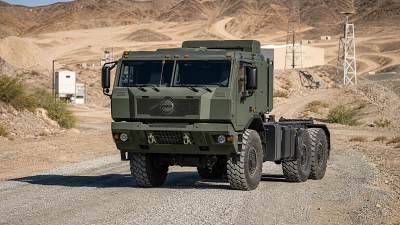
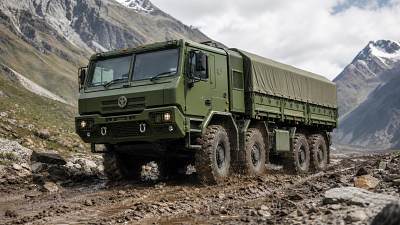
Mining support trucks are a clear example. A truck moving ore, fuel, service parts, or water across internal mine roads may run 12 to 20 hours per day under dust, vibration, and steep grade conditions. Here, tandem rear drive axles with higher torque tolerance, cross-axle differential locks, and stronger hub assemblies are often preferred over lighter highway-focused designs.
Construction fleets also create special requirements. A truck tipper that enters soft subgrade areas, climbs temporary ramps, and unloads on uneven platforms faces a complex mix of axle articulation and lateral load transfer. If the suspension and axle package are not matched, tire scrub, frame twist, and premature spring or bushing failure may appear within the first 1,500 to 2,500 operating hours.
Typical application scenarios
Mining and quarry logistics
These operations usually require reinforced rear axles, heavy-duty suspension, and higher resistance to contamination. Speeds may stay below 35 km/h, but the torque demand is persistent and surface impact is severe.
Remote construction and earthmoving support
Where wheel loaders, excavators, and concrete equipment are active, haul roads change weekly. Axles must handle mixed loading, temporary road geometry, and repeated reversing on unstable ground.
Forestry, landfill, and municipal off road service
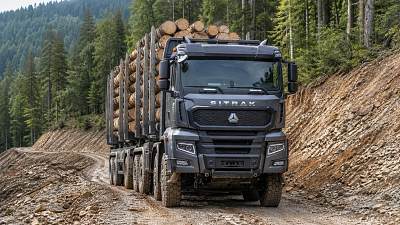
Mud, organic debris, and water exposure raise sealing and traction requirements. Wider tires, suitable final drive ratios, and differential locking become more important than top speed.
The following table helps map common use cases to likely axle priorities. This can support early supplier discussions and improve RFQ accuracy when sourcing complete trucks or axle components internationally.
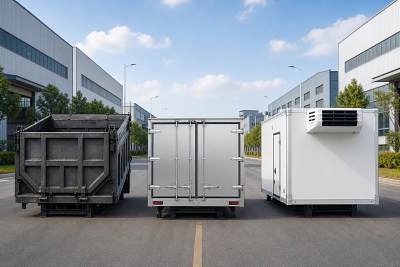
This comparison shows why use-case clarity matters. A truck trailer moving palletized goods to a temporary project yard may need only moderate reinforcement, while a quarry tipper with 6x4 or 8x4 architecture often needs a much more robust rear axle and suspension strategy. Application detail directly improves sourcing accuracy.
How to Choose Axle Configuration: Ratio, Capacity, Reduction, and Suspension Match
Selecting the right axle setup starts with four core variables: gross vehicle weight, terrain severity, drivetrain torque demand, and working speed. Buyers should then match these with axle ratio, reduction design, suspension layout, and tire specification. In off road projects, the most expensive error is often not over-buying, but buying a road-oriented configuration that delivers lower productivity and higher maintenance costs over 24 to 36 months.
Axle ratio matters because low-speed climbing and heavy pulling need torque multiplication. A lower final drive ratio can support traction and startability, but it may reduce road speed and fuel efficiency during transfer runs. For mixed-use fleets, this trade-off should be quantified route by route rather than assumed. Even a difference in average cycle speed of 5 to 8 km/h can change daily output on repetitive haul jobs.
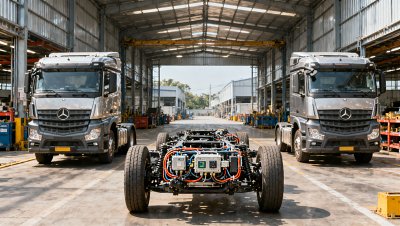
Reduction type is another critical issue. Single reduction axles can be suitable in lighter mixed-duty applications, while hub reduction is often selected for harsher terrain, larger tires, and higher torque load. Suspension compatibility also matters. A strong axle paired with a poorly matched suspension may still generate premature wear in bushings, torque rods, and tires.
Four procurement questions to ask suppliers
- What is the recommended duty profile: paved road, mixed road, quarry, mining, or full off road operation?
- Is the axle a single reduction or hub reduction design, and what service interval is typical under dusty conditions?
- Which tire sizes, suspension types, and differential lock options are approved for the offered configuration?
- What spare parts availability and lead time can be expected for bearings, seals, shafts, brake components, and housings?
The next table summarizes practical selection factors. It is intended for procurement comparisons across truck chassis suppliers, trailer manufacturers, and spare parts vendors on a heavy truck B2B platform.
For dealers and distributors, this framework also supports portfolio planning. Stocking only highway-oriented axles may limit competitiveness in regions with mining, agriculture, municipal engineering, or infrastructure growth. Offering a range that includes off road truck axle solutions can open higher-value demand from project-based buyers.
Common Procurement Risks, Cost Drivers, and Delivery Considerations
The biggest procurement risk is specifying an axle by price or nominal tonnage alone. In cross-border sourcing, buyers may compare several quotations that appear similar but differ significantly in housing thickness, gear set design, brake protection, seal quality, or parts interchangeability. Those differences may not be obvious in the first quotation sheet, yet they can determine whether service life reaches 2,000 hours or extends beyond 5,000 hours under similar working conditions.
Lead time is another factor. Depending on specification complexity, spare axle assemblies may have a common delivery window of 2 to 6 weeks, while special ratios, reinforced housings, or low-volume trailer axle options can extend beyond 8 weeks. For project fleets, buyers should calculate not only purchase timing but also commissioning risk, customs timelines, and spare kit readiness before the trucks enter service.
Maintenance cost often outweighs small upfront savings. If a lower-cost axle causes tire wear, lubricant contamination, or repeated seal replacement, the cost difference can reverse within one operating season. Commercial evaluators should look at three layers of cost: acquisition, downtime, and parts support. A better-supported axle option may be financially stronger even if the initial quotation is 5% to 12% higher.
Frequent buyer mistakes
- Using highway fleet experience as the main reference for quarry, mine, or landfill operations.
- Failing to ask about spare parts interchangeability across axle families and model generations.
- Ignoring service environment details such as water crossings, dust density, and average slope percentage.
- Comparing complete truck quotations without matching suspension, tires, brakes, and axle ratio line by line.
Practical evaluation checklist
A disciplined sourcing process usually includes 6 checks: duty cycle confirmation, axle specification review, route severity rating, spare parts plan, delivery timeline validation, and after-sales communication path. For B2B platforms connecting buyers and suppliers globally, this checklist can improve transparency and reduce rework during quotation rounds.
For distributors or regional agents, after-sales planning is especially important. If local customers operate in remote zones, basic stock of seals, bearings, brake linings, axle shafts, and lubricants should be planned in advance. Waiting 3 to 5 weeks for a critical replacement part during a peak construction period can damage customer trust and future order potential.
Maintenance Strategy, Supplier Collaboration, and FAQ for Buyers
A suitable axle setup does not end with specification approval. Off road truck fleets need preventive inspection schedules, lubricant control, and supplier communication that reflects operating severity. In difficult terrain, daily visual checks and weekly underbody inspections can prevent minor seal or housing issues from becoming full axle failures. For high-hour fleets, some operators shorten lubricant inspection intervals to every 250 to 500 hours depending on contamination exposure.
Supplier collaboration should also extend beyond first delivery. Reliable manufacturers and parts suppliers should be able to provide exploded diagrams, wear part lists, service interval guidance, and recommendation boundaries for actual applications. This is where a professional heavy truck industry platform adds value: buyers can compare product categories, identify suitable suppliers, review adjacent parts availability, and align sourcing decisions with maintenance reality rather than only brochure claims.
For commercial buyers, the best result usually comes from a package approach: axle setup, suspension compatibility, tire strategy, spare parts support, and delivery planning discussed together. This improves lifecycle predictability and gives dealers or agents a stronger basis for long-term customer support in mining, logistics, infrastructure, and municipal engineering markets.
FAQ
How do I know if a truck really needs an off road axle setup?
If more than 30% to 40% of operating distance is on loose, uneven, muddy, or steep surfaces, or if the truck carries heavy loads at low average speed for most of the shift, a standard road axle may be insufficient. Repeated traction loss, tire scrub, and frequent seal or bearing issues are early warning signs.
Is hub reduction always better for off road trucks?
Not always. Hub reduction is often beneficial in harsh terrain and high torque applications, but it also adds complexity, weight, and cost. For lighter mixed-duty fleets that still spend meaningful time on paved roads, a properly selected single reduction axle may remain the more balanced choice.
What delivery information should buyers request before placing an order?
Request production lead time, spare parts availability, packaging details, documentation support, and whether critical wear parts can ship separately. A complete answer should cover at least the first 12 months of likely service parts demand, especially for remote projects.
What is the best way to compare suppliers on a B2B platform?
Use a structured comparison sheet. Check application fit, axle design, suspension matching, service documentation, parts support, and delivery realism. Comparing 5 or 6 technical and commercial criteria side by side is more reliable than choosing based on price alone.
Truck off road operations expose axle systems to a very different set of demands than highway logistics. Mining routes, quarry haul roads, remote construction projects, forestry work, and municipal off road duties all require a closer look at axle rating, reduction design, traction support, and serviceability. For researchers, procurement teams, and distributors, better specification at the sourcing stage reduces lifecycle risk and improves uptime.
If you are evaluating complete trucks, truck trailers, construction machinery support vehicles, or spare axle components, a professional heavy truck B2B platform can help you compare suppliers, review product categories, and identify solutions that match your real working environment. Contact us to get a tailored sourcing plan, discuss axle configuration details, or explore more heavy truck and off road transport solutions.
Trending News
- How to assess a truck cement manufacturer’s build quality before ordering
- When does a truck trailer OEM make sense for private-label fleets?
- What to verify before choosing a water truck OEM for your fleet
- How to size a cab chassis truck for a fire department apparatus
- When does a truck off road setup need locking differentials?
Tag
Recommended News
 Truck TechnologyWhen does a truck off road setup need locking differentials?Truck off road setups need locking differentials when uneven, low-grip terrain causes wheelspin. Learn how to choose the right axle locks for safer, reliable mobility.
 Truck TechnologyEPA Remote-Diagnostics Rules Take Effect for Diesel EnginesEPA Remote-Diagnostics Rules take effect for diesel engines sold in the U.S. Learn how OTA updates, real-time NOx reporting, and fault-code retention may impact compliance, OEM projects, and imports.
 Truck TechnologyCab Chassis Truck for Military Use: Key Specs That Affect Mission ReadinessCab chassis truck for military use: explore the key specs that drive mission readiness, off-road mobility, integration flexibility, and lifecycle support for smarter fleet decisions.
 Truck TechnologyBULLDOZER with GPS Tracking: What Improves on Remote Job SitesBULLDOZER with GPS tracking improves remote job sites with better visibility, reduced idle time, stronger fleet coordination, and smarter earthmoving decisions across harsh terrain.
 Truck TechnologyTruck Body Materials Compared: Steel, Aluminum, or Composite?Truck body material comparison made practical: explore steel, aluminum, and composite options for payload, durability, corrosion resistance, and lifecycle cost.
 Truck TechnologyBest Cab Chassis Truck Setups for Municipal Engineering TasksCab chassis truck for municipal engineering: compare the best setups for sanitation, tanker, utility, and dump tasks to improve uptime, safety, and long-term fleet value.
 Truck TechnologyTruck Electrical System Faults: Common Causes and Fast ChecksTruck electrical system faults can cause no-starts, dim lights, and costly downtime. Learn common causes, fast checks, and practical steps to diagnose issues quickly.
 Truck TechnologyASEAN-ICV Opens Mutual Access for Connected Heavy VehiclesASEAN-ICV opens mutual access for connected heavy vehicles, cutting duplicate V2X testing across Thailand, Vietnam, Indonesia, and Malaysia. See what it means for exports, compliance, and fleet delivery.
![]() Truck TechnologyTruck Concrete Mixer Basics: Capacity, Drum Type, and Jobsite FitTruck concrete mixer basics explained: compare capacity, drum type, and jobsite fit to improve pour efficiency, cut delays, and choose the right mixer truck with confidence.
Truck TechnologyTruck Concrete Mixer Basics: Capacity, Drum Type, and Jobsite FitTruck concrete mixer basics explained: compare capacity, drum type, and jobsite fit to improve pour efficiency, cut delays, and choose the right mixer truck with confidence. Truck TechnologyBrazil Requires Dual-Mode Tracking on Imported Heavy TrucksBrazil requires dual-mode tracking on imported heavy trucks. Learn how BeiDou+GPS, SISFROTA, and ABNT NBR 16501:2025 rules affect licensing, compliance, and market access.
 Truck TechnologyWater Truck OEM Options: Tank Size, Pump Output, and Road ConditionsWater truck OEM selection starts with the right match of tank size, pump output, and road conditions. Learn how to compare specs, improve uptime, and choose a fleet-ready solution.
 Truck TechnologyChile Requires Remote Diagnostics on Imported Heavy TrucksChile Requires Remote Diagnostics on Imported Heavy Trucks: learn how NCh3871:2026, OTA, ISO 22161, and VHMP rules will impact truck imports, registration, and fleet planning.
 Truck TechnologyHow to Compare Logging Truck OEM Specs for Drivetrain and Load StabilityLogging truck OEM specs compared the right way: learn how to evaluate drivetrain torque, axle ratios, suspension, and load stability for safer forestry hauling.
 Truck TechnologyIndia Drafts BS-VI Phase II Remote OBD Upload RuleIndia Drafts BS-VI Phase II Remote OBD Upload Rule: learn how India’s new real-time OBD upload proposal could impact truck exporters, T-Box upgrades, certification timelines, and market access.
 Truck TechnologyMilitary Truck Payload vs Mobility: What Matters in Harsh TerrainMilitary truck performance in harsh terrain depends on more than payload. Discover how mobility, traction, axle load, and suspension affect real-world mission success.
 Truck TechnologyLogging Truck OEM Options: Key Specs for Harsh Forestry RoutesLogging truck OEM options for forestry routes: compare axle layouts, frame strength, traction, braking, and service support to choose a durable, high-uptime truck.
 Truck TechnologyVietnam to Require VCA Checks for Imported Heavy TrucksVietnam to Require VCA Checks for Imported Heavy Trucks from August 1, 2026. Learn how VCA testing, CAN, HVIL, and OBD-II rules could impact truck exports, certification, and delivery planning.
 Truck TechnologyMexico Enforces CAN FD Rule for Imported TrucksMexico Enforces CAN FD Rule for Imported Trucks: learn how NOM-042-SEMARNAT-2026 impacts OBD-II+, ANCE verification, ECU strategy, and Mexico-bound truck compliance.
 Truck TechnologyBrazil ANP Rule Requires H₂ Leak Sensors on Imported Gas TractorsBrazil ANP rule requires H₂ leak sensors on imported gas tractors from Oct 1, 2026. Learn the compliance impact, IEC 60079-29-1 standard, and what exporters must do now.
 Truck TechnologyTruck Brake System Basics: Components, Failure Risks, and Safety ChecksTruck brake system basics explained: key components, common failure risks, and practical safety checks to improve fleet uptime, compliance, and road safety.
 Truck TechnologySupply Chain Expo Opens With Focus on Heavy Truck Core SystemsHeavy truck core systems take center stage at the Supply Chain Expo, spotlighting battery systems, electric drive axles, and by-wire technologies shaping export opportunities.
 Truck TechnologyTruck Control Unit Failures: Common Symptoms and Fix StrategiesTruck control unit failures often start with small warning signs. Learn key symptoms, root causes, and smart repair strategies to cut downtime and avoid costly misdiagnosis.
 Truck TechnologyEU V2X Rule Sets 2027 Deadline for New Heavy Truck ApprovalEU V2X Rule Sets 2027 Deadline for New Heavy Truck Approval: learn how ETSI EN 302 637-2 and UN R155 reshape EU truck compliance, certification, sourcing, and export planning.
 Truck TechnologyEU Draft Targets V2X as Standard for New Heavy TrucksV2X is moving toward a standard for new EU heavy trucks. Learn how the draft rule may affect certification, ETSI EN 302 637-2 compliance, open API access, and export planning.
 Truck TechnologyTruck Loader Capacity Guide for Quarry and Construction JobsTruck loader capacity guide for quarry and construction jobs. Learn how payload, cycle time, and material type affect output, safety, and sourcing decisions.