Truck Leasing vs Ownership in 2026: Where Costs Diverge
In 2026, the cost gap between truck leasing and ownership is no longer a simple finance question. For fleet buyers, procurement teams, dealers, and business evaluators, the right choice depends on utilization rate, maintenance risk, cash flow pressure, resale assumptions, and uptime requirements. In many cases, leasing is becoming more attractive for fleets that need flexibility, faster renewal cycles, and predictable monthly costs. Ownership still makes more sense where trucks run for long service lives, utilization is high, maintenance is well controlled, and resale channels are strong. This guide explains where costs diverge, what B2B buyers should compare, and how to make a practical decision across applications such as truck trailer, truck tipper, off road truck, and truck van operations.
Why truck leasing vs ownership matters more in 2026
The core search intent behind this topic is clear: B2B buyers want to know which option creates the lower total cost and lower operational risk in 2026, not just which one looks cheaper at purchase. They are looking for a decision framework that helps them compare leasing and ownership under real operating conditions.
That matters because cost divergence is widening. Truck prices remain influenced by emissions technology, electronics, financing rates, and supply chain shifts. At the same time, fleets are facing stricter uptime expectations, uncertain residual values, rising labor costs in maintenance, and pressure to preserve cash for broader equipment procurement. A company sourcing heavy trucks may also be evaluating wheel loader purchases, hydraulic pump supply, trailer inventory, and truck battery replacement programs. Capital allocation is now more strategic than before.
For this reason, the most useful comparison is not lease payment versus loan payment. It is total operating impact over the intended service period.
What fleet buyers and sourcing teams care about most
For the target audience, the biggest concern is not theory. It is whether a truck financing model supports profit, delivery reliability, and purchasing flexibility.
The main questions usually are:
- Which model creates lower total cost of ownership over 3, 5, or 7 years?
- How much capital will be tied up in trucks versus other productive assets?
- Who carries maintenance risk as vehicles age?
- What happens if resale values weaken?
- How important is fleet renewal speed for compliance, fuel economy, and brand image?
- Will leasing reduce downtime through service packages and vehicle replacement options?
- Is ownership more profitable for high-mileage or specialized applications?
These are especially relevant for distributors, procurement teams, and commercial evaluators who must justify decisions internally and compare suppliers across different truck categories.
Where costs really diverge: lease economics vs ownership economics
The biggest cost differences between leasing and owning usually appear in six areas.
1. Upfront capital requirement
Ownership typically requires a larger down payment or full capital purchase. That increases asset control, but it also reduces liquidity. Leasing usually lowers the initial outlay, which is useful for companies that want to preserve cash for expansion, spare parts stocking, workshop tools, or other machinery categories.
2. Monthly cost predictability
Leasing often offers more predictable monthly expenses, especially when maintenance is bundled. Ownership can look cheaper on paper in early years, but actual monthly costs may fluctuate because of repairs, tire replacement, financing terms, and downtime.
3. Maintenance and repair exposure
This is one of the biggest divergence points in 2026. As trucks become more complex, repair costs and diagnostic requirements increase. Under ownership, the operator usually absorbs aging-related maintenance risk. Under a full-service lease, part of that risk can be shifted to the leasing provider.
4. Residual value and resale risk
Ownership creates a potential resale upside if used truck demand stays strong and the vehicle is well maintained. But it also exposes the buyer to residual value uncertainty. Leasing reduces this exposure because the future value risk is often embedded in the lease structure.
5. Utilization efficiency
High-utilization fleets often gain more from ownership if they can keep trucks productive for many years. Lower-utilization or seasonal fleets often benefit more from leasing, because they avoid holding underused assets on the balance sheet.
6. Downtime cost
For many commercial fleets, downtime can cost more than finance charges. A truck that misses deliveries, construction schedules, or municipal work windows creates losses beyond workshop invoices. Lease contracts with service support can improve uptime predictability, while ownership requires stronger internal maintenance capabilities to match that performance.
When leasing is usually the better business decision
Leasing often becomes the stronger choice when flexibility and cost control matter more than long-term asset retention.
Typical leasing-friendly scenarios include:
- Fast fleet renewal cycles
- Operations in uncertain or volatile freight markets
- Businesses expanding into new routes or regions
- Companies that want predictable budgeting
- Users with limited in-house maintenance capability
- Fleets adopting newer low-emission or connected truck models
For example, a logistics operator using truck van or regional truck trailer units may prefer leasing because customer requirements change quickly, and newer trucks may deliver better fuel efficiency, telematics, and reliability. A dealer or distributor may also favor leasing in some cases to maintain a fresher demonstrator or rental fleet without absorbing full depreciation risk.
Leasing is also attractive when procurement teams need to keep borrowing capacity available for other business-critical investments. If a company must also purchase wheel loader units, trailers, spare parts inventory, or hydraulic systems, leasing trucks may improve capital flexibility across the wider equipment plan.
When ownership still delivers the stronger return
Ownership remains a sound strategy where operational conditions support long asset life and disciplined maintenance.
It often works best in these cases:
- High-mileage or high-utilization fleets with stable demand
- Operators with strong workshop capabilities
- Applications where trucks stay in service well beyond financing term
- Markets with healthy used truck resale channels
- Businesses that customize vehicles heavily for specific duty cycles
A truck tipper in a stable construction fleet or an off road truck in long-term site service may justify ownership if the machine is expected to run hard for years and the operator can manage maintenance internally. In these settings, the ability to continue using the asset after loan payoff can produce lower lifetime cost than repeated lease cycles.
Ownership can also be attractive when a business has reliable access to parts, workshop labor, and established disposal channels. The stronger those capabilities are, the more manageable ownership risk becomes.
How to compare total cost of ownership in a practical B2B way
For procurement and commercial evaluation teams, the best approach is to build a side-by-side model that compares leasing and ownership under the same duty cycle.
Include the following cost categories:
- Purchase price or capitalized lease cost
- Down payment or initial fees
- Financing interest or lease rate
- Insurance
- Fuel consumption differences
- Scheduled maintenance
- Unscheduled repairs
- Tires and wear parts
- Downtime cost per day or per hour
- Replacement vehicle cost if downtime occurs
- Residual value or disposal proceeds
- Tax and accounting treatment relevant to your market
Then stress-test the model using three assumptions:
- Best-case resale and low repair cost
- Base-case normal operation
- Worst-case low resale and high maintenance cost
This helps reveal where the cost gap really diverges. In many fleet decisions, ownership wins only if residual value and maintenance stay favorable. If either assumption weakens, leasing can become the safer and sometimes cheaper option.
Application differences: not every truck category should be financed the same way
One common mistake is treating all commercial vehicles the same. Financing strategy should match application.
Truck trailer operations
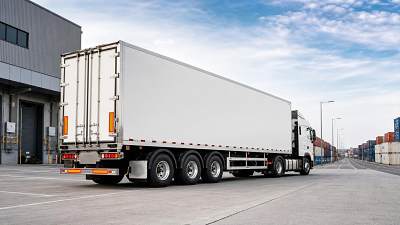
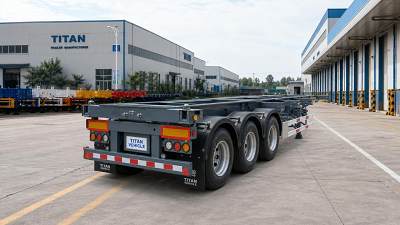
For standard long-haul or regional logistics, leasing can be useful where fleet age, fuel efficiency, and uptime are critical. Ownership may still work for large fleets with robust maintenance systems and strong lane predictability.
Truck tipper fleets
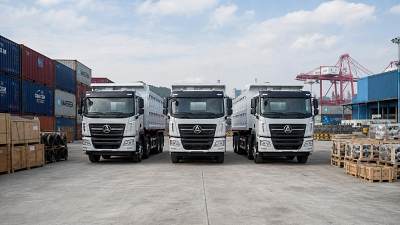
Tippers often face severe duty cycles, variable jobsite wear, and body-specific configurations. Ownership may be preferable if the truck will be fully utilized for years and customization is extensive. Leasing may suit contractors with project-based demand or uncertain utilization.
Off road truck applications
Harsh environments create significant wear and maintenance risk. If a lessor can structure service support suited to the application, leasing can reduce risk. But many specialized off road truck users choose ownership due to customization and long on-site service life.
Truck van and urban delivery fleets
These fleets often value predictable operating cost, cleaner technology adoption, and more frequent replacement cycles. Leasing tends to be especially competitive here.
Key risks buyers should not ignore
Whether leasing or buying, decision-makers should examine risks beyond the headline price.
- Contract rigidity: Some lease structures limit mileage, usage type, or early return options.
- Maintenance exclusions: Not all full-service leases cover the same items.
- Residual assumptions: Ownership models can look artificially attractive if resale forecasts are too optimistic.
- Downtime accountability: Clarify who is responsible for replacement support.
- Parts availability: Delays in truck battery, hydraulic pump, tire, or electronic component supply can materially affect uptime.
- Cross-border service support: International fleets should verify whether service networks match operating geographies.
For global sourcing teams, supplier reliability matters as much as finance structure. The truck itself, service support, parts ecosystem, and regional coverage all influence the real cost outcome.
A simple decision framework for 2026 fleet planning
If you need a fast internal screening method, use this logic:
- Choose leasing if your priority is cash preservation, flexible fleet renewal, lower residual risk, and more predictable operating cost.
- Choose ownership if your trucks have high utilization, long economic life, strong internal maintenance support, and reliable resale channels.
- Run a blended strategy if your fleet includes different duty cycles. Many companies should not choose only one model.
A blended model is often the most practical. For example, a business may lease newer high-visibility road units while owning specialized tippers or site vehicles. That approach aligns capital structure with operational reality.
Conclusion: the best option depends on control, risk, and utilization
In 2026, the difference between truck leasing and ownership is increasingly shaped by maintenance risk, residual uncertainty, cash flow priorities, and uptime performance. Leasing is often stronger for businesses that need flexibility, predictable cost, and faster fleet renewal. Ownership remains valuable where trucks are heavily utilized, maintained well, and retained long enough to maximize asset value.
For procurement teams, dealers, and business evaluators, the smartest move is to compare total cost under real operating assumptions, not just sticker price or monthly payment. The more accurately you model uptime, service support, resale risk, and application type, the easier it becomes to choose the structure that supports long-term business performance.
In other words, the right answer is not “lease” or “buy” in the abstract. It is choosing the financing model that best matches your truck category, operating intensity, capital strategy, and supplier ecosystem.
Trending News
- Delivery Truck Supplier with Cost-Effective Solutions: 2026 Market Outlook
- Low Bed Trailer Export with Waterproof Features: What Buyers Often Miss
- Portable Construction Machinery Supplier: Where Mobility Improves Jobsite Output
- Truck Spare Parts Supplier with Bulk Order Discounts: Savings vs Stock Risk
- Best Flatbed Trailer Supplier Options for Logistics Transportation
Tag
Recommended News
 Transportation CostsSemi Trailer Manufacturer with Lightweight Design: What Cuts Fleet CostsSemi trailer manufacturer with lightweight design choices can cut fleet costs through better payload, fuel savings, and durability. See which trailer strategy fits your routes.
 Transportation CostsLow-Maintenance Truck Spare Parts: Long-Term Cost BreakdownTruck spare parts supplier with low maintenance: discover how durable parts cut downtime, labor, and lifecycle costs for fleets. Compare smarter sourcing strategies now.
 Transportation CostsTruck Cement Bulk Order: Cost Factors That Change Final PricingTruck cement bulk order pricing depends on route, payload, compliance, and supplier terms. Discover the key cost factors to compare quotes, cut hidden expenses, and buy with confidence.
 Transportation CostsCrane Truck Cost Breakdown: Chassis, Crane Unit, and Compliance FeesCrane truck cost explained: compare chassis, crane unit, taxes, and compliance fees to avoid hidden expenses, approve budgets faster, and choose the right truck with confidence.
 Transportation CostsCrane Truck Price Breakdown: Capacity, Boom Type, and Operating CostCrane truck price explained by capacity, boom type, and operating cost. Compare key cost drivers, ownership value, and smart buying tips to choose the right crane truck.
 Transportation CostsTruck Cement Mixer Price in 2026: What Changes Total Ownership CostTruck cement mixer price in 2026 depends on fuel, compliance, maintenance, financing, and resale—not just the quote. Discover how to compare real ownership cost and choose smarter.
 Transportation CostsHeavy Equipment Export to Mexico: Cost Factors Beyond Shipping RatesHeavy equipment export to Mexico involves more than freight rates. Discover hidden cost factors, customs, taxes, inland delivery, and compliance tips to reduce risk and improve ROI.
 Transportation CostsWhen Bulk Discounts From a Truck Spare Parts Supplier Really Save MoneyDiscover when a truck spare parts supplier with bulk order discounts truly cuts fleet costs—compare total cost, compatibility, inventory risk, and supplier reliability before you buy.
 Transportation CostsTruck Cement Mixer Price in 2026: What Buyers Should Budget ForTruck cement mixer price in 2026 depends on more than the base quote. Discover key cost drivers, landed cost factors, and smart sourcing tips to budget better and buy with confidence.
 Transportation CostsTruck Trailer OEM for Custom Loads: Where the Real Cost BeginsTruck trailer OEM costs start beyond the quote. Learn how custom loads, compliance, delivery, and maintenance shape true ROI—and how to choose a supplier that protects long-term fleet value.
 Transportation CostsTruck Tipper Bulk Order: Cost Factors Often Missed in Early QuotesTruck tipper bulk order costs go far beyond the first quote. Discover hidden factors in specs, shipping, compliance, parts, and support to avoid budget surprises.
![]() Transportation CostsTruck Cement Wholesale: What Impacts Margin More Than Purchase PriceTruck cement wholesale margins depend on more than purchase price. Discover how fuel use, payload, uptime, compliance, and supplier stability shape long-term profitability.
Transportation CostsTruck Cement Wholesale: What Impacts Margin More Than Purchase PriceTruck cement wholesale margins depend on more than purchase price. Discover how fuel use, payload, uptime, compliance, and supplier stability shape long-term profitability. Transportation CostsCrane Truck Cost: A Practical Guide to Total Ownership ExpenseCrane truck cost explained beyond the sticker price—compare financing, maintenance, fuel, compliance, downtime, and resale value to make smarter, lower-risk fleet investment decisions.
 Transportation CostsConstruction Machinery Cost Breakdown for Better Project BudgetingConstruction machinery cost explained clearly: compare purchase, rental, fuel, maintenance, and downtime to budget smarter, control risk, and improve project profitability.
 Transportation CostsLogging Truck Price: What Drives Cost Up or DownLogging truck price depends on configuration, payload, compliance, brand, and market timing. Learn how to compare true cost, reduce risk, and choose higher-value trucks.
 Transportation CostsCrane Truck Cost: What Affects Ownership Beyond the Purchase PriceCrane truck cost goes beyond the sticker price. Discover how fuel, maintenance, training, financing, compliance, and resale value shape true ownership costs and smarter buying decisions.
 Transportation CostsConstruction Machinery Cost Breakdown for Better Project PlanningConstruction machinery cost explained for smarter project planning. Learn key cost drivers, reduce downtime, control budgets, and choose equipment with better lifecycle value.
 Transportation CostsLogging Truck Price Guide: What Drives the Final CostLogging truck price depends on far more than chassis cost. Discover what drives total ownership cost, compare specs smarter, and choose the right truck for long-term ROI.
 Transportation CostsTruck Cement Wholesale: How Bulk Pricing Changes by Order SizeTruck cement wholesale pricing changes with order size. Learn how small, mid, and bulk purchases affect total cost, cash flow, and supplier terms to secure smarter deals.
 Transportation CostsBulldozer Price in 2026: What Actually Drives the Cost UpBulldozer price in 2026 is driven by steel, emissions rules, digital features, freight, and brand support. Learn what really raises costs and compare suppliers with confidence.
 Transportation CostsTruck Trailer Bulk Order: 7 Cost Factors That Change the Final QuoteTruck trailer bulk order pricing can change fast. Discover 7 key cost factors that affect the final quote and learn how to compare suppliers, control budget risk, and buy smarter.
 Transportation CostsConstruction Machinery Cost Planning for Multi-Stage ProjectsConstruction machinery cost planning for multi-stage projects: learn how to control equipment, transport, maintenance, and supplier costs to protect margins and improve project performance.
 Transportation CostsConstruction Machinery Price: How to Compare Quotes Without Missing Hidden CostsConstruction machinery price comparison made smarter: uncover hidden costs in freight, duties, warranty, parts, and downtime to choose the best supplier with confidence.
 Transportation CostsCrane Truck Cost Breakdown: What Drives the Final PriceCrane truck cost explained: discover the real price drivers behind capacity, chassis, safety, compliance, and support so you can compare suppliers wisely and avoid hidden ownership costs.
 Transportation CostsAre Energy-Saving Excavators Worth the Higher Price UpfrontExcavator manufacturer with energy-saving features: learn if the higher upfront cost pays off through lower fuel use, less downtime, and stronger long-term fleet ROI.