Dongguan Waterway Traffic Control Impacts Heavy Transport Logistics
Introduction
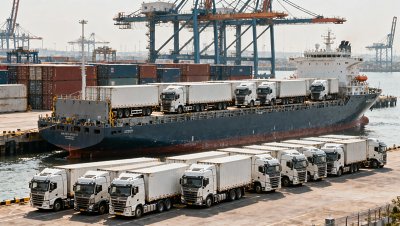
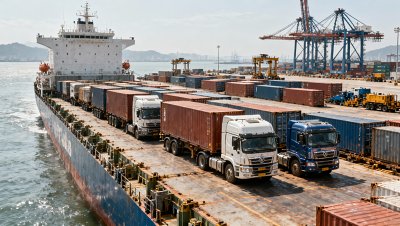
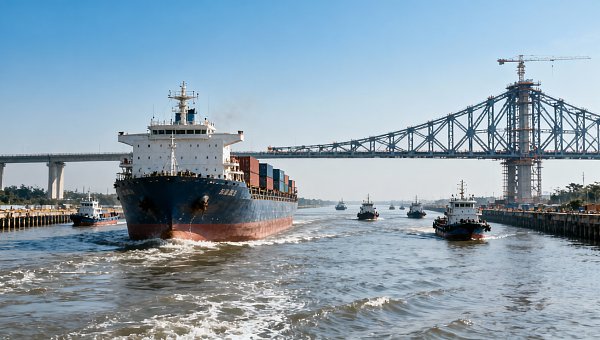
From April 7 to 10, 2026, temporary traffic control measures will be implemented at Dongguan's Daoyunhai Waterway due to steel beam transportation for the Chuancha Bridge construction. The waterway will enforce one-way navigation and restricted zones during specified hours, redirecting vessels to alternative routes. This disruption affects heavy transport logistics in the surrounding land routes, particularly impacting export equipment delivery schedules. Industries reliant on timely heavy equipment transport, such as manufacturing, construction, and export-oriented businesses, should monitor this development closely.
Event Overview
The temporary traffic control at Dongguan's Daoyunhai Waterway will occur in two phases:
- April 7, 15:00–18:00: Initial one-way navigation restrictions
- April 7–10, daily 09:00–18:00: Extended waterway closures with mandatory detours to the Dongjiang North Main Stream or temporary berthing areas
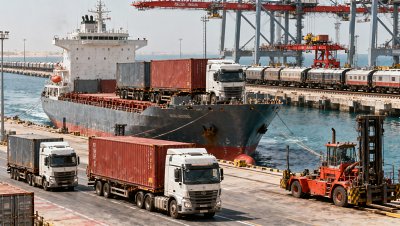
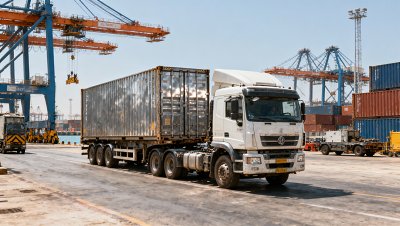
The waterway serves as a critical junction near major land routes like the Guangzhou-Shenzhen Coastal Expressway and Shuixiang Avenue, where heavy trucks and specialized transport vehicles frequently operate.
Impact on Specific Industries
1. Heavy Equipment Transport & Logistics
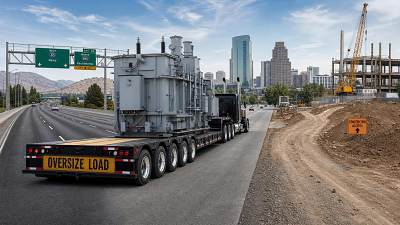
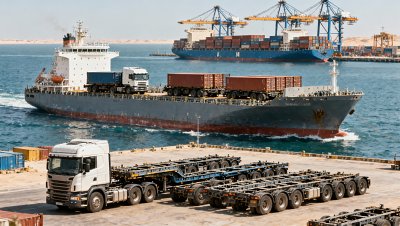
The restrictions will delay heavy truck and specialized vehicle movements by 1–3 days, particularly affecting port-to-inland distribution routes. Companies relying on just-in-time deliveries for oversized cargo (e.g., construction machinery, industrial equipment) may face shipment rescheduling challenges.
2. Export-Oriented Manufacturing
Businesses with tight export deadlines for machinery or large-scale products could experience delivery delays. The bottleneck may ripple through supply chains, especially for time-sensitive international shipments.
3. Construction & Infrastructure Projects
Local projects requiring steel beams or other materials transported via this corridor may encounter logistical hurdles, potentially delaying onsite assembly timelines.
Actionable Insights for Affected Businesses
Monitor Official Updates
Track announcements from the Dongguan Maritime Safety Administration for potential adjustments to the traffic control schedule or alternative route designations.
Prioritize High-Value Shipments
For time-critical deliveries, consider preemptive rerouting via unaffected corridors or adjusting production schedules to accommodate the 1–3 day delay window.
Communicate Proactively
Notify clients and partners about potential delays, especially for export contracts with penalty clauses. Document disruption-related communications for contractual compliance.
Industry Perspective
Analysis suggests this event highlights the interdependence of waterway and land transport networks in the Greater Bay Area. While a short-term disruption, it underscores the need for diversified logistics strategies in regions where critical infrastructure upgrades coincide with heavy freight volumes. The impact appears localized but serves as a case study for contingency planning in similar transport hubs.
Conclusion
This temporary traffic control exemplifies how infrastructure projects can create logistical ripple effects. Affected businesses should treat this as a contained operational challenge rather than systemic disruption, focusing on adaptive routing and client communication. The situation warrants attention but not alarm for most supply chain managers.
Source: Dongguan Maritime Safety Administration notice (April 5, 2026). Ongoing updates may revise implementation details.
Trending News
- How to compare concrete mixer truck suppliers by total landed cost
- How axle load limits affect low bed trailer exports to Southeast Asia
- How to locate a truck exhaust system leak before replacing parts
- When does heavy equipment transport require a lowboy trailer?
- When does a light commercial vehicle for urban delivery save fleet costs?
Tag
Recommended News
 Logistics & FreightHow does a truck wing body improve loading and unloading efficiency?Truck wing bodies speed up loading and unloading with wide side access, faster forklift handling, and flexible pallet delivery. Discover whether they fit your operation.
 Logistics & FreightRed Sea Delays Push Ro-Ro Transit to 42 DaysRed Sea delays push Ro-Ro transit to 42 days, forcing heavy-truck exporters to rethink Suez route timing, freight costs, and delivery planning. Explore faster alternatives and key trade impacts.
 Logistics & FreightCai Mep Delays Stretch Truck Parts Clearance to 12 DaysTruck parts clearance at Cai Mep now stretches to 12 days, disrupting road transport equipment imports. Learn the impact on delivery, procurement, and logistics planning.
 Logistics & FreightTruck Logging: Common Route and Load Mistakes That Raise Operating RiskTruck logging mistakes in route and load planning can quietly raise fuel costs, delays, wear, and compliance risk. Learn the key errors and how to build safer, more reliable transport decisions.
 Logistics & FreightLight Commercial Vehicle for Urban Delivery: Best Fit for Stop-and-Go RoutesLight commercial vehicle for urban delivery choices can make or break stop-and-go efficiency. Discover how to match payload, maneuverability, and cost for smarter city routes.
 Logistics & FreightRed Sea Disruptions Push Equipment Exports to Rail and Caspian RouteRed Sea disruptions are pushing equipment exports to rail and the Caspian route, cutting transit to 18–21 days. See how exporters can balance delivery speed, cost, and supply chain reliability.
![]() Logistics & FreightAlashankou Opens Priority Clearance for NEV Heavy TrucksAlashankou opens priority clearance for NEV heavy trucks, cutting customs time to under 4 hours and removing key port fees. See what this means for exporters, logistics teams, and buyers.
Logistics & FreightAlashankou Opens Priority Clearance for NEV Heavy TrucksAlashankou opens priority clearance for NEV heavy trucks, cutting customs time to under 4 hours and removing key port fees. See what this means for exporters, logistics teams, and buyers. Logistics & FreightChina-Europe Rail Adds Emergency Fuel SurchargeChina-Europe rail adds an emergency fuel surcharge of USD 1,200/TEU for trucks, semi-trailers, and chassis exports. See route impact, cost risks, and planning actions now.
 Logistics & FreightKazakhstan AI Customs Review Lifts Truck Parts Checks to 37%Kazakhstan AI customs review lifts truck parts checks to 37%, raising HS 8708 inspection risks and delays. Learn what exporters, importers, and brokers must do now.
 Logistics & FreightSuez Fee Hike Reshapes Ro-Ro Truck BookingsSuez fee hike reshapes Ro-Ro truck bookings as heavy truck exporters face higher freight costs, 90-day booking windows, and tighter vessel space—see what to plan now.
 Logistics & FreightRed Sea Disruption Tightens Ro-Ro Capacity on Asia-Europe RouteRed Sea disruption squeezes Ro-Ro capacity on the Asia-Europe route, driving heavy-truck shipping costs and delays. See what exporters, buyers, and logistics teams must track now.
 Logistics & FreightBest Light Commercial Vehicle for Urban Delivery in Tight City RoutesLight commercial vehicle for urban delivery: discover how to choose the best model for tight city routes with better maneuverability, loading efficiency, and lower operating costs.
 Logistics & FreightGTRI Jumps 12.3% as Red Sea Diversions Tighten CapacityGTRI jumps 12.3% as Red Sea diversions tighten truck shipping capacity on Asia-Europe routes. See what rising costs, 62-75 day lead times, and booking suspensions mean for exporters.
 Logistics & FreightWing Van Truck Loading Problems and Practical Ways to Reduce Cargo DamageWing van truck loading mistakes can damage cargo even on short routes. Learn practical ways to improve load balance, restraint, and daily handling to cut losses.
 Logistics & FreightSuez Canal Fees Rise 35% as Heavy Truck Shipping Hits 68 DaysSuez Canal fees rise 35% as heavy truck shipping stretches to 68 days. See how higher costs and longer transit can disrupt Q3 truck and chassis delivery plans.
 Logistics & FreightDjibouti Port Clearance for Truck Chassis Extends to 18 DaysDjibouti Port clearance for truck chassis now extends to 18 days, disrupting East Africa transit. Learn the impact on truck chassis shipments, documents, and delivery planning.
 Logistics & FreightDjibouti Port Extends Truck Chassis Clearance to 18 WorkdaysDjibouti Port extends truck chassis clearance to 18 workdays, raising customs risks for East Africa and Middle East shipments. Learn the new VIN and drawing rules now.
 Logistics & FreightSuez Eastbound Rates Rise 12% as Rail Alternatives GainSuez eastbound rates rise 12% as rail alternatives gain amid Djibouti congestion. See how shippers, vehicle parts importers, and logistics providers can adapt routing and protect supply continuity.
 Logistics & FreightBulk Trailer vs Container Trailer for High-Volume FreightBulk trailer or container trailer? Discover which option cuts handling costs, speeds high-volume freight, and fits your cargo, route, and delivery goals best.
 Logistics & FreightCentral Asia Rail Rates Jump as Red Sea Diversions BiteCentral Asia rail rates jump as Red Sea diversions tighten capacity. See how rising costs on the China-Kyrgyzstan-Uzbekistan corridor affect heavy truck exports, documents, and delivery planning.
 Logistics & FreightRail Rate Jump Signals Cost Pressure on Eurasian DiversionRail rate jump on the China-Kyrgyzstan-Uzbekistan corridor signals rising Eurasian cost pressure. See how it may impact delivery timing, export quotes, and supply chain planning.
 Logistics & FreightWhen a Van Trailer Is the Right Choice for Secure FreightVan trailer solutions protect secure freight from weather, dust, and theft. Learn when a van trailer is the smart choice for safer delivery and better cargo control.
 Logistics & FreightRed Sea Disruption Lifts China-Kyrgyz-Uzbek Rail Rates 18%Red Sea disruption lifts China-Kyrgyz-Uzbek rail rates 18%, raising export costs for truck KD parts, chassis, and loose components. See what shippers must monitor now.
 Logistics & FreightChina-Europe Rail Eastern Route Passes 40,000 TripsChina-Europe Rail Eastern Route passes 40,000 trips as Manzhouli launches a smart warehouse for heavy truck KD exports. Discover how faster customs clearance may improve rail logistics planning.
 Logistics & FreightXi’an Rail Launches Truck Export Service in 72 HoursXi’an Rail launches truck export service in 72 hours, offering a faster China-Europe rail solution for new energy heavy trucks with lower costs, streamlined customs, and stronger delivery efficiency.