How does a truck wing body improve loading and unloading efficiency?
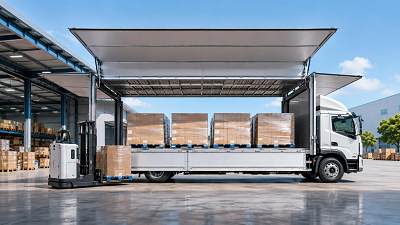
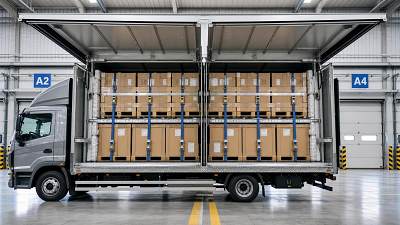
A truck wing body improves loading and unloading efficiency by turning the full length of the cargo compartment into a usable access point. Instead of working only through rear doors, the side panels lift upward to create wide openings along one or both sides. This allows forklifts to place or remove pallets from several positions at once, reduces the need to reshuffle freight, and makes the vehicle easier to serve at sites where rear access is limited.
The benefit is not simply that the body opens wider. The real gain comes from matching access to the way freight is handled. A conventional box body is efficient when goods move in a straight line through the rear. A wing body is more effective when goods are palletised, when deliveries contain many separate consignments, or when loading space and time are constrained. In those conditions, side access can remove several small delays that otherwise add up during every stop.
Why side access changes the loading process
With a rear-only body, the first pallet loaded is usually the hardest one to reach later. Goods for different delivery points must be arranged in a sequence, and a pallet needed near the front may require other freight to be moved before it can be removed. That is manageable for full loads going to one destination, but it becomes inefficient for multi-drop work or mixed cargo.
A truck wing body changes that layout. Once the side is open, a forklift can approach the cargo area at the position closest to the required pallet. This reduces unnecessary handling and gives more flexibility in how the load is arranged. Pallets can be loaded by route, by customer, by weight distribution, or by unloading priority without relying entirely on a single rear-to-front sequence.
For example, a vehicle carrying palletised packaging, building materials, retail stock, or industrial components may have goods for several unloading points. With side access, the load can be divided into working zones. At a delivery site, the required zone can be opened and handled directly while the rest of the cargo remains in place. The result is a cleaner flow: less searching, less repositioning, and less waiting for the forklift to work through the body.
Faster forklift access is the main operational advantage
Forklifts are most productive when they can travel short, predictable paths and place loads directly where they belong. A rear door forces the forklift to enter from one narrow end of the body. The truck wing configuration provides a long loading face, so the forklift can work from the side at multiple points.
This is particularly useful at busy depots. One forklift can load the front section while another works further back, provided the loading plan, available space, and site procedures support simultaneous activity. Even when only one forklift is used, it does not need to make repeated deep entries into the cargo space. Shorter approaches can make pallet placement more controlled and reduce time lost manoeuvring around other freight.
Side access also helps when freight has different dimensions. Standard pallets may sit alongside long items, bulky cartons, stillages, or machinery parts. A rear-only approach can make such combinations awkward because the load must pass through the same opening in a fixed order. A wing body gives the handling team more placement options. Freight can be approached from the side that offers the clearest route, rather than being forced through the rear opening.
Where a truck wing body delivers the clearest improvement
The design is most valuable where loading time is repeatedly affected by access rather than by paperwork, warehouse capacity, or road delays. It is a practical solution for operations with frequent handling cycles and forklift-compatible freight.
- Multi-drop distribution: Direct side access helps remove goods for individual stops without disturbing pallets for later deliveries.
- Pallet networks and hub transfers: Loads often arrive mixed and must be transferred quickly. Broad access makes sorting and placement easier.
- Manufacturing supply runs: Components, packaging, and returnable containers may need to be loaded in separate groups for different production areas.
- Retail and wholesale deliveries: Mixed pallets can be grouped by store, category, or unloading location rather than only by loading sequence.
- Building and industrial supply work: Long or irregular goods can often be handled more easily from the side, assuming the site has suitable ground and clearance.
In these applications, efficiency is not limited to the minutes spent lifting freight. Faster access can improve dock scheduling, reduce vehicle queues, and make it easier to recover when a delivery is delayed. A body that allows direct handling of the right part of the load gives the operation more room to adapt.
It can reduce handling damage, but only with a disciplined load plan
Every extra movement of a pallet creates another opportunity for fork damage, crushed cartons, unstable wrapping, or misplaced goods. When freight has to be unloaded and reloaded just to reach another item, handling risk rises along with labour time. The ability to lift a pallet directly from its position can reduce those unnecessary touches.
That does not mean a wing body automatically protects cargo. A poorly secured load can become more difficult to manage when a large side opening is available. Goods still need correct restraint, suitable load distribution, and protection against movement during transit. Curtains, straps, nets, load bars, and other restraint arrangements must suit the actual cargo and operating method. The body design improves access; it does not replace proper load security.
Loading order also matters. It is tempting to use the broad side opening as a reason to load wherever space is available. That can create a different problem: pallets become accessible but the vehicle becomes poorly balanced, high-value items are exposed too early, or a delivery crew has no clear unloading sequence. A better approach is to define loading zones before the vehicle arrives at the dock. The wing body then supports the plan instead of compensating for a missing one.
The site must be suitable for the wings to earn their keep
A truck wing body needs lateral clearance. The raised panels require open space above and beside the vehicle, while forklifts need a safe travel area along the loading side. Low roofs, overhead pipes, loading-bay structures, parked vehicles, trees, and uneven ground can limit or prevent full use of the side opening.
This is one of the most common selection errors. A fleet may focus on the size of the cargo opening but overlook where the truck will actually stop. A vehicle that spends most of its day at side-accessible yards may gain a great deal from wing panels. A vehicle that mostly reverses into enclosed docks designed for rear loading may not use that advantage often enough to justify the added complexity.
Weather exposure is another practical consideration. Opening a large side area can expose cargo to rain, wind, dust, or direct sunlight. For short, controlled handling cycles this may be acceptable. For moisture-sensitive goods, loose products, or long loading periods, it may require a covered bay, a different handling procedure, or another body type. The right question is not whether a wing body can open in poor weather, but whether the freight can safely be handled that way.
Loading efficiency depends on body equipment as well as the wings
Two wing bodies can perform very differently in daily work. The lifting mechanism must open reliably, the side clearance must be usable, and the cargo area must suit the freight being carried. A wide opening has less value if the floor cannot withstand the handling equipment, if internal restraint points are poorly placed, or if the body height conflicts with the warehouse loading method.
Before choosing a truck wing configuration, it is useful to examine the complete handling cycle rather than only the body specification:
- Map where loading and unloading take place, including dock layouts, side clearance, overhead obstacles, and surface condition.
- Identify how freight is presented: pallets, stillages, loose cartons, machinery, long materials, or a mixture of these.
- Review the number of delivery points and whether pallets must be accessed in a particular order.
- Confirm the forklifts, pallet trucks, or other equipment that will work around the vehicle.
- Plan restraint and weather protection around the actual cargo, not around an idealised pallet load.
- Consider maintenance access for the wing lifting system and the practical consequences of downtime.
This process often reveals whether the need is truly for side access or for a different issue to be solved, such as poor warehouse staging, unsuitable pallet sizes, or an inefficient delivery schedule. A wing body is most effective when it removes a real access bottleneck.
Common operating mistakes that reduce the benefit
One mistake is treating the side opening as a general-purpose door and leaving it open longer than necessary. Apart from exposure to weather and site traffic, this can create an uncontrolled work area. The vehicle should be positioned, secured, and opened only when the handling route is clear. The raised panels and the forklift travel path need to be considered together.
Another mistake is relying on a wing body where the receiving site has no forklift or sufficient side room. Some deliveries still require rear access, a tail lift, manual handling, or a different unloading arrangement. The truck can be versatile, but it cannot make an unsuitable customer site suitable by itself.
It is also easy to overlook the importance of closing checks. Before departure, wings must be fully lowered, locked, and inspected as part of the normal vehicle walk-around. The body should not be viewed as separate from the vehicle; its moving panels, seals, locking points, and lifting equipment are part of the daily operating condition.
Choosing between a wing body and a conventional box body
A conventional box body remains a sensible choice when loads move mainly through a rear dock, deliveries are simple, or cargo needs a more enclosed environment. It can also be better suited to routes where vehicles regularly enter confined sites or where side-opening clearance is unreliable.
A truck wing body becomes the stronger option when direct side forklift access changes the workflow in a meaningful way. The clearest signs are repeated multi-drop handling, mixed pallet loads, open-yard operations, and freight that is difficult to sequence through rear doors. The decision should be based on the proportion of stops where side access will actually be used, not on the theoretical convenience of having it available.
When comparing body builders or complete vehicles, sourcing platforms that cover trucks, trailers, and related equipment can help narrow the search by body configuration and supplier capability. The Global Heavy Truck Industry Platform provides a place to compare relevant commercial-vehicle products and identify suppliers for discussions around cargo layout, operating conditions, and support needs. The useful comparison is not simply wing body versus non-wing body, but whether the complete vehicle matches the loading equipment, routes, cargo, and delivery sites involved.
The strongest operational result comes from treating the wing body as part of a handling system. When the site has room, freight is planned for side access, forklifts can work safely, and load restraint is properly managed, the body can turn loading and unloading from a single-file task into a direct, flexible process. When those conditions are absent, its advantages become smaller, and a simpler rear-loading solution may serve the route better.
Trending News
- What documents are needed to export a low bed trailer to Southeast Asia?
- What to verify before choosing a delivery truck supplier for school transportation
- What an excavator manufacturer catalog should show before you compare models
- What to check before appointing a bulldozer distributor
- How to verify supplier reliability when sourcing bulldozers overseas
Tag
Recommended News
 Logistics & FreightHow does a truck wing body improve loading and unloading efficiency?Truck wing bodies speed up loading and unloading with wide side access, faster forklift handling, and flexible pallet delivery. Discover whether they fit your operation.
 Logistics & FreightRed Sea Delays Push Ro-Ro Transit to 42 DaysRed Sea delays push Ro-Ro transit to 42 days, forcing heavy-truck exporters to rethink Suez route timing, freight costs, and delivery planning. Explore faster alternatives and key trade impacts.
 Logistics & FreightCai Mep Delays Stretch Truck Parts Clearance to 12 DaysTruck parts clearance at Cai Mep now stretches to 12 days, disrupting road transport equipment imports. Learn the impact on delivery, procurement, and logistics planning.
 Logistics & FreightTruck Logging: Common Route and Load Mistakes That Raise Operating RiskTruck logging mistakes in route and load planning can quietly raise fuel costs, delays, wear, and compliance risk. Learn the key errors and how to build safer, more reliable transport decisions.
 Logistics & FreightLight Commercial Vehicle for Urban Delivery: Best Fit for Stop-and-Go RoutesLight commercial vehicle for urban delivery choices can make or break stop-and-go efficiency. Discover how to match payload, maneuverability, and cost for smarter city routes.
 Logistics & FreightRed Sea Disruptions Push Equipment Exports to Rail and Caspian RouteRed Sea disruptions are pushing equipment exports to rail and the Caspian route, cutting transit to 18–21 days. See how exporters can balance delivery speed, cost, and supply chain reliability.
![]() Logistics & FreightAlashankou Opens Priority Clearance for NEV Heavy TrucksAlashankou opens priority clearance for NEV heavy trucks, cutting customs time to under 4 hours and removing key port fees. See what this means for exporters, logistics teams, and buyers.
 Logistics & FreightChina-Europe Rail Adds Emergency Fuel SurchargeChina-Europe rail adds an emergency fuel surcharge of USD 1,200/TEU for trucks, semi-trailers, and chassis exports. See route impact, cost risks, and planning actions now.
 Logistics & FreightKazakhstan AI Customs Review Lifts Truck Parts Checks to 37%Kazakhstan AI customs review lifts truck parts checks to 37%, raising HS 8708 inspection risks and delays. Learn what exporters, importers, and brokers must do now.
 Logistics & FreightSuez Fee Hike Reshapes Ro-Ro Truck BookingsSuez fee hike reshapes Ro-Ro truck bookings as heavy truck exporters face higher freight costs, 90-day booking windows, and tighter vessel space—see what to plan now.
 Logistics & FreightRed Sea Disruption Tightens Ro-Ro Capacity on Asia-Europe RouteRed Sea disruption squeezes Ro-Ro capacity on the Asia-Europe route, driving heavy-truck shipping costs and delays. See what exporters, buyers, and logistics teams must track now.
 Logistics & FreightBest Light Commercial Vehicle for Urban Delivery in Tight City RoutesLight commercial vehicle for urban delivery: discover how to choose the best model for tight city routes with better maneuverability, loading efficiency, and lower operating costs.
 Logistics & FreightGTRI Jumps 12.3% as Red Sea Diversions Tighten CapacityGTRI jumps 12.3% as Red Sea diversions tighten truck shipping capacity on Asia-Europe routes. See what rising costs, 62-75 day lead times, and booking suspensions mean for exporters.
 Logistics & FreightWing Van Truck Loading Problems and Practical Ways to Reduce Cargo DamageWing van truck loading mistakes can damage cargo even on short routes. Learn practical ways to improve load balance, restraint, and daily handling to cut losses.
 Logistics & FreightSuez Canal Fees Rise 35% as Heavy Truck Shipping Hits 68 DaysSuez Canal fees rise 35% as heavy truck shipping stretches to 68 days. See how higher costs and longer transit can disrupt Q3 truck and chassis delivery plans.
 Logistics & FreightDjibouti Port Clearance for Truck Chassis Extends to 18 DaysDjibouti Port clearance for truck chassis now extends to 18 days, disrupting East Africa transit. Learn the impact on truck chassis shipments, documents, and delivery planning.
 Logistics & FreightDjibouti Port Extends Truck Chassis Clearance to 18 WorkdaysDjibouti Port extends truck chassis clearance to 18 workdays, raising customs risks for East Africa and Middle East shipments. Learn the new VIN and drawing rules now.
 Logistics & FreightSuez Eastbound Rates Rise 12% as Rail Alternatives GainSuez eastbound rates rise 12% as rail alternatives gain amid Djibouti congestion. See how shippers, vehicle parts importers, and logistics providers can adapt routing and protect supply continuity.
 Logistics & FreightBulk Trailer vs Container Trailer for High-Volume FreightBulk trailer or container trailer? Discover which option cuts handling costs, speeds high-volume freight, and fits your cargo, route, and delivery goals best.
 Logistics & FreightCentral Asia Rail Rates Jump as Red Sea Diversions BiteCentral Asia rail rates jump as Red Sea diversions tighten capacity. See how rising costs on the China-Kyrgyzstan-Uzbekistan corridor affect heavy truck exports, documents, and delivery planning.
 Logistics & FreightRail Rate Jump Signals Cost Pressure on Eurasian DiversionRail rate jump on the China-Kyrgyzstan-Uzbekistan corridor signals rising Eurasian cost pressure. See how it may impact delivery timing, export quotes, and supply chain planning.
 Logistics & FreightWhen a Van Trailer Is the Right Choice for Secure FreightVan trailer solutions protect secure freight from weather, dust, and theft. Learn when a van trailer is the smart choice for safer delivery and better cargo control.
 Logistics & FreightRed Sea Disruption Lifts China-Kyrgyz-Uzbek Rail Rates 18%Red Sea disruption lifts China-Kyrgyz-Uzbek rail rates 18%, raising export costs for truck KD parts, chassis, and loose components. See what shippers must monitor now.
 Logistics & FreightChina-Europe Rail Eastern Route Passes 40,000 TripsChina-Europe Rail Eastern Route passes 40,000 trips as Manzhouli launches a smart warehouse for heavy truck KD exports. Discover how faster customs clearance may improve rail logistics planning.
 Logistics & FreightXi’an Rail Launches Truck Export Service in 72 HoursXi’an Rail launches truck export service in 72 hours, offering a faster China-Europe rail solution for new energy heavy trucks with lower costs, streamlined customs, and stronger delivery efficiency.