Rail Rate Jump Signals Cost Pressure on Eurasian Diversion
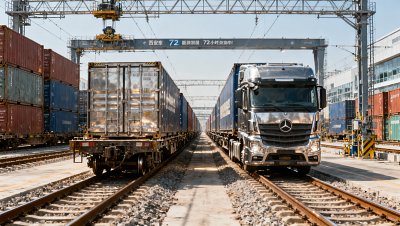
On June 24, 2026, a notice from the China-Kyrgyzstan-Uzbekistan international intermodal coordination office showed that the weekly TEU rate on the China-Kyrgyzstan-Uzbekistan railway rose 18% from the previous week to USD 2,850 per TEU, the highest level of 2026 so far. In the context of continued Red Sea disruption and rising pressure on alternative Eurasian routes, this development matters not only as a freight update but also as an execution signal for exporters, buyers, and supply chain service providers that rely on this corridor for deliveries of new energy trucks, construction machinery, and chassis into Central and West Asian markets.
A corridor under visible pricing strain
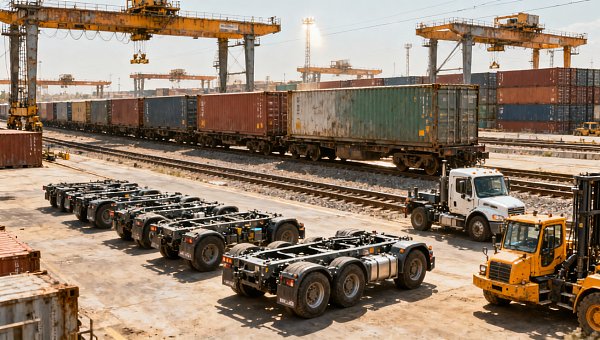
The confirmed facts are limited but clear. According to the June 24 notice, the Red Sea crisis continues to put pressure on alternative Asia-Europe transport channels. Within that context, the standard container rate on the China-Kyrgyzstan-Uzbekistan railway increased by 18% week on week, reaching USD 2,850 per TEU and setting a new high for 2026. The route has become a key overland channel for exports of Chinese new energy trucks, construction machinery, and chassis to Central and West Asian markets. The notice also indicates that rate volatility on this line directly affects delivery schedules and the stability of end-market quotations.
Where the pressure may appear first in day-to-day business
Export quotations face a tighter adjustment window
From an industry perspective, exporters using this route may feel the impact first in pricing discipline and shipment planning. When freight moves sharply within a single week, the business risk is not only higher transport cost but also the need to revisit quotation validity, delivery commitments, and contract assumptions tied to logistics expense. What deserves closer attention is whether existing export documentation, commercial terms, and delivery schedules leave enough room for freight-related adjustments.
Procurement and manufacturing schedules may need closer coordination
For manufacturers and procurement teams shipping new energy trucks, construction machinery, or chassis, the issue is not limited to transport budgets. Analysis shows that when a route becomes both critical and more expensive, planning across production, outbound booking, and customer delivery windows becomes more sensitive. Teams involved in order release, parts allocation, and dispatch should pay closer attention to whether logistics timing assumptions remain aligned with current route conditions.
Supply chain service providers may face higher execution sensitivity
For logistics coordinators, freight forwarders, and other supply chain service providers, the notice points to a more demanding execution environment rather than a formally announced new trade rule. Even so, rate volatility on a key corridor can change how bookings, handover timing, and client communication are managed in practice. Observably, service providers should pay particular attention to transport documents, booking arrangements, and any delivery-related clauses that may affect liability, timing, or customer claims.
Buyers and downstream channels may see pressure in delivery and offer stability
For overseas buyers and distribution channels served through this route, the direct issue may be the reliability of lead times and the consistency of quoted prices. Analysis shows that when a key overland alternative becomes more expensive, downstream procurement decisions may become more cautious, especially where equipment purchases depend on confirmed delivery windows, technical documents, or tender schedules. The immediate concern is not a proven market shift, but a need for closer review of shipment-linked commitments.
What companies should monitor now
Review contract wording against freight volatility
Companies using this corridor should closely check how contracts, quotations, and order confirmations deal with freight changes, delivery timing, and validity periods. This is especially relevant where final pricing or shipment release depends on transport cost assumptions that may no longer hold over a short cycle.
Track document consistency across shipment and tender processes
Where exports involve technical files, bid documents, shipping paperwork, or customer-side acceptance materials, businesses should verify that logistics timing remains consistent with committed delivery terms. The input information does not establish any new formal compliance rule, but it does suggest a need to watch for execution friction in documentation and handover arrangements.
Recheck supply planning for route-dependent product lines
Products identified in the notice, including new energy trucks, construction machinery, and chassis, deserve closer operational review if they depend on this railway for regular outbound flow. Observably, companies should focus on whether procurement release, production completion, and dispatch sequencing remain workable under a more expensive and potentially less stable route environment.
Watch official wording and market feedback before treating this as a settled shift
It is more appropriate to understand this development as a live execution signal rather than a complete rule reset. Businesses should continue monitoring how official notices, transport coordination updates, customer responses, and market-side delivery practices evolve before concluding that a longer-term pricing pattern has fully formed.
Why this matters beyond one week of freight data
Analysis shows that the significance of this notice lies less in the single number itself and more in what it reveals about route dependence under external disruption. A key overland channel for machinery and vehicle-related exports is showing sharper cost movement at a time when alternative Asia-Europe transport options are already under strain. That does not by itself prove a lasting structural change, but it does signal that logistics cost, delivery execution, and quotation stability should be treated as linked compliance and trade management issues rather than isolated transport matters.
How this update is best understood for now
At this stage, the notice is best read as an operational warning sign for companies active in Central and West Asian delivery chains, especially those relying on the China-Kyrgyzstan-Uzbekistan railway for equipment-related exports. The confirmed change is the weekly rate increase and its immediate effect on delivery and quotation stability. The broader industry meaning still requires observation, particularly in how market participants adjust contracts, shipment planning, and execution standards in response.
Basis of this article and what still needs verification
This article is based on the user-provided news title, event date, and event summary. For developments of this kind, relevant source types typically include official notices, regulatory or transport coordination releases, customs or trade authority information, industry association updates, standard-setting documents, and reporting by authoritative media. A specific official source link was not provided in the input, so continued verification is still necessary. What remains worth monitoring includes later official wording, implementation interpretation, changes in tender or shipment documentation, market feedback, and how companies actually adjust delivery execution.
Trending News
- How to compare concrete mixer truck suppliers by total landed cost
- How axle load limits affect low bed trailer exports to Southeast Asia
- How to locate a truck exhaust system leak before replacing parts
- When does heavy equipment transport require a lowboy trailer?
- When does a light commercial vehicle for urban delivery save fleet costs?
Tag
Recommended News
 Logistics & FreightHow does a truck wing body improve loading and unloading efficiency?Truck wing bodies speed up loading and unloading with wide side access, faster forklift handling, and flexible pallet delivery. Discover whether they fit your operation.
 Logistics & FreightRed Sea Delays Push Ro-Ro Transit to 42 DaysRed Sea delays push Ro-Ro transit to 42 days, forcing heavy-truck exporters to rethink Suez route timing, freight costs, and delivery planning. Explore faster alternatives and key trade impacts.
 Logistics & FreightCai Mep Delays Stretch Truck Parts Clearance to 12 DaysTruck parts clearance at Cai Mep now stretches to 12 days, disrupting road transport equipment imports. Learn the impact on delivery, procurement, and logistics planning.
 Logistics & FreightTruck Logging: Common Route and Load Mistakes That Raise Operating RiskTruck logging mistakes in route and load planning can quietly raise fuel costs, delays, wear, and compliance risk. Learn the key errors and how to build safer, more reliable transport decisions.
 Logistics & FreightLight Commercial Vehicle for Urban Delivery: Best Fit for Stop-and-Go RoutesLight commercial vehicle for urban delivery choices can make or break stop-and-go efficiency. Discover how to match payload, maneuverability, and cost for smarter city routes.
 Logistics & FreightRed Sea Disruptions Push Equipment Exports to Rail and Caspian RouteRed Sea disruptions are pushing equipment exports to rail and the Caspian route, cutting transit to 18–21 days. See how exporters can balance delivery speed, cost, and supply chain reliability.
![]() Logistics & FreightAlashankou Opens Priority Clearance for NEV Heavy TrucksAlashankou opens priority clearance for NEV heavy trucks, cutting customs time to under 4 hours and removing key port fees. See what this means for exporters, logistics teams, and buyers.
Logistics & FreightAlashankou Opens Priority Clearance for NEV Heavy TrucksAlashankou opens priority clearance for NEV heavy trucks, cutting customs time to under 4 hours and removing key port fees. See what this means for exporters, logistics teams, and buyers. Logistics & FreightChina-Europe Rail Adds Emergency Fuel SurchargeChina-Europe rail adds an emergency fuel surcharge of USD 1,200/TEU for trucks, semi-trailers, and chassis exports. See route impact, cost risks, and planning actions now.
 Logistics & FreightKazakhstan AI Customs Review Lifts Truck Parts Checks to 37%Kazakhstan AI customs review lifts truck parts checks to 37%, raising HS 8708 inspection risks and delays. Learn what exporters, importers, and brokers must do now.
 Logistics & FreightSuez Fee Hike Reshapes Ro-Ro Truck BookingsSuez fee hike reshapes Ro-Ro truck bookings as heavy truck exporters face higher freight costs, 90-day booking windows, and tighter vessel space—see what to plan now.
 Logistics & FreightRed Sea Disruption Tightens Ro-Ro Capacity on Asia-Europe RouteRed Sea disruption squeezes Ro-Ro capacity on the Asia-Europe route, driving heavy-truck shipping costs and delays. See what exporters, buyers, and logistics teams must track now.
 Logistics & FreightBest Light Commercial Vehicle for Urban Delivery in Tight City RoutesLight commercial vehicle for urban delivery: discover how to choose the best model for tight city routes with better maneuverability, loading efficiency, and lower operating costs.
 Logistics & FreightGTRI Jumps 12.3% as Red Sea Diversions Tighten CapacityGTRI jumps 12.3% as Red Sea diversions tighten truck shipping capacity on Asia-Europe routes. See what rising costs, 62-75 day lead times, and booking suspensions mean for exporters.
 Logistics & FreightWing Van Truck Loading Problems and Practical Ways to Reduce Cargo DamageWing van truck loading mistakes can damage cargo even on short routes. Learn practical ways to improve load balance, restraint, and daily handling to cut losses.
 Logistics & FreightSuez Canal Fees Rise 35% as Heavy Truck Shipping Hits 68 DaysSuez Canal fees rise 35% as heavy truck shipping stretches to 68 days. See how higher costs and longer transit can disrupt Q3 truck and chassis delivery plans.
 Logistics & FreightDjibouti Port Clearance for Truck Chassis Extends to 18 DaysDjibouti Port clearance for truck chassis now extends to 18 days, disrupting East Africa transit. Learn the impact on truck chassis shipments, documents, and delivery planning.
 Logistics & FreightDjibouti Port Extends Truck Chassis Clearance to 18 WorkdaysDjibouti Port extends truck chassis clearance to 18 workdays, raising customs risks for East Africa and Middle East shipments. Learn the new VIN and drawing rules now.
 Logistics & FreightSuez Eastbound Rates Rise 12% as Rail Alternatives GainSuez eastbound rates rise 12% as rail alternatives gain amid Djibouti congestion. See how shippers, vehicle parts importers, and logistics providers can adapt routing and protect supply continuity.
 Logistics & FreightBulk Trailer vs Container Trailer for High-Volume FreightBulk trailer or container trailer? Discover which option cuts handling costs, speeds high-volume freight, and fits your cargo, route, and delivery goals best.
 Logistics & FreightCentral Asia Rail Rates Jump as Red Sea Diversions BiteCentral Asia rail rates jump as Red Sea diversions tighten capacity. See how rising costs on the China-Kyrgyzstan-Uzbekistan corridor affect heavy truck exports, documents, and delivery planning.
 Logistics & FreightRail Rate Jump Signals Cost Pressure on Eurasian DiversionRail rate jump on the China-Kyrgyzstan-Uzbekistan corridor signals rising Eurasian cost pressure. See how it may impact delivery timing, export quotes, and supply chain planning.
 Logistics & FreightWhen a Van Trailer Is the Right Choice for Secure FreightVan trailer solutions protect secure freight from weather, dust, and theft. Learn when a van trailer is the smart choice for safer delivery and better cargo control.
 Logistics & FreightRed Sea Disruption Lifts China-Kyrgyz-Uzbek Rail Rates 18%Red Sea disruption lifts China-Kyrgyz-Uzbek rail rates 18%, raising export costs for truck KD parts, chassis, and loose components. See what shippers must monitor now.
 Logistics & FreightChina-Europe Rail Eastern Route Passes 40,000 TripsChina-Europe Rail Eastern Route passes 40,000 trips as Manzhouli launches a smart warehouse for heavy truck KD exports. Discover how faster customs clearance may improve rail logistics planning.
 Logistics & FreightXi’an Rail Launches Truck Export Service in 72 HoursXi’an Rail launches truck export service in 72 hours, offering a faster China-Europe rail solution for new energy heavy trucks with lower costs, streamlined customs, and stronger delivery efficiency.