Is a BULLDOZER for Land Clearing Worth Buying or Renting?
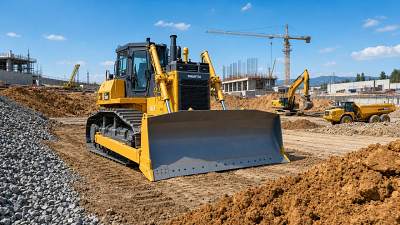
When planning a site preparation project, many decision-makers ask whether a BULLDOZER for land clearing is better purchased outright or rented as needed. The right choice depends on project scale, budget, equipment utilization, and long-term business goals. This article explores the key cost, efficiency, and operational factors that help companies make a smarter investment decision.
Why a Checklist Approach Works Better for This Decision
For enterprise buyers in construction, logistics support, mining access development, and infrastructure contracting, the purchase-versus-rental question is rarely solved by price alone. A BULLDOZER for land clearing may look cost-effective on a day-rate basis or attractive as a long-term asset, but the real decision must include utilization, transport, maintenance, operator availability, and project continuity over the next 12 to 36 months.
A checklist-based review helps decision-makers avoid two common mistakes. The first is buying equipment that works only for one large project and then remains underused for 6 to 9 months each year. The second is renting repeatedly for multiple phases and eventually paying more than the equivalent ownership cost, especially when mobilization, fuel management, and schedule delays are added.
In the heavy equipment and road transport equipment industry, land clearing is not an isolated equipment decision. It connects to site logistics, lowbed trailer movement, operator planning, spare parts access, and supplier reliability. That is why businesses should evaluate the BULLDOZER for land clearing as part of an operational system rather than as a standalone machine.
Start with These Priority Questions
- How many working hours will the machine realistically deliver per month: below 80 hours, around 120 to 160 hours, or above 200 hours?
- Will the equipment stay on one site for 3 to 6 months, or move across several locations with additional transport cost?
- Does the company already have operators, maintenance staff, and spare parts sourcing channels for crawler equipment?
- Is the land clearing workload a recurring business line or just a project-specific requirement?
If leadership teams answer these four questions early, they usually narrow the decision much faster. In many cases, utilization rate and project continuity are more decisive than sticker price.
Use This Core Decision Checklist Before Choosing a BULLDOZER for Land Clearing
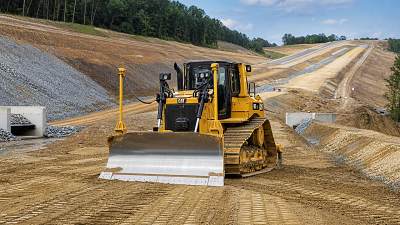
The most practical way to compare buying and renting is to score the machine against commercial, operational, and scheduling criteria. A BULLDOZER for land clearing is often selected for rough grading, brush removal, topsoil stripping, access road opening, and debris pushing. However, those jobs vary widely in duration, ground condition, and blade requirement, so the decision standard must be structured.
Before reviewing the table below, define your likely operating pattern. For example, 1 project lasting 4 months is very different from 5 projects spread across 18 months. Likewise, soft ground, stumps, and mixed rock increase wear and may justify stronger undercarriage support or a machine with a ripper attachment.
The following decision table is designed for business buyers who need a quick screening method before requesting quotations or supplier proposals.
This table should not be treated as an absolute rule, but it highlights where the balance usually shifts. If your BULLDOZER for land clearing will be deployed continuously and integrated with your fleet scheduling, ownership deserves serious consideration. If demand is intermittent or uncertain, rental often reduces risk faster than it reduces cost.
Non-Negotiable Checks Before You Ask for Quotes
- Confirm blade type and work scope. Straight blades, semi-U blades, and full U blades suit different clearing volumes and material flow.
- Check transport requirements. Many crawler dozers need lowbed trailer movement and route planning before site transfer.
- Review undercarriage wear expectations. Abrasive soil and rock can materially change ownership economics within 1 operating season.
- Verify operator availability. An efficient machine still loses value if skilled operation cannot be maintained across shifts.
These checks are especially important for companies sourcing internationally through a B2B platform, where equipment comparison is easy but local operating conditions differ significantly from one market to another.
Compare the Real Cost Drivers, Not Just the Rental Rate or Purchase Price
A common mistake is comparing monthly rental against the invoice price of the machine without modeling the supporting cost chain. For a BULLDOZER for land clearing, total cost of use typically includes transport, fuel consumption, wear parts, routine service intervals, downtime risk, operator expense, and idle time between assignments. In many projects, these hidden items account for a meaningful share of total equipment cost over 6 to 24 months.
Decision-makers should build at least three scenarios: low utilization, medium utilization, and high utilization. This approach is more realistic than using a single forecast. For example, if planned utilization drops by 25% because a permit is delayed or weather shortens the season, ownership may become much less attractive than expected.
The table below shows the cost elements that should be compared side by side before selecting a buy or rent strategy.
This comparison matters because equipment economics change quickly once a machine sits idle. If your BULLDOZER for land clearing is active only 2 months in every 6-month cycle, the ownership cost per productive hour can rise sharply even if the base asset price looked favorable during procurement.
Watch the Cost Factors Companies Often Miss
Transport is one of the most overlooked expenses. A crawler dozer may need escort planning, loading ramps, and lowbed trailer scheduling. On regional projects with 3 to 5 site transfers, this can materially affect total budget and should be included in both buy and rent models.
Another missed factor is work-tool suitability. If the machine needs a ripper, winch, or specialized blade setup, rental availability may be limited in some markets. That can create schedule risk even when the base rental rate appears attractive.
Finally, consider parts lead time. For ownership, filters and wear items can be planned, but major components may require several days or several weeks depending on supplier network and cross-border logistics. For companies operating in remote corridors, uptime planning is often more important than headline acquisition cost.
Match the Decision to Project Type, Fleet Strategy, and Supply Chain Reality
The right answer changes by business model. A contractor that clears land as a regular service line has different priorities from a logistics operator preparing one industrial yard. A BULLDOZER for land clearing should therefore be evaluated in relation to expected site conditions, fleet utilization, and access to support equipment such as excavators, dump trucks, water trucks, and transport trailers.
If your company already manages heavy trucks and off-road equipment, adding one dozer may be operationally efficient. You may already have fuel handling, mechanics, transport assets, and dispatch systems. In that case, ownership friction is lower. If not, renting can act as a trial phase before making a larger fleet investment.
For international buyers, platform-based sourcing is especially useful when comparing suppliers across machine categories, spare parts availability, and transport solutions. The equipment decision is stronger when procurement teams review the entire support chain instead of selecting the machine in isolation.
Scenario-Based Guidance for Enterprise Buyers
The table below provides a practical way to map project scenarios to a likely equipment strategy. It is not a substitute for quotation analysis, but it gives procurement teams a structured starting point.
The strongest signal from these scenarios is that recurring use and support infrastructure favor ownership, while uncertainty favors rental. For many companies, a staged approach also works well: rent a BULLDOZER for land clearing for the first project cycle, collect hour and cost data, then decide whether to purchase for year 2 or year 3.
Practical Fit Checks by Site Condition
- Dense brush and topsoil removal usually favor a blade setup optimized for pushing volume rather than hard ripping.
- Stump-filled ground may require ripper capability and stronger operator skill, increasing both wear and task time.
- Wet or unstable terrain can reduce productivity and may change transport, flotation, and scheduling assumptions.
- Projects with strict delivery windows often value guaranteed machine availability more than the lowest nominal rate.
These fit checks matter because a poorly matched machine can turn a cost decision into a productivity problem. In land clearing, lost output over 10 working days can be more expensive than a higher but better-aligned equipment choice.
Risk Reminders and Execution Steps Before Final Approval
Even when the economic direction seems clear, final approval should include a risk review. The BULLDOZER for land clearing decision often fails at the execution stage, not during the financial model. Delayed delivery, unclear maintenance obligations, wrong blade specification, and missing transport coordination are among the most common preventable issues.
For procurement leaders and operations managers, the goal is not simply to secure a machine. The goal is to secure productive output within schedule, budget, and field conditions. That means the approval process should include technical validation, support confirmation, and a fallback plan for downtime or project changes.
Use the following execution checklist before signing a purchase order or rental contract.
Final Approval Checklist
- Confirm expected monthly operating hours and test whether the estimate still works if usage falls by 15% to 25%.
- Verify machine configuration, including blade type, ripper need, undercarriage condition, and operator cabin requirements.
- Check transport plan, including loading method, route restrictions, and lowbed trailer availability.
- Review service terms, consumables responsibility, inspection intervals, and downtime response commitments.
- Ensure spare parts access for routine service items and likely wear components over the first 6 to 12 months.
- Align procurement, site management, and finance teams on whether flexibility or lower long-term cost is the primary decision objective.
Common Red Flags
Be cautious if the decision is based only on a low rental quote without clarity on service exclusions, transport charges, or replacement availability. Likewise, be cautious if a purchase decision assumes full-year utilization but the company has no confirmed backlog to support that assumption.
Another red flag appears when buyers compare machines only by engine size or price tier. For a BULLDOZER for land clearing, practical output depends on traction, blade suitability, ground type, and operator competence at least as much as headline specifications.
In many enterprise settings, the best choice is not universally buying or universally renting. It is choosing the option that matches workload stability, fleet maturity, and supply chain support in your region.
Why Choose Us for Equipment Sourcing and Decision Support
The Global Heavy Truck Industry Platform helps commercial buyers evaluate equipment decisions with a broader supply-chain perspective. If you are reviewing a BULLDOZER for land clearing, we can support not only product discovery but also comparison across related categories such as transport trailers, construction machinery, spare parts, and supplier capabilities for cross-border trade.
For business decision-makers, that means a more practical sourcing process. Instead of reviewing one machine in isolation, you can compare supplier responsiveness, equipment categories, support resources, and procurement options in one professional B2B environment. This is especially valuable when your project timeline, logistics setup, and after-sales support all affect the success of the equipment decision.
If you need help with parameter confirmation, equipment selection, estimated delivery cycle, transport matching, spare parts planning, or supplier comparison, contact us. We can help you organize the right inquiry points before you request quotations, including machine configuration, project scenario fit, quantity planning, budget range, and cooperation method. This makes it easier to move from a general question about buying or renting to a workable sourcing plan.
Trending News
Tag
Recommended News
 Used Truck MarketVietnam Tightens Used Commercial Vehicle Import RulesUsed commercial vehicle exporters face tighter Vietnam import rules from July 2026. Learn how new compliance documents may affect customs clearance, inventory turnover, and shipment planning.
 Fleet ManagementHeavy Truck Fuel Efficiency: What Impacts Operating CostsHeavy truck fuel efficiency directly impacts operating costs. Learn how design, payload, maintenance, and driver behavior affect fuel use and smarter truck buying decisions.
 Buying GuideHow to Choose a Cab Chassis Truck for Construction ProjectsCab chassis truck for construction buying guide: learn how to match axle layout, wheelbase, frame strength, and lifecycle cost to project needs for smarter fleet decisions.
 Used Truck MarketVietnam Tightens Proof Rules for Used Commercial Vehicle ImportsVietnam tightens proof rules for used commercial vehicle imports from July 1, 2026. Learn key compliance risks, certificate requirements, and how importers can avoid port refusal.
 Buying GuideExcavator Manufacturer Supplier Comparison: Quality Control Points That MatterExcavator manufacturer supplier comparison guide: learn the quality control points that reduce risk, improve reliability, and help buyers choose with confidence.
 Buying GuideHeavy Truck Chassis Manufacturer Checklist for Durability and Axle LayoutHeavy truck chassis manufacturer checklist covering durability, axle layout, quality control, and lifecycle cost. Compare suppliers smarter and choose a chassis built for long-term fleet performance.
 Buying GuideHow to Evaluate an Excavator Manufacturer in USA for Long-Term Parts SupportExcavator manufacturer in USA selection should go beyond specs. Learn how to assess long-term parts support, dealer strength, and uptime protection before you buy.
 Buying GuideWhat to Check Before Choosing a Construction Machinery SupplierConstruction machinery supplier selection starts with the right checks. Learn how to compare quality, certifications, delivery, and after-sales support to reduce risk and buy with confidence.
 Buying GuideHow to Choose a Bulldozer for Construction Site ConditionsBulldozer for construction selection starts with site conditions. Learn how to match size, blade, tracks, and cost factors to boost productivity and reduce downtime.
 Used Truck MarketVietnam Tightens Papers for Used Commercial Vehicle ImportsVietnam tightens papers for used commercial vehicle imports from July 1, 2026. Learn the new certificate and re-inspection rules, key compliance risks, and how exporters can avoid costly delays.
 Buying GuideTruck Trailer Bulk Order: How to Compare Price, Lead Time, and QualityTruck trailer bulk order decisions should go beyond the lowest quote. Learn how to compare price, lead time, quality, and supplier reliability for better fleet value.
 Buying GuideHow to Choose a Light Commercial Vehicle for Last Mile DeliveryLearn how to choose a light commercial vehicle for last mile delivery by comparing payload, cargo space, powertrain, and total cost to improve urban efficiency and fleet ROI.
![]() Buying GuideHow to Choose a Delivery Truck Supplier in USA Without Costly DelaysDelivery truck supplier in USA selection affects uptime, compliance, and delivery speed. Learn how to avoid costly delays, compare suppliers smarter, and choose a lower-risk fleet partner.
Buying GuideHow to Choose a Delivery Truck Supplier in USA Without Costly DelaysDelivery truck supplier in USA selection affects uptime, compliance, and delivery speed. Learn how to avoid costly delays, compare suppliers smarter, and choose a lower-risk fleet partner. Buying GuideHow to Evaluate a Crane Truck Supplier for Fleet ReliabilityCrane truck supplier selection affects uptime, parts access, and long-term fleet performance. Learn how to compare quality, support, and export capability with confidence.
 Buying GuideCrane Truck Quotation Checklist: Specs That Change the Final PriceCrane truck quotation guide: compare chassis, boom, axles, outriggers, compliance, and hidden costs before you buy. Get smarter quotes and avoid costly sourcing mistakes.
 Buying GuideDump Truck Bulk Order Cost Factors and Delivery RisksDump truck bulk order pricing depends on specs, shipping, compliance, and after-sales support. Learn key cost factors, delivery risks, and how to compare quotes with confidence.
 Buying GuideHow to Evaluate an Excavator with High Efficiency for Jobsite OutputEXCAVATOR with high efficiency evaluation starts with real jobsite output, fuel use, reliability, and support. Learn how to compare models and choose the right machine for higher productivity.
 Buying GuideCrane Truck Distributor Selection: 5 Key FactorsCrane truck distributor selection affects uptime, safety, and total cost. Discover 5 key factors to compare suppliers, support, sourcing strength, and long-term value.
 FAQTipper Trailer Payload Limits and Safety RisksTipper trailer payload limits affect braking, stability, and rollover risk. Learn practical safety checks, load control tips, and ways to reduce costly overload damage.
 Buying GuideHow to Evaluate an Excavator Manufacturer in ChinaExcavator manufacturer in China selection starts with the right checks. Learn how to compare factory strength, quality control, export support, and total procurement risk.
 Buying GuideHow to Choose a Bulldozer for Road Construction in 2026BULLDOZER for road construction selection in 2026 starts with terrain, blade type, fuel efficiency, and uptime—not horsepower alone. Learn how to compare smarter and choose with confidence.
![]() Buying GuideHow to Compare a Truck Chassis Supplier in EuropeTruck chassis supplier in Europe comparison guide: learn how to assess compliance, customization, delivery reliability, and after-sales support to choose a stronger long-term partner.
Buying GuideHow to Compare a Truck Chassis Supplier in EuropeTruck chassis supplier in Europe comparison guide: learn how to assess compliance, customization, delivery reliability, and after-sales support to choose a stronger long-term partner.![]() Buying GuideDelivery Truck Supplier in USA: Cost and Lead Time GuideDelivery truck supplier in USA guide: compare truck costs, lead times, hidden fees, and supplier reliability to choose the right partner and reduce procurement risk.
Buying GuideDelivery Truck Supplier in USA: Cost and Lead Time GuideDelivery truck supplier in USA guide: compare truck costs, lead times, hidden fees, and supplier reliability to choose the right partner and reduce procurement risk. Fleet ManagementTruck Fleet Planning Tips for Lower DowntimeTruck fleet planning tips to cut downtime, improve uptime, optimize maintenance, manage spare parts, and build a more reliable, cost-efficient transport operation.
 Buying GuideBULLDOZER for Mining Operations: Key Performance ChecksBULLDOZER for mining operations: discover key checks for traction, hydraulics, durability, fuel economy, safety, and lifecycle cost before you buy.