How to Compare a Truck Chassis Supplier in Europe
Choosing a truck chassis supplier in Europe now requires more than checking quotes and lead times. Market conditions are shifting across regulation, electrification, customization, and supply chain resilience.
That shift matters because chassis quality influences uptime, payload efficiency, body integration, and lifecycle cost. A weak supplier match can delay fleet deployment and increase maintenance exposure.
For any company comparing a truck chassis supplier in Europe, the best decision comes from reading current market signals and linking them to sourcing criteria. This guide explains what is changing, why it matters, and how to respond.
Why the truck chassis supplier in Europe landscape is changing
Europe’s truck chassis market is moving toward stricter compliance, faster model adaptation, and more application-specific engineering. Standard platforms still matter, but flexibility is becoming a stronger differentiator.
Demand is also becoming more fragmented. Logistics fleets, municipal operators, construction users, and cross-border transport projects need different wheelbases, axle layouts, cab formats, and body-mounting solutions.
At the same time, buyers expect better visibility. A trusted truck chassis supplier in Europe is now judged by technical data access, certification clarity, production transparency, and post-delivery responsiveness.
Another important signal is regional risk management. European sourcing decisions increasingly consider not only price, but also continuity, parts support, and the supplier’s ability to handle market disruptions.
The main forces pushing comparison standards higher
Several structural forces are raising the benchmark for every truck chassis supplier in Europe. These forces shape how chassis are designed, manufactured, documented, and supported.
- European buyers increasingly request application-specific chassis rather than generic catalog units.
- Lead time reliability now ranks close to unit price in many sourcing decisions.
- Technical communication speed is becoming a measurable supplier advantage.
- After-sales capability is gaining importance in cross-border procurement.
How these changes affect supplier evaluation in real projects
The comparison process is no longer limited to factory size or headline price. Every truck chassis supplier in Europe must be reviewed through application fit, engineering support, and operational continuity.
For logistics projects, payload balance, fuel efficiency, and axle configuration usually carry the most weight. For construction and municipal applications, frame durability and body adaptation become more critical.
Cross-border projects introduce another layer of complexity. Documentation accuracy, homologation support, and spare parts availability can determine whether deployment remains on schedule.
This means the best truck chassis supplier in Europe may differ by operating environment. A supplier strong in standard long-haul chassis may not be ideal for specialist body installations.
Key impact areas to review
- Vehicle uptime and maintenance intervals
- Bodybuilder compatibility and installation accuracy
- Delivery predictability across multiple orders
- Lifecycle support and replacement part access
- Documentation quality for import and registration
What to compare first when reviewing a truck chassis supplier in Europe
A practical comparison starts with a shortlist of measurable factors. These factors help separate a capable truck chassis supplier in Europe from one that only appears competitive on paper.
1. Production capability and consistency
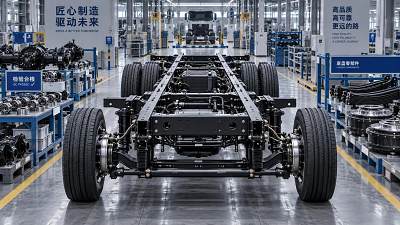
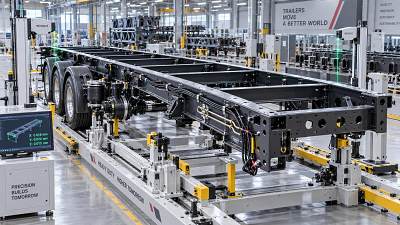
Check annual output, production lines, welding standards, coating processes, and quality checkpoints. Ask whether the supplier can maintain consistency across repeat orders and mixed chassis configurations.
2. Compliance and certification readiness
Review available certifications, homologation support, material traceability, and testing records. A reliable truck chassis supplier in Europe should provide clear documentation without long delays.
3. Customization depth
Compare wheelbase options, axle combinations, suspension choices, frame reinforcement, PTO compatibility, and cab variants. Good customization reduces bodywork compromise and improves application efficiency.
4. Delivery reliability
Ask for recent delivery performance data, not promises. Stable scheduling, export handling, and communication discipline often matter more than the shortest theoretical lead time.
5. After-sales and parts support
A strong truck chassis supplier in Europe should offer spare parts planning, technical troubleshooting, warranty clarity, and response channels that function across borders and time zones.
A simple comparison framework that improves decision quality
Using a weighted scorecard can reduce bias. It also helps align technical, commercial, and operational priorities when comparing each truck chassis supplier in Europe.
This framework works especially well when sourcing through digital industry platforms. Structured supplier data makes it easier to compare technical specifications and reduce evaluation time.
Signals that indicate a dependable long-term partner
Not every capable supplier will look identical, but strong patterns do appear. A dependable truck chassis supplier in Europe usually demonstrates clarity, discipline, and application understanding.
- Fast and accurate replies to technical questions
- Complete specification sheets and drawing support
- Evidence of similar export or project experience
- Stable supply of key components and parts
- Transparent terms for warranty and claims handling
Weak signals also matter. Incomplete data, shifting quotations, vague compliance answers, or slow technical follow-up often indicate future friction after the order is placed.
What deserves attention in the next sourcing cycle
Over the next few years, comparing a truck chassis supplier in Europe will likely involve more digital validation, more emissions-related design changes, and stronger demand for modular platforms.
That makes early technical alignment more valuable than ever. Shortlisting suppliers by application suitability first can prevent expensive redesign, registration delays, and service gaps later.
- Request technical documents before commercial negotiation becomes final.
- Compare lifecycle cost, not only unit acquisition cost.
- Check whether support extends to body integration and export documents.
- Use recent project references to validate reliability claims.
A specialized B2B platform can simplify this process by connecting buyers with verified manufacturers, product categories, market insights, and comparison resources across the heavy truck supply chain.
If you are evaluating a truck chassis supplier in Europe, start by building a shortlist based on technical fit, compliance readiness, and support depth. Then compare suppliers with consistent criteria and documented evidence.
Well-structured sourcing decisions create stronger project outcomes. They also help identify suppliers that can support long-term growth across logistics, construction, municipal transport, and specialized heavy-duty operations.
Trending News
- How to assess a truck cement manufacturer’s build quality before ordering
- When does a truck trailer OEM make sense for private-label fleets?
- What to verify before choosing a water truck OEM for your fleet
- How to size a cab chassis truck for a fire department apparatus
- When does a truck off road setup need locking differentials?
Tag
Recommended News
 Buying GuideHow to assess a truck cement manufacturer’s build quality before orderingTruck cement manufacturer build quality: assess tank steel, welding, chassis integration, pneumatic systems, factory QC, and inspection evidence before ordering.
 Buying GuideWhen does a truck trailer OEM make sense for private-label fleets?Truck trailer OEM programs help private-label fleets cut lifecycle costs, standardize operations, and improve uptime. Learn when customization delivers real commercial value.
 Buying GuideWhat to verify before choosing a water truck OEM for your fleetWater truck OEM selection guide: verify chassis compatibility, tank quality, pump performance, compliance, and service support to build a safer, more reliable fleet.
 Buying GuideHow to size a cab chassis truck for a fire department apparatusCab chassis truck for fire department sizing guide: balance GVWR, axle loads, wheelbase, water tank placement, and mission needs for safer apparatus design.
 Buying GuideWhat to verify before choosing a truck chassis supplierChoose the right truck chassis supplier with a practical checklist for application fit, axle ratings, body integration, quality control, delivery reliability, and after-sales support.
 Buying GuideHow to choose a logging truck for steep and rough forest roadsLogging truck selection for steep, rough forest roads: compare traction, braking, gearing, chassis strength, tires, and supplier support for safer, more reliable hauling.
 Buying GuideHow to choose a flatbed trailer deck length for oversized loadsFlatbed trailer deck length guide for oversized loads: balance cargo support, axle weight, securement space, overhang, and route access for safer transport.
 Buying GuideHow to assess a truck chassis supplier for trailer manufacturingTruck chassis supplier for trailer manufacturing: learn how to assess technical fit, quality control, engineering support, and delivery reliability for smarter sourcing.
 Buying GuideIs the SHACMAN H3000 6×4 Cement Mixer suitable for large projects?SHACMAN H3000 6×4 Cement Mixer: assess payload, cycle time, traction, and service support to see if it can keep large concrete projects moving efficiently.
 Buying GuideHow to evaluate heavy duty trucks for sale in Russia before buyingHeavy duty trucks for sale in Russia: learn how to compare specifications, winter readiness, service support, supplier reliability, and total ownership costs before buying.
 Buying GuideWhat to verify before choosing a logging truck producerChoose a logging truck producer with confidence: verify chassis strength, load security, compliance, service support, and delivery control for demanding forestry routes.
 Buying GuideHow to choose a truck excavator for confined construction sitesTruck excavator selection for confined sites: explore access, reach, stability, attachments, and safety factors to choose a productive, space-efficient solution.
 Buying GuideHow to choose a bulk trailer for high-volume aggregate haulingBulk trailer selection guide for high-volume aggregate hauling—optimize payload, body type, safety, compliance, and total cost for reliable fleet performance.
 Buying GuideHow to compare truck tire rolling resistance for lower fleet fuel costsTruck tire rolling resistance explained: compare test data, tread design, maintenance, and total cost to cut fleet fuel costs with confidence.
 Buying GuideHow to evaluate quality control before choosing a truck trailer OEMTruck trailer OEM quality control: learn how to assess design validation, welding, material traceability, testing, compliance, and factory audits before you buy.
 Buying GuideHow to verify a dump truck supplier can meet your delivery deadlineDump truck supplier with quick delivery: learn how to verify stock, production capacity, quality control, and export logistics to keep your project on schedule.
 Buying GuideHow to size a bulldozer for mining operations by haul road gradeBULLDOZER for mining operations sizing guide: match haul road grade, traction, blade capacity, and stability to improve safety, productivity, and fuel efficiency.
 Buying GuideHow to evaluate a construction machinery manufacturer’s quality controlConstruction machinery manufacturer quality control: learn how to assess materials, welding, hydraulics, testing, and after-sales support before you buy.
 Buying GuideHow to verify an excavator manufacturer with CE certificationExcavator manufacturer with CE certification: learn how to verify documents, model traceability, and factory compliance to avoid sourcing risks and buy with confidence.
 Buying GuideHow to evaluate a crane truck exporter before placing a bulk orderCrane truck exporter evaluation made simple: learn how to verify compliance, production capacity, delivery reliability, and after-sales support before placing a bulk order.
 Buying GuideWhen does a refrigerator truck make more sense than insulated transportRefrigerator truck or insulated transport? Learn when a refrigerator truck delivers better temperature control, lower spoilage risk, and smarter cold chain ROI.
 Buying GuideWhen does a tractor truck make more sense than a rigid truck?Tractor truck or rigid truck? Learn when a tractor truck delivers better flexibility, payload efficiency, and long-haul value for growing freight operations.
 Buying GuideHow to choose the right BULLDOZER for land clearing on rough terrainBULLDOZER for land clearing on rough terrain: learn how to choose the right size, tracks, blade, and support setup to improve safety, productivity, and total project value.
 Buying GuideHow to evaluate a semi trailer distributor before placing a bulk orderSemi trailer distributor selection can make or break a bulk order. Learn how to assess technical support, quality control, documentation, delivery reliability, and after-sales service before you buy.
 Buying GuideHow to compare an excavator manufacturer for construction on uptime supportExcavator manufacturer for construction comparison starts with uptime support. Learn how to assess service response, parts availability, training, and escalation to reduce downtime risk.