Truck Dozer vs Wheel Dozer: Which Fits Tough Jobsite Conditions
Choosing between a truck dozer and a wheel dozer shapes more than equipment preference. It affects traction, pass efficiency, fuel use, tire or undercarriage wear, and the rhythm of material handling across difficult ground.
That choice matters even more in mining support, road building, site preparation, and infrastructure work, where surface conditions can change within the same shift. A machine that performs well on one section may lose efficiency on another.
In the wider land transport equipment sector, this comparison also connects with fleet planning. Contractors and buyers often evaluate a truck dozer alongside haul trucks, trailers, and other construction machinery as part of one operating system.
For that reason, the debate is not simply truck dozer versus wheel dozer in isolation. It is about finding the machine that fits haul routes, loading zones, maintenance capability, and jobsite risk.
Understanding the two machine types
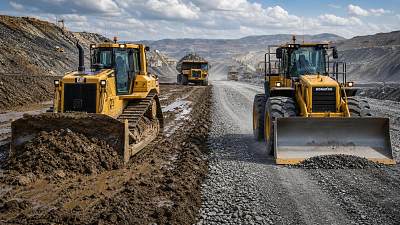
A truck dozer usually refers to a tracked dozer used in heavy construction and earthmoving environments. Its tracks spread machine weight over a larger contact area and help it stay productive on weak or uneven surfaces.
A wheel dozer uses tires instead of tracks. It generally travels faster, moves more easily between working zones, and suits jobs where ground firmness supports higher-speed cycles.
Both machines push, spread, stockpile, reclaim, and clean working areas. The difference is how they deliver force, mobility, and stability under pressure.
This is why the truck dozer comparison remains active across global equipment sourcing channels. Buyers are not comparing labels. They are comparing operating behavior in real terrain.
Why the choice is getting more attention
Project schedules have tightened, while ground conditions have become less predictable. Many sites combine soft subgrade, blasted rock, temporary haul roads, and congested working areas within one contract.
At the same time, equipment buyers now compare suppliers globally instead of locally. Digital B2B platforms make it easier to review machine specifications, attachments, support capability, and total fleet compatibility before procurement begins.
The Global Heavy Truck Industry Platform sits in this context. It connects construction machinery, complete trucks, chassis systems, trailers, and parts resources in one marketplace, which helps users compare a truck dozer decision against broader transport and site logistics needs.
That broader view matters. A dozer choice can influence haul road quality, truck cycle times, stockpile recovery, and maintenance planning across the entire operation.
Performance differences in tough jobsite conditions
Soft ground and poor bearing capacity
A truck dozer usually has the advantage on wet clay, loose fill, mud, and recently disturbed ground. Lower ground pressure allows the machine to keep moving where tires may sink or lose push force.
That makes tracked machines more dependable during early site opening, embankment shaping, and mining support in unstable ground. When flotation is the main issue, the truck dozer often becomes the safer choice.
Rock, abrasion, and impact
Wheel dozers work well on firm, abrasive surfaces when travel speed and quick repositioning matter. However, sharp rock can increase tire damage risk, especially in fragmented quarry or mining conditions.
A truck dozer handles rough, uneven contact with more confidence, though undercarriage wear can become a major cost factor. In abrasive applications, surface type should be assessed together with maintenance discipline.
Long pushes and repeated cycles
For sustained blade load and difficult pushing resistance, a truck dozer often delivers stronger penetration and better hold. Tracks convert power into drawbar pull effectively when the machine must keep pushing through resistance.
A wheel dozer, by contrast, can outperform when the job favors faster shuttle movement, lighter spreading, and shorter-distance stockpile handling. In those cases, higher travel speed can improve hourly output.
Slope and maneuverability
Tracked machines generally provide more stable footing on irregular slopes and broken terrain. A truck dozer is often preferred where consistent contact and controlled blade work are required.
Wheel dozers can turn quickly and move between zones with less delay. On large, open, firm worksites, that mobility becomes a real productivity advantage.
A practical comparison at decision stage
The most useful comparison is rarely based on a single specification. It comes from matching terrain, cycle pattern, wear exposure, and support resources.
This table should be treated as a starting point, not a final answer. Blade type, operator skill, job layout, and service support can shift the outcome significantly.
Where each machine fits in actual operations
A truck dozer is commonly favored for mine support areas, landfill cells, road foundation work, and early-stage infrastructure preparation. These environments reward traction and stability more than transit speed.
Wheel dozers often fit aggregate yards, coal stockpiles, port-related bulk material zones, and large industrial sites with maintained ground. Their faster movement supports quick response across wider operating footprints.
The most important point is not to separate the dozer from related transport equipment. A truck dozer that improves haul road condition may create value far beyond its own hourly output.
This is one reason integrated sourcing platforms have become more useful. When machinery, trucks, trailers, and spare parts can be reviewed together, equipment selection becomes more operationally realistic.
Key checks before making a final selection
A reliable truck dozer assessment should look beyond brochure horsepower. The following checks usually reveal the better long-term fit.
- Measure actual ground condition by season, not only during the site visit.
- Map push distance, turning frequency, and travel distance between work areas.
- Estimate wear cost using local parts access, not generic factory assumptions.
- Check blade configuration, visibility, and operator control for the planned task.
- Review how the machine supports trucks, loaders, or stockpile handling flows.
- Confirm aftersales support, spare parts availability, and service response time.
These checks are especially useful when sourcing across borders. The lowest upfront price on a truck dozer may become expensive if support delays interrupt project continuity.
Using market intelligence to reduce selection risk
The current equipment market offers more options, but also more variation in configuration and support quality. That makes comparison discipline essential.
A platform focused on heavy trucks and construction machinery can help narrow that complexity. Access to supplier profiles, product categories, industry news, and buying guides creates a stronger base for evaluating each truck dozer option.
This matters because the machine decision often extends into parts planning, transport compatibility, and future fleet expansion. A dozer should fit the operating ecosystem, not just the tender line item.
The most useful way to move forward
When the site is soft, uneven, or highly resistant under load, a truck dozer usually offers the stronger technical case. When ground is firm and cycle speed dominates, a wheel dozer often becomes the more efficient answer.
The better decision comes from matching machine behavior to terrain, duty cycle, and support conditions. In practice, that means building a shortlist around real operating data, not general preference.
A useful next step is to compare candidate models against three simple filters: ground condition, expected wear pattern, and interaction with the wider truck and machinery fleet. That approach usually reveals which truck dozer solution truly fits tough jobsite conditions.
Trending News
- How to compare concrete mixer truck suppliers by total landed cost
- How axle load limits affect low bed trailer exports to Southeast Asia
- How to locate a truck exhaust system leak before replacing parts
- When does heavy equipment transport require a lowboy trailer?
- When does a light commercial vehicle for urban delivery save fleet costs?
Tag
Recommended News
 Truck ReviewsBulk Trailer Capacity vs Stability: What Matters Most on SiteBulk trailer decisions are not just about capacity. Learn how stability, axle setup, tipping safety, and site conditions affect real productivity and smarter fleet performance.
 Truck ReviewsSHACMAN X5000 6×4 Dump Truck: Payload, Fuel Use, and Site Fit ExplainedSHACMAN X5000 6×4 Dump truck guide covering payload, fuel use, and site fit. See how this heavy-duty model supports smarter hauling decisions and lower operating risk.
 Truck ReviewsMixer Truck Capacity Guide: Choosing the Right Size for Jobsite EfficiencyMixer truck capacity guide for better jobsite efficiency. Learn how to choose the right size to reduce trips, improve concrete delivery flow, and compare supplier options with confidence.
 Truck ReviewsWheel Loader vs Excavator: Which Handles Mixed Jobsite Loading BetterWheel loader or excavator? Discover which machine handles mixed jobsite loading better, cuts delays, improves truck flow, and delivers stronger site efficiency.
 Truck ReviewsHow to Choose a Log Truck for Steep Terrain and Long HaulsLog truck selection guide for steep terrain and long hauls. Learn how to compare drivetrain, braking, payload, and durability to cut risk, improve uptime, and choose the right truck.
 Truck ReviewsTruck Dozer vs Wheel Dozer: Which Fits Tough Jobsite ConditionsTruck dozer vs wheel dozer: discover which machine performs better in soft ground, rock, slopes, and fast cycles, and choose the right fit for tough jobsites with confidence.
 Truck ReviewsCurtain Side Trailer vs Box Trailer for Mixed Cargo LoadsCurtain side trailer vs box trailer: discover which option handles mixed cargo loads better for faster loading, stronger protection, and more efficient multi-stop deliveries.
 Truck ReviewsTruck Tipper for Construction: Key Specs That Affect Loading EfficiencyTruck tipper for construction buying guide: compare body volume, hydraulics, chassis strength, axle setup, and tipping angle to improve loading efficiency and jobsite output.
 Truck ReviewsSHACMAN X5000 6×4 Dump Truck: Payload, Fuel Use, and Jobsite FitSHACMAN X5000 6×4 Dump truck insights on payload, fuel use, and jobsite fit. See how it performs in construction, quarry, and infrastructure work before you buy.
 Truck ReviewsHeavy Duty Trucks for Sale: Compare Payload, Fuel Use, and Service LifeHeavy duty trucks for sale: compare payload, fuel use, and service life to find reliable, cost-efficient transport solutions and smarter global sourcing options.
 Truck ReviewsTruck Excavator vs Standard Digger for Tight Job SitesTruck excavator or standard digger for tight job sites? Compare mobility, stability, setup speed, and real productivity to choose the smarter machine.
 Truck ReviewsSHACMAN X5000 6×4 Dump Truck Review for Heavy HaulSHACMAN X5000 6×4 Dump truck review for heavy haul: compare performance, payload, durability, safety, costs, and sourcing tips for demanding projects.
 Truck ReviewsLight Duty Truck With Durable Engine: What Matters MostLight duty truck with durable engine: discover the key checks for uptime, lower fuel costs, smarter maintenance, and reliable performance before you buy.
 Truck ReviewsWhat Makes a Truck Tipper for Construction Perform Better On-Site?Truck tipper for construction performance depends on site conditions, body strength, hydraulics, and traction. Learn how to choose the right model for safer, faster, more efficient jobs.
 Truck ReviewsLogging Truck Producer Comparison: Durability Issues That Affect UptimeLogging truck producer comparison guide: discover the durability issues that impact uptime, repair costs, and safety, and learn how to choose a truck built for harsh forestry transport.
 Truck ReviewsTruck Tipper for Construction: When Payload Matters More Than PriceTruck tipper for construction buying guide: learn why payload, durability, and cycle efficiency matter more than price to cut costs, boost uptime, and improve site productivity.
 Truck ReviewsCrane Truck Manufacturer Comparison for Urban Lifting and Narrow SitesCrane truck manufacturer comparison for urban lifting: discover how to choose compact, safe, high-efficiency models for narrow sites, faster setup, and reliable support.
 Truck ReviewsTruck Cement Mixer Manufacturer Comparison: Drum Design, Output, and ServiceTruck cement mixer manufacturer comparison guide covering drum design, real output, and after-sales service. Help your team compare suppliers, reduce sourcing risk, and choose with confidence.
 Truck ReviewsTruck Tipper Manufacturer Comparison: Build Quality Points That MatterTruck tipper manufacturer comparison guide: discover the build quality points that truly affect durability, payload stability, maintenance, and long-term operating cost.
 Truck ReviewsTruck Cement for Sale: How to Judge Value From Photos and Spec SheetsTruck cement for sale buyers can learn to judge true value from photos and spec sheets. Spot wear, compare capacity, and avoid costly mistakes before you contact sellers.
 Truck ReviewsLogging Truck Producer Comparison: Features That Matter in Tough TerrainLogging truck producer comparison for tough terrain: discover the features that impact traction, stability, durability, and uptime to choose the right forestry truck with confidence.
 Truck ReviewsLogging Truck Producer Comparison: Capacity, Durability, and ServiceLogging truck producer comparison guide covering capacity, durability, and service. Compare real-world fit, reduce fleet risk, and choose reliable suppliers for forestry transport.
 Truck ReviewsFlatbed Trailer Supplier With High Strength: What Really MattersFlatbed trailer supplier with high strength: learn how to assess materials, structure, compliance, and lifecycle value to choose reliable trailer partners with confidence.
 Truck ReviewsDoes Quick Installation Really Matter When Choosing an Excavator ManufacturerExcavator manufacturer with quick installation: learn why fast setup only matters when paired with reliable performance, lower downtime, operator support, and long-term jobsite efficiency.
 Truck ReviewsWhat Makes a Truck Tipper for Construction Easier to Maintain On SiteTruck tipper for construction models with easy hydraulic access, modular parts, and clear service points cut downtime, lower repair costs, and keep demanding jobsites running.