When OEM Services Matter in Heavy Truck Parts Manufacturing
In today’s competitive commercial vehicle market, choosing a heavy truck parts manufacturer with OEM services can make a critical difference in product quality, supply chain efficiency, and long-term brand growth. For business decision-makers, OEM capability is not just about customized production—it is a strategic advantage that supports reliability, global sourcing, and stronger market responsiveness across the heavy truck parts industry.
For most enterprise buyers, the real question is not whether OEM services sound attractive, but when they truly matter enough to influence supplier selection, total cost, and long-term operational performance. In heavy truck parts manufacturing, OEM capability becomes especially important when your business depends on product consistency, branded differentiation, fast adaptation to market needs, and dependable support across multiple regions.
The core search intent behind this topic is practical and decision-driven. Buyers want to understand when working with a heavy truck parts manufacturer with OEM services creates measurable value, what risks it reduces, and how to judge whether a supplier’s OEM claims are credible. They are not looking for generic definitions. They want a clear framework for sourcing decisions.
Why OEM Services Matter More in Heavy Truck Parts Than in Many Other Industries
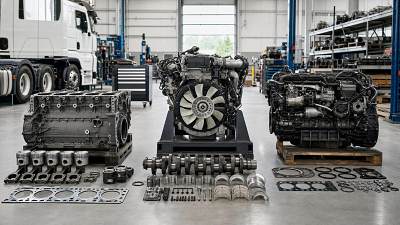
Heavy truck parts operate in one of the most demanding product environments in manufacturing. Components must perform under high loads, long mileage cycles, extreme temperatures, poor road conditions, and strict uptime expectations. A failure in braking parts, suspension systems, chassis components, engine-related assemblies, or electrical systems does not just create warranty costs. It can interrupt logistics operations, delay construction projects, and damage customer trust.
That is why OEM services carry more strategic weight in this sector than in many standard industrial categories. When a supplier can manufacture to your exact technical specifications, match fitment requirements across vehicle platforms, and maintain stable quality from batch to batch, you reduce operational uncertainty. This becomes increasingly important for distributors, fleet support providers, vehicle assemblers, and regional parts brands that cannot afford inconsistent field performance.
For decision-makers, OEM capability also matters because heavy truck parts are rarely purchased in isolation. They are part of broader aftermarket strategies, vehicle lifecycle management, regional compliance requirements, and brand positioning efforts. A supplier that can support custom requirements, documentation, packaging, testing, and scalable production offers more than manufacturing capacity. It offers business flexibility.
What Business Buyers Actually Want to Know Before Choosing an OEM-Capable Supplier
Most target readers in this market are not searching for technical theory alone. They want answers to commercial questions. Can the supplier maintain quality at volume? Can custom parts be produced without excessive lead times? Will OEM development improve margins or create complexity? Can the manufacturer support expansion into new markets with different standards, product mixes, and customer expectations?
Another key concern is risk. Business buyers want to avoid suppliers that advertise OEM services but only provide superficial customization, such as logo printing or minor packaging changes. True OEM support should include engineering communication, material control, tooling capability where needed, process consistency, traceability, testing standards, and the ability to align production with long-term procurement plans.
They also care about supply continuity. In the heavy truck industry, one delayed component can disrupt assembly schedules, maintenance commitments, or distributor inventory planning. A qualified heavy truck parts manufacturer with OEM services should be able to support forecasting, repeat orders, change management, and quality problem resolution in a structured way. In other words, buyers want a manufacturing partner, not just a low-cost exporter.
When OEM Services Deliver the Highest Strategic Value
OEM services matter most when your business model requires differentiation. If you are building a regional aftermarket brand, private-label truck parts line, or specialized product portfolio for fleets or workshops, standard off-the-shelf sourcing may not give you enough control. You may need tailored dimensions, upgraded materials, product markings, branded packaging, installation kits, or documentation customized for your market. In these cases, OEM manufacturing supports both product identity and customer confidence.
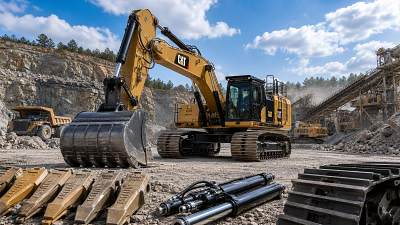
They also matter when your application requirements are specific. Heavy trucks are used in logistics, mining, municipal engineering, construction, and industrial transport, and each environment can place different demands on parts performance. OEM services allow buyers to request design adjustments or material changes that improve durability under certain operating conditions. This can become a major competitive advantage in markets where end users care more about lifecycle value than lowest purchase price.
Another high-value scenario is multi-market expansion. Companies selling across different countries often need product variations, labels, certifications, packaging languages, and fitment adaptations. A manufacturer with mature OEM processes can help standardize what should remain consistent while managing what needs localization. That reduces internal coordination costs and shortens the time required to launch or expand product lines internationally.
How OEM Capability Improves Quality Control and Product Reliability
Quality is one of the strongest reasons to work with an OEM-focused supplier. In heavy truck parts manufacturing, quality is not only about whether a part looks correct at delivery. It is about whether that part will maintain dimensional accuracy, material performance, and functional stability over time. Reliable OEM manufacturers build quality into sourcing, machining, forming, finishing, assembly, and inspection, rather than treating quality as a final checkpoint.
For buyers, this matters because standardized OEM processes make product outcomes more predictable. If your supplier documents technical drawings carefully, controls incoming materials, validates samples before mass production, and maintains inspection records, you gain stronger assurance that repeat orders will match approved standards. This reduces returns, field complaints, installation issues, and hidden costs tied to inconsistent supply.
OEM services can also improve reliability through controlled engineering change management. In real-world truck parts sourcing, product revisions happen. Vehicle models evolve, customer feedback reveals weak points, or new regulations require adjustments. A capable OEM manufacturer can manage these changes systematically, update tooling or specifications, and preserve traceability. That is far more valuable than buying from suppliers who cannot clearly document what changed, when, and why.
The Cost Question: Is OEM Manufacturing Really Worth It?
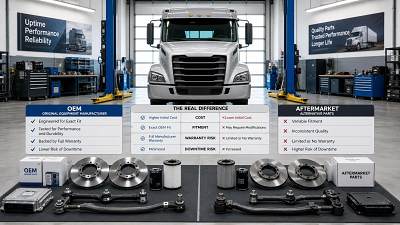
For enterprise buyers, OEM sourcing should never be judged only by unit price. The right comparison is total business cost. A slightly cheaper standard part may appear attractive in procurement spreadsheets, but if it causes fitment problems, shorter service life, unstable quality, or more customer complaints, the real cost becomes much higher. This is especially true in the heavy truck sector, where downtime and replacement cycles carry significant commercial impact.
OEM services often require initial investment in development, sampling, tooling, process setup, or packaging design. However, these costs can be justified when they lead to better product-market fit, fewer defects, stronger brand loyalty, or improved procurement efficiency over time. For distributors and brand owners, OEM manufacturing can also support healthier margins by allowing differentiated offerings that are not directly comparable to generic catalog products.
The return on investment becomes even clearer when you view OEM capability as a supply chain tool. Better forecast alignment, more stable quality, fewer emergency replacements, and stronger long-term supplier coordination all contribute to lower operating friction. For business leaders making sourcing decisions, the right question is not “Is OEM cheaper today?” but “Does OEM help us build a more profitable and resilient business over the next three to five years?”
How to Tell Whether a Manufacturer’s OEM Services Are Genuine
Not every supplier offering OEM services has the systems to support serious business requirements. Some only provide cosmetic customization, while others can genuinely support technical collaboration and scalable production. Decision-makers should evaluate OEM capability using evidence, not sales language. Start by asking what kind of customization the supplier has completed before, what categories they specialize in, and how they manage specifications from inquiry to delivery.
Ask for details about engineering communication, sample approval procedures, tooling management, quality checkpoints, and batch traceability. A credible manufacturer should be able to explain how drawings are reviewed, how materials are verified, how deviations are controlled, and how repeat consistency is maintained. If the answers are vague, the OEM offering may not be mature enough for strategic procurement.
It is also important to assess organizational readiness. Does the supplier have dedicated technical staff? Can they provide documentation in a professional and timely manner? Are they experienced in export packaging, labeling compliance, and international order coordination? A heavy truck parts manufacturer with OEM services should demonstrate both factory capability and cross-border business competence, especially if your supply chain spans multiple regions.
Which Heavy Truck Businesses Benefit Most from OEM Partnerships
OEM manufacturing is not equally important for every buyer, but it brings exceptional value to several business types. Regional distributors building private-label programs are among the biggest beneficiaries. OEM services allow them to create recognizable product lines, maintain quality standards, and avoid direct price competition with generic alternatives. This is particularly useful in markets where trust and product consistency influence repeat business.
Fleet service providers and maintenance networks also benefit when they need dependable parts that match operational conditions. If a fleet operates in harsh environments or across a standardized truck mix, customized OEM sourcing can improve service intervals, fitment accuracy, and inventory efficiency. Over time, this supports lower maintenance uncertainty and stronger service commitments to end customers.
Vehicle assemblers, specialized equipment manufacturers, and companies serving construction or mining sectors may gain even more from OEM support. Their parts requirements are often more application-specific, and standard supply may not fully address technical or branding needs. In these situations, OEM partnerships can become part of a broader competitive strategy rather than just a procurement choice.
Common Risks Buyers Face Without Strong OEM Support
One of the biggest risks of relying only on generic sourcing is inconsistency. Parts may look similar on paper but vary in material quality, tolerances, finish, or performance from one batch to another. In heavy truck applications, these differences can lead to installation problems, reduced service life, and increased warranty pressure. Without structured OEM control, buyers often spend more time resolving issues downstream.
Another risk is weak brand positioning. If your products are identical to dozens of others in the market, competition quickly shifts to price. That makes growth harder, especially for distributors or parts brands trying to build customer loyalty. OEM services help create distinction through product specifications, packaging, technical support materials, and better alignment with end-user expectations.
There is also the risk of poor scalability. A supplier may handle small standard orders well but struggle when you need customized packaging, scheduled deliveries, documentation, or coordinated product development across several SKUs. As your business expands, the lack of OEM capability becomes a bottleneck. Choosing the right manufacturing partner early can prevent costly supplier changes later.
How Global Sourcing Platforms Help Buyers Find the Right OEM Partner
For international buyers, identifying a qualified OEM supplier is often difficult because capabilities vary widely across manufacturers. This is where a professional B2B platform focused on the heavy truck ecosystem becomes highly valuable. Instead of searching across fragmented sources, buyers can compare suppliers, product categories, and industry resources within a marketplace built around commercial vehicles, trailers, construction machinery, and spare parts.
A specialized global platform improves sourcing efficiency by helping decision-makers discover manufacturers with relevant category expertise, evaluate product breadth, and access supporting information such as market insights, supplier profiles, and buying guides. This is especially useful when sourcing heavy truck parts across borders, where supplier communication, product clarity, and trust signals are essential.
For buyers looking for a heavy truck parts manufacturer with OEM services, the platform model also supports better decision-making because it connects procurement with context. Instead of treating sourcing as a one-time transaction, buyers can study market trends, review supplier positioning, and identify partners capable of supporting long-term growth. That is increasingly important in a global industry shaped by changing logistics demand, infrastructure investment, and regional supply chain shifts.
What Decision-Makers Should Do Before Committing to an OEM Supplier
The best OEM partnerships begin with internal clarity. Before approaching suppliers, define your actual goals: lower lifecycle cost, stronger brand differentiation, better fitment accuracy, faster market entry, improved durability, or expansion into new regions. Without this clarity, it is difficult to judge which OEM capabilities matter most or what trade-offs are acceptable in pricing, lead time, and minimum order quantities.
Next, create a structured supplier evaluation process. Review technical ability, manufacturing systems, quality management, communication speed, export readiness, and sample performance. Compare not just quotations, but how each supplier responds to detail, handles revisions, and explains their processes. In many cases, the responsiveness and discipline shown during the quotation and sample stages are strong indicators of future execution quality.
Finally, think beyond the first order. The right OEM supplier should be able to support a roadmap, not just a shipment. Ask how they handle scaling, new product introductions, performance feedback, and long-term collaboration. In heavy truck parts manufacturing, sourcing decisions have lasting effects on brand reputation, service reliability, and commercial resilience. The more strategic your business goals, the more important true OEM capability becomes.
Conclusion: OEM Services Matter When Performance, Brand, and Supply Reliability Matter
OEM services are most valuable when heavy truck parts sourcing is tied to bigger business outcomes: product reliability, market differentiation, supply chain stability, and long-term growth. For enterprise decision-makers, this is not simply a manufacturing option. It is a practical lever for reducing risk, improving consistency, and building stronger competitive positioning in a demanding global market.
Working with a heavy truck parts manufacturer with OEM services makes the greatest difference when you need more than a standard catalog product. If your company depends on dependable performance, customized specifications, branded value, or multi-market scalability, OEM capability becomes a strategic requirement rather than an added feature.
In a complex international supply environment, buyers who evaluate OEM partners carefully and use trusted industry platforms to identify capable suppliers will be better positioned to make informed, profitable decisions. The companies that treat OEM sourcing as part of long-term business strategy, rather than short-term purchasing, are often the ones that gain stronger resilience and better market results.
Trending News
- How to compare concrete mixer truck suppliers by total landed cost
- How axle load limits affect low bed trailer exports to Southeast Asia
- How to locate a truck exhaust system leak before replacing parts
- When does heavy equipment transport require a lowboy trailer?
- When does a light commercial vehicle for urban delivery save fleet costs?
Tag
Recommended News
 Truck Parts IndustryWhat causes a truck injector to fail prematurely?Truck injector failure can stem from fuel contamination, water, wiring faults, heat, or incorrect installation. Discover practical diagnostic steps to prevent repeat repairs.
 Truck Parts IndustryEU REACH Rule Takes Effect for Truck Rubber PartsEU REACH Rule takes effect for truck rubber parts exported to the EU. Learn how SCIP reporting, SVHC declarations, and supply chain compliance now impact truck manufacturers and suppliers.
 Truck Parts IndustryHow to Evaluate Commercial Vehicle Parts With Eco-Friendly Materials for Durability and ComplianceCommercial vehicle parts with eco-friendly materials require more than green claims. Learn how to assess durability, compliance, and supplier reliability for smarter sourcing.
 Truck Parts IndustryHow to Evaluate a Truck Parts Supplier Beyond Unit PriceTruck parts supplier selection should go beyond unit price. Learn how to assess quality, traceability, compliance, delivery, and support to reduce fleet risk and total cost.
 Truck Parts IndustryVietnam to Require QR Traceability Labels on Imported Heavy-Truck PartsVietnam to Require QR Traceability Labels on Imported Heavy-Truck Parts from Aug 1, 2026. Learn scope, VNQR-2025 rules, VITRAC links, and how to avoid port refusal and fines.
 Truck Parts IndustryHow to Evaluate a Truck Spare Parts Supplier for Long-Term Cost ControlTruck spare parts supplier selection affects far more than price. Learn how to compare quality, delivery, traceability, and hidden costs to protect fleet uptime and control long-term expenses.
 Truck Parts IndustryFuel Injection Pump Failure Signs and What They Mean for Engine PerformanceFuel injection pump failure signs can quickly reduce truck power, raise fuel use, and trigger hard starts. Learn what each symptom means and when to act before costly downtime.
 Truck Parts IndustryExcavator Attachment Selection for Demolition and Site PrepExcavator attachment selection for demolition and site prep: compare breakers, grapples, crushers, and buckets to boost productivity, safety, and ROI.
 Truck Parts IndustryTruck Engine Overhaul or Replacement: Which Costs Less Long Term?Truck engine overhaul or replacement? Compare long-term cost, downtime, fuel efficiency, and reliability to choose the smarter option for your fleet.
 Truck Parts IndustryHow to Choose Excavator Parts That Last LongerExcavator parts buying guide: learn how to choose excavator parts that last longer by comparing fit, material quality, operating conditions, and supplier reliability.
 Truck Parts IndustryAre Eco-Friendly Commercial Vehicle Parts Durable Enough for Daily Use?Commercial vehicle parts with eco-friendly materials can be durable for daily use—if tested right. Explore where they perform best, key risks, and smarter sourcing insights.
 Truck Parts IndustryTruck Parts OEM vs Aftermarket: Cost, Fit, and Warranty RisksTruck parts OEM vs aftermarket: compare true cost, fit accuracy, and warranty risks to reduce downtime, avoid disputes, and make smarter fleet sourcing decisions.
 Truck Parts IndustryTruck Spare Parts Buying Guide: How to Reduce Downtime and Fitment RiskTruck spare parts buying guide for fleet maintenance teams: learn how to reduce downtime, avoid fitment risk, verify suppliers, and make smarter sourcing decisions.
 Truck Parts IndustryHow to Evaluate a Truck Parts Supplier Beyond PriceTruck parts supplier selection should go beyond price. Learn how to compare quality, delivery, service, and total cost to reduce risk and keep fleets running efficiently.
 Truck Parts IndustryHeavy Truck Parts for Construction: Signs of a Reliable ManufacturerHeavy truck parts manufacturer for construction: learn how to identify reliable suppliers through quality control, traceability, testing, and support to reduce downtime and improve fleet safety.
 Truck Parts IndustryHow to Compare Truck Spare Parts Suppliers on Quality and Lead TimeTruck spare parts supplier comparison starts with quality and lead time. Learn how to assess consistency, delivery reliability, and sourcing fit for smarter purchases.
 Truck Parts IndustryEU REACH Sets PAH Limit for Heavy Truck Rubber PartsEU REACH sets a new PAH limit for heavy truck rubber parts, affecting brake hoses, bushings, and export compliance. Learn what suppliers must prepare now to avoid testing delays and customs risks.
 Truck Parts IndustryWhat to Check in a Truck Chassis Supplier Before Fleet ExpansionTruck chassis supplier selection can make or break fleet expansion. Learn what to check on quality, production, delivery, support, and total cost before requesting a quote.
 Truck Parts IndustryCold Storage Truck Parts That Matter Most for Temperature ControlCommercial vehicle parts for cold storage determine real temperature stability. Discover the key truck components that reduce spoilage, improve efficiency, and protect sensitive cargo.
 Truck Parts IndustryHow to Evaluate a Heavy Truck Parts Manufacturer for Long-Term Supply StabilityHeavy truck parts manufacturer selection starts with supply stability. Learn how to assess quality, capacity, lead times, and risk signals for smarter long-term sourcing.
 Truck Parts IndustryEU EPR Rules Extend to Commercial TrailersEU EPR rules now extend to commercial trailers, bringing new registration, reporting, and fee duties from 2027. See how exporters can prepare early to avoid customs delays.
 Truck Parts IndustryTruck Suspension Problems: Signs, Causes, and Fix OptionsTruck suspension issues can lead to tire wear, poor handling, and costly downtime. Learn the key signs, root causes, and best fix options for different truck applications.
 Truck Parts IndustryHow to Choose a Heavy Truck Parts Manufacturer for Construction FleetsHeavy truck parts manufacturer for construction selection starts with uptime, quality, and delivery. Learn how to compare suppliers, reduce fleet risk, and choose with confidence.
 Truck Parts IndustryUS Sets AEBS Rule for Imported Commercial TrailersUS sets AEBS rule for imported commercial trailers starting Oct. 1, 2026. Learn FMVSS No. 127A, SAE J2929, and key compliance steps to avoid CBP entry denial.
 Truck Parts IndustryHow to Choose Commercial Vehicle Parts That Reduce DowntimeCommercial vehicle parts selection can make or break fleet uptime. Learn how to choose parts that improve fit, quality, supply reliability, and lower total downtime cost.