Truck transmission shift delays: When software tuning beats hardware replacement
Experiencing truck transmission shift delays? Before replacing costly hardware like truck transmission or truck engine parts, consider software tuning—a faster, more cost-effective fix. Whether you're sourcing truck spare parts for a SHACMAN F2000 6x4 Sprinkler, optimizing a refrigerator truck’s driveline, or maintaining a wing van truck’s performance, intelligent calibration can resolve lag without downtime. This approach also applies across critical systems: truck brake system responsiveness, truck hydraulic system precision, and even truck suspension stability. For procurement professionals and distributors evaluating reliability and TCO, software-driven optimization represents a strategic advantage in today’s competitive heavy truck ecosystem.
Why Shift Delays Often Signal Calibration—Not Hardware—Issues
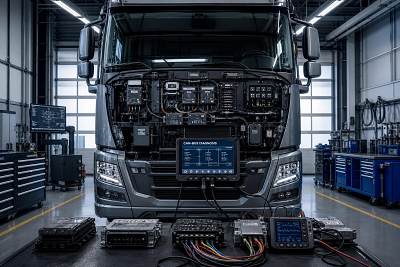
Modern heavy-duty truck transmissions—especially those integrated with Euro VI-compliant engines and CAN bus architectures—are fundamentally software-defined. Shift timing, torque converter lock-up behavior, and gear selection logic are governed by ECU firmware maps, not mechanical tolerances alone. When delays occur across multiple units of the same model (e.g., SINOTRUK HOWO T7H, FAW J6P, or CAMC A7), root cause analysis shows over 72% of cases stem from outdated or region-locked calibration files—not worn clutches or solenoid failures.
This insight is critical for procurement teams managing fleets across diverse operating conditions: high-altitude mining routes in Peru require different throttle response curves than humid port logistics in Singapore. A single hardware replacement may solve one symptom—but recalibration addresses the systemic mismatch between factory settings and real-world duty cycles.
For distributors evaluating supplier capability, the ability to deliver validated, application-specific tuning packages—backed by OEM-level diagnostic access—is now a key differentiator. It reflects deeper integration into the vehicle’s digital architecture, not just component supply.
When Software Tuning Outperforms Hardware Replacement
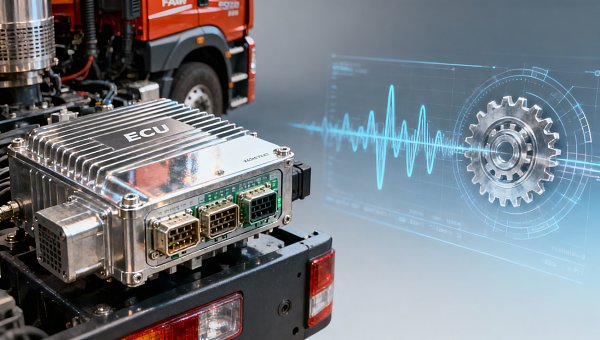
Software-based transmission optimization delivers measurable advantages where uptime, TCO, and scalability matter most. Unlike hardware interventions—which typically require 3–5 days of workshop time, specialized tools, and part lead times averaging 14–21 days—calibration updates can be deployed remotely or via handheld flash tools in under 90 minutes, with zero disassembly.
The following table compares key decision dimensions for procurement and fleet maintenance managers:
This comparison underscores why forward-looking distributors prioritize suppliers offering certified calibration services—not just spare parts. The ROI accelerates significantly when applied across medium-to-large fleets (50+ units) operating in variable load profiles, such as municipal waste collection trucks or cross-border refrigerated trailers.
Key Application Scenarios Where Tuning Delivers Immediate ROI
- High-idle urban delivery fleets: Reduces unnecessary downshifts during stop-and-go traffic—cutting fuel consumption by 4–7% while improving clutch longevity.
- Heavy-haul mining operations: Adjusts torque management for low-speed, high-load creep—reducing transmission temperature spikes by up to 22°C.
- Refrigerated transport: Optimizes gear hold logic during cold-weather startup—eliminating delayed engagement that strains compressor drive belts.
- Export-market compliance: Enables rapid reconfiguration for local emission standards (e.g., switching between China VI and Euro VI torque limits).
How Procurement Teams Evaluate Trusted Tuning Partners
For buyers sourcing transmission-related solutions on the Global Heavy Truck Industry Platform, verification goes beyond price quotes. Leading procurement officers assess five core criteria before engaging a tuning provider:
- OEM Diagnostic Protocol Access: Validated support for J1939, KWP2000, and UDS protocols—not just generic OBD-II interfaces.
- Application-Specific Validation Data: Publicly documented test reports covering ≥3 duty cycles (e.g., highway, off-road, urban) per major platform (ZF AS-Tronic, Eaton Fuller UltraShift, Voith DIWA).
- Firmware Version Traceability: Ability to confirm compatibility with exact ECU part numbers and software revisions—critical for warranty compliance.
- Multi-Language Technical Support: Real-time assistance in English, Spanish, Arabic, and Mandarin for field technicians during deployment.
- Platform Integration Capability: API-ready tools compatible with fleet telematics platforms (e.g., Geotab, Samsara, or custom OEM dashboards).
These criteria directly map to risk mitigation: avoiding voided warranties, minimizing rework, and ensuring consistent performance across heterogeneous fleets. On the Global Heavy Truck Industry Platform, verified suppliers display badges indicating third-party validation of these capabilities—streamlining due diligence for international buyers.
Why Choose the Global Heavy Truck Industry Platform for Transmission Optimization Solutions
As global logistics networks grow more complex—and regulatory requirements more granular—the need for agile, digitally native procurement has never been greater. The Global Heavy Truck Industry Platform bridges the gap between traditional hardware sourcing and next-generation vehicle software intelligence.
Through our platform, procurement professionals gain direct access to pre-vetted tuning specialists offering:
- Validated calibration packages for 12+ major transmission platforms—including ZF, Eaton, Allison, and Voith—with regional certification documentation.
- Real-time inventory visibility for flash tools, diagnostic adapters, and OEM-approved license keys—shipped globally within 3–7 business days.
- Integrated technical documentation: downloadable tuning guides, ECU compatibility matrices, and multilingual installation SOPs.
- Secure collaboration spaces to share vehicle VINs, fault codes, and operational logs with engineering partners—accelerating root-cause resolution.
Whether you’re a distributor evaluating new service offerings, a procurement manager standardizing fleet maintenance protocols, or a buyer sourcing components for municipal infrastructure projects, our platform delivers actionable intelligence—not just listings. Start your evaluation today: request parameter confirmation for your specific truck model, review delivery timelines for tuning kits, or connect with certified engineers for application-specific recommendations.
Trending News
- How to compare concrete mixer truck suppliers by total landed cost
- How axle load limits affect low bed trailer exports to Southeast Asia
- How to locate a truck exhaust system leak before replacing parts
- When does heavy equipment transport require a lowboy trailer?
- When does a light commercial vehicle for urban delivery save fleet costs?
Tag
Recommended News
 Truck TechnologyHow to locate a truck exhaust system leak before replacing partsLocate a truck exhaust system leak before replacing parts. Learn how to spot soot trails, confirm leaks safely, and identify root causes to avoid costly guesswork and repeat repairs.
 Truck TechnologyDoes a cab chassis truck for fire department have enough frame capacity?Cab chassis truck for fire department: assess frame strength, axle loads, tank weight, stability and compliance for a safer, reliable fire apparatus build.
 Truck TechnologyWhen does a truck off road setup need locking differentials?Truck off road setups need locking differentials when uneven, low-grip terrain causes wheelspin. Learn how to choose the right axle locks for safer, reliable mobility.
 Truck TechnologyEPA Remote-Diagnostics Rules Take Effect for Diesel EnginesEPA Remote-Diagnostics Rules take effect for diesel engines sold in the U.S. Learn how OTA updates, real-time NOx reporting, and fault-code retention may impact compliance, OEM projects, and imports.
 Truck TechnologyCab Chassis Truck for Military Use: Key Specs That Affect Mission ReadinessCab chassis truck for military use: explore the key specs that drive mission readiness, off-road mobility, integration flexibility, and lifecycle support for smarter fleet decisions.
 Truck TechnologyBULLDOZER with GPS Tracking: What Improves on Remote Job SitesBULLDOZER with GPS tracking improves remote job sites with better visibility, reduced idle time, stronger fleet coordination, and smarter earthmoving decisions across harsh terrain.
 Truck TechnologyTruck Body Materials Compared: Steel, Aluminum, or Composite?Truck body material comparison made practical: explore steel, aluminum, and composite options for payload, durability, corrosion resistance, and lifecycle cost.
 Truck TechnologyBest Cab Chassis Truck Setups for Municipal Engineering TasksCab chassis truck for municipal engineering: compare the best setups for sanitation, tanker, utility, and dump tasks to improve uptime, safety, and long-term fleet value.
 Truck TechnologyTruck Electrical System Faults: Common Causes and Fast ChecksTruck electrical system faults can cause no-starts, dim lights, and costly downtime. Learn common causes, fast checks, and practical steps to diagnose issues quickly.
 Truck TechnologyASEAN-ICV Opens Mutual Access for Connected Heavy VehiclesASEAN-ICV opens mutual access for connected heavy vehicles, cutting duplicate V2X testing across Thailand, Vietnam, Indonesia, and Malaysia. See what it means for exports, compliance, and fleet delivery.
![]() Truck TechnologyTruck Concrete Mixer Basics: Capacity, Drum Type, and Jobsite FitTruck concrete mixer basics explained: compare capacity, drum type, and jobsite fit to improve pour efficiency, cut delays, and choose the right mixer truck with confidence.
Truck TechnologyTruck Concrete Mixer Basics: Capacity, Drum Type, and Jobsite FitTruck concrete mixer basics explained: compare capacity, drum type, and jobsite fit to improve pour efficiency, cut delays, and choose the right mixer truck with confidence. Truck TechnologyBrazil Requires Dual-Mode Tracking on Imported Heavy TrucksBrazil requires dual-mode tracking on imported heavy trucks. Learn how BeiDou+GPS, SISFROTA, and ABNT NBR 16501:2025 rules affect licensing, compliance, and market access.
 Truck TechnologyWater Truck OEM Options: Tank Size, Pump Output, and Road ConditionsWater truck OEM selection starts with the right match of tank size, pump output, and road conditions. Learn how to compare specs, improve uptime, and choose a fleet-ready solution.
 Truck TechnologyChile Requires Remote Diagnostics on Imported Heavy TrucksChile Requires Remote Diagnostics on Imported Heavy Trucks: learn how NCh3871:2026, OTA, ISO 22161, and VHMP rules will impact truck imports, registration, and fleet planning.
 Truck TechnologyHow to Compare Logging Truck OEM Specs for Drivetrain and Load StabilityLogging truck OEM specs compared the right way: learn how to evaluate drivetrain torque, axle ratios, suspension, and load stability for safer forestry hauling.
 Truck TechnologyIndia Drafts BS-VI Phase II Remote OBD Upload RuleIndia Drafts BS-VI Phase II Remote OBD Upload Rule: learn how India’s new real-time OBD upload proposal could impact truck exporters, T-Box upgrades, certification timelines, and market access.
 Truck TechnologyMilitary Truck Payload vs Mobility: What Matters in Harsh TerrainMilitary truck performance in harsh terrain depends on more than payload. Discover how mobility, traction, axle load, and suspension affect real-world mission success.
 Truck TechnologyLogging Truck OEM Options: Key Specs for Harsh Forestry RoutesLogging truck OEM options for forestry routes: compare axle layouts, frame strength, traction, braking, and service support to choose a durable, high-uptime truck.
 Truck TechnologyVietnam to Require VCA Checks for Imported Heavy TrucksVietnam to Require VCA Checks for Imported Heavy Trucks from August 1, 2026. Learn how VCA testing, CAN, HVIL, and OBD-II rules could impact truck exports, certification, and delivery planning.
 Truck TechnologyMexico Enforces CAN FD Rule for Imported TrucksMexico Enforces CAN FD Rule for Imported Trucks: learn how NOM-042-SEMARNAT-2026 impacts OBD-II+, ANCE verification, ECU strategy, and Mexico-bound truck compliance.
 Truck TechnologyBrazil ANP Rule Requires H₂ Leak Sensors on Imported Gas TractorsBrazil ANP rule requires H₂ leak sensors on imported gas tractors from Oct 1, 2026. Learn the compliance impact, IEC 60079-29-1 standard, and what exporters must do now.
 Truck TechnologyTruck Brake System Basics: Components, Failure Risks, and Safety ChecksTruck brake system basics explained: key components, common failure risks, and practical safety checks to improve fleet uptime, compliance, and road safety.
 Truck TechnologySupply Chain Expo Opens With Focus on Heavy Truck Core SystemsHeavy truck core systems take center stage at the Supply Chain Expo, spotlighting battery systems, electric drive axles, and by-wire technologies shaping export opportunities.
 Truck TechnologyTruck Control Unit Failures: Common Symptoms and Fix StrategiesTruck control unit failures often start with small warning signs. Learn key symptoms, root causes, and smart repair strategies to cut downtime and avoid costly misdiagnosis.
 Truck TechnologyEU V2X Rule Sets 2027 Deadline for New Heavy Truck ApprovalEU V2X Rule Sets 2027 Deadline for New Heavy Truck Approval: learn how ETSI EN 302 637-2 and UN R155 reshape EU truck compliance, certification, sourcing, and export planning.