China Adds Tractor-Trailer Battery-Swap Systems to Subsidy Program
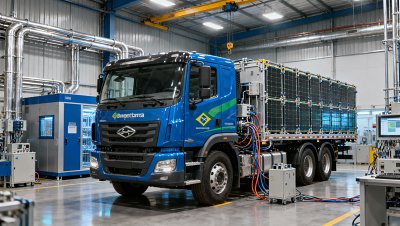
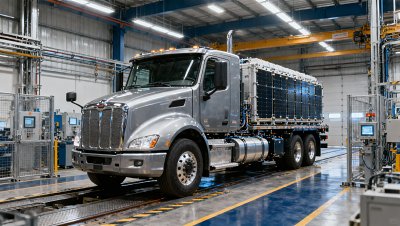
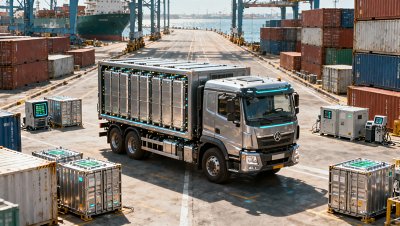
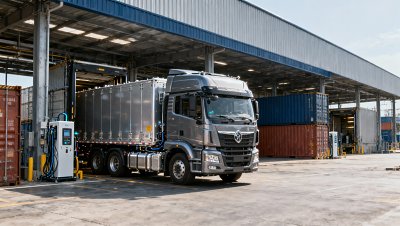
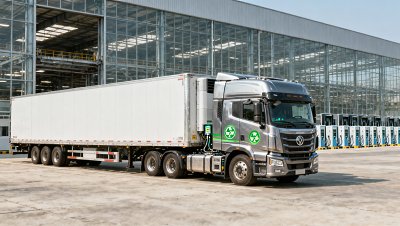
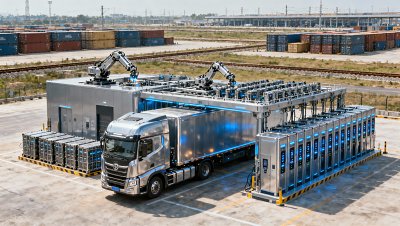
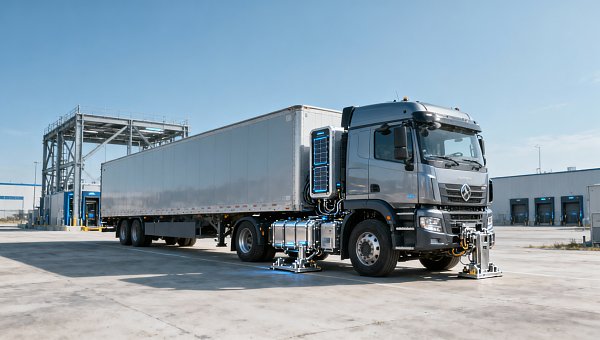
On May 12, 2026, China’s Ministry of Transport and the National Development and Reform Commission jointly issued the Implementation Details for Subsidies on New Energy Urban Buses and Power Batteries (2026). A notable revision is the first-time inclusion of modular battery-swap systems compatible with heavy-duty tractor-trailers in the national equipment upgrade subsidy program — marking a structural shift in policy support toward medium- and heavy-duty electric commercial vehicles.
Event Overview
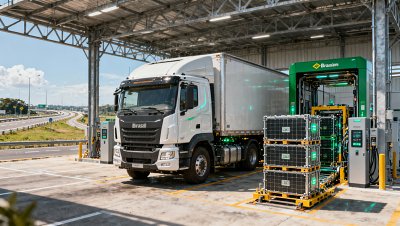
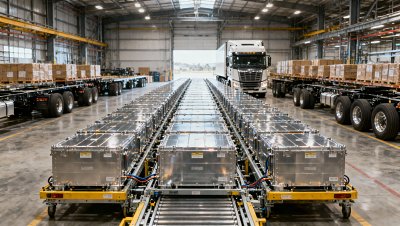
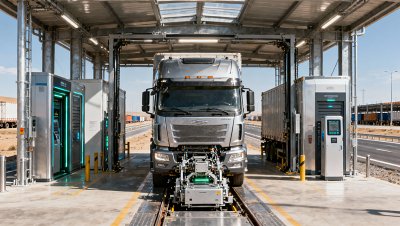
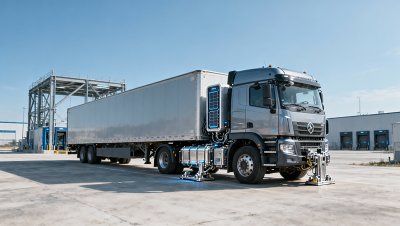
On May 12, 2026, China’s Ministry of Transport and the National Development and Reform Commission jointly issued the Implementation Details for Subsidies on New Energy Urban Buses and Power Batteries (2026). The document explicitly adds ‘modular battery-swap systems adapted for heavy-duty tractor-trailers’ to the eligible subsidy list. Under the scheme, each qualified system is eligible for a maximum subsidy of RMB 32,000. The subsidy applies exclusively to domestic operating enterprises engaged in urban public transport or freight logistics services.
Industries Affected
Direct trading enterprises: Export-oriented OEMs and system integrators supplying swap-enabled tractor-trailer chassis to overseas markets will face revised pricing expectations. Though the subsidy does not apply abroad, its domestic scale-up effect may compress production costs, indirectly reshaping export quotations and delivery timelines.
Raw material procurement enterprises: Suppliers of standardized battery module housings, high-current connectors, and thermal management components are likely to see increased order visibility — particularly for parts compliant with GB/T 34014–2023 and newly referenced swap interface specifications. However, no new material standards were introduced in the document; demand shifts remain volume-driven rather than specification-driven.
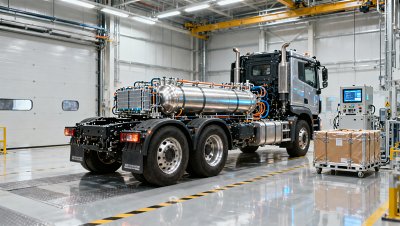
Manufacturing enterprises: Domestic manufacturers producing integrated swap chassis or skid-mounted swap stations must now align production planning with subsidy eligibility criteria — including third-party certification requirements and minimum operational durability thresholds (not detailed in the released text). Capacity ramp-up decisions may accelerate in Q3 2026, contingent on provincial implementation guidelines.
Supply chain service enterprises: Logistics providers specializing in oversized component transport and certified installation teams for roadside swap infrastructure may experience higher tender activity — especially in provinces piloting heavy-duty EV corridors (e.g., Jiangsu, Guangdong, Sichuan). Yet the policy does not mandate infrastructure deployment; uptake remains commercially discretionary.
Key Considerations and Recommended Actions
Verify provincial rollout timelines and application windows
While the central policy was issued on May 12, 2026, subsidy disbursement depends on provincial transport departments publishing local implementation rules — including documentation requirements, audit procedures, and fund allocation schedules. Enterprises should monitor provincial notices starting June 2026.
Assess compatibility of existing swap architecture against updated technical annexes
The实施细则 references Annex II (Technical Requirements for Tractor-Trailer Swap Systems), which introduces dimensional tolerances and mechanical locking validation protocols. Firms with legacy designs should conduct gap analysis before applying — retrofits are not subsidized.
Evaluate export pricing strategy in light of anticipated cost pass-through
Given the projected 8–12% price reduction for export-grade swap chassis in H2 2026, international sales teams should prepare revised quotation templates and clarify whether price adjustments apply to firm orders placed before or after July 1, 2026.
Editorial Perspective / Industry Observation
Observably, this policy signals a deliberate pivot from light- to medium/heavy-duty electrification — not as an isolated incentive, but as a coordination point across industrial policy (e.g., battery recycling mandates), grid planning (off-peak charging incentives), and road asset utilization (dedicated swap lanes under pilot review). Analysis shows the inclusion was less about immediate fleet renewal and more about de-risking long-haul EV adoption by lowering total cost of ownership (TCO) volatility for operators. From an industry perspective, the subsidy’s real leverage lies not in direct capital support, but in validating technical interoperability as a prerequisite for scalability — a threshold that previously hindered cross-manufacturer fleet standardization.
Conclusion
This policy does not guarantee rapid fleet electrification, nor does it resolve charging infrastructure gaps or grid capacity constraints. Rather, it serves as a calibrated enabler: lowering the entry barrier for early-mover logistics fleets while pressuring suppliers to converge on physical and communication protocols. A rational interpretation is that the measure accelerates consolidation among swap-system vendors — favoring those with certified integration pathways over pure-play battery or chassis makers lacking end-to-end validation.
Source Attribution
Official source: Ministry of Transport of the People’s Republic of China and National Development and Reform Commission, Implementation Details for Subsidies on New Energy Urban Buses and Power Batteries (2026), issued May 12, 2026. Full text available at www.mot.gov.cn and www.ndrc.gov.cn (Chinese language only).
To be monitored: Provincial implementation rules (expected June–August 2026); updates to GB/T standards related to heavy-duty swap interfaces; quarterly subsidy claim data published by provincial transport bureaus.
Trending News
- How to compare concrete mixer truck suppliers by total landed cost
- How axle load limits affect low bed trailer exports to Southeast Asia
- How to locate a truck exhaust system leak before replacing parts
- When does heavy equipment transport require a lowboy trailer?
- When does a light commercial vehicle for urban delivery save fleet costs?
Tag
Recommended News
 New Energy TrucksMIIT’s 404th Notice Clears Swap-Body Electric Trucks for ExportMIIT’s 404th notice approves FAW Jiefang swap-body electric trucks for export, boosting CE/ECE and UN R100 compliance readiness for global buyers.
 New Energy TrucksBrazil ANP Clears Three Chinese Battery Makers for Truck Swap NetworkBrazil ANP clears CATL, BYD FinDreams Battery, and Gotion for the truck swap network, opening new opportunities in Brazil’s electric heavy truck and battery-swapping market.
![]() New Energy TrucksEPA Phase 3 Rule Adds CIM Requirement for Hybrid HD TrucksEPA Phase 3 Rule adds CIM requirement for hybrid HD trucks from MY2027. Learn what U.S. importers, exporters, and OEMs must review now to stay compliant and market-ready.
New Energy TrucksEPA Phase 3 Rule Adds CIM Requirement for Hybrid HD TrucksEPA Phase 3 Rule adds CIM requirement for hybrid HD trucks from MY2027. Learn what U.S. importers, exporters, and OEMs must review now to stay compliant and market-ready. New Energy TrucksEPA Phase 3 Rule Adds Carbon Monitoring to N3 TrucksEPA Phase 3 Rule adds carbon monitoring to N3 trucks sold in the U.S. Learn how CARB-CIM v2.1, EPA validation, and 2027 deadlines impact exporters and heavy truck compliance.
 New Energy TrucksEU Battery Rule Starts July 5: 20% Recycled Cobalt Required for Heavy-Truck Power BatteriesEU Battery Rule starts July 5: heavy-truck power batteries entering the EU must disclose recycled content, including 20% recycled cobalt. Learn the compliance impact for exporters and suppliers.
 New Energy TrucksBrazil Tightens Local Battery Testing for NEV TrucksBrazil Tightens Local Battery Testing for NEV Trucks: learn how INMETRO’s new Brazil battery testing rule reshapes certification, delivery timelines, and market access for imported heavy-duty trucks.
 New Energy TrucksMexico Enforces Local Battery Thermal Runaway TestsMexico Enforces Local Battery Thermal Runaway Tests for imported new energy heavy trucks under NOM-042-SEMARNAT-2026. Learn the new Mexico compliance path, local lab testing rules, and what exporters must do now.
 New Energy TrucksIndonesia Extends B30 Rule, Tightens Imported Truck CertificationIndonesia extends B30 through 2027 and tightens imported truck certification. Learn how B30 adaptability testing affects diesel tractor truck exports, compliance costs, and delivery timelines.
 New Energy TrucksBrazil Sets H₂ Leak Monitoring Rule for Gas Tractor ImportsBrazil sets H₂ leak monitoring rule for gas tractor imports from Sept. 1, 2026. Learn how ANP, ABNT, and INMETRO requirements could impact compliance, certification, and delivery plans.
 New Energy TrucksEU Battery Rule Reshapes China E-Truck ExportsEU Battery Rule Reshapes China E-Truck Exports: learn how new UN38.3, IEC 62619, and carbon footprint requirements could impact compliance, lead times, and EU delivery plans.
 New Energy TrucksEU Battery Rules Raise Export Bar for China E-TrucksEU Battery Rules are raising the export bar for China e-trucks. Learn how battery passport registration, carbon footprint data, and supply-chain readiness will shape EU market access by 2026.
 New Energy TrucksBrazil ANP Rule Extends H₂ Leak Monitoring to Imported Gas TrucksBrazil ANP Rule extends H₂ leak monitoring to imported gas trucks, reshaping LNG/CNG export compliance, certification, and delivery planning for Brazil-bound heavy vehicles.
 New Energy TrucksEU Rule Sets Battery Passport Requirement for Imported E-TrucksEU battery passport requirement for imported e-trucks takes effect Aug 1, 2026. Learn the customs risks, compliance documents, and actions exporters, battery suppliers, and EU importers should review now.
 New Energy TrucksMexico PACK Launch Reshapes Heavy Truck Battery FlowsMexico PACK launch reshapes heavy truck battery flows as CATL starts mass production in Mexico, highlighting USMCA origin, AEO support, and localized delivery advantages for North America.
 New Energy TrucksBattery-Swap Corridor Opens on China-Mongolia RouteBattery-swap corridor opens on the China-Mongolia route, bringing 12 fast-swap stations, TIR booking access, and new opportunities for cross-border electric heavy truck logistics.
 New Energy TrucksCalifornia Sets 10% ZEV Truck Floor for 2027California sets a 10% ZEV truck floor for 2027, reshaping medium- and heavy-duty truck registrations, fleet buying, and charging plans. Learn what businesses should do now.
 New Energy TrucksChina CV Exports Rise as E-Trucks Gain New MarketsChina CV exports surge as e-trucks win new markets. Explore growth data, localized adaptation, compliance, and service strategies shaping commercial vehicle success in Latin America and Southeast Asia.
 New Energy TrucksBrazil ANP Sets 2027 Green Truck RuleBrazil ANP’s 2027 green truck rule reshapes municipal fleet procurement, driving demand for electric and hydrogen heavy-duty trucks, certification support, and market-entry planning.
 New Energy TrucksEU Tightens Battery Passport Rules for Heavy TrucksEU battery passport rules for heavy trucks now require ISO 14067 carbon verification. Learn how exporters, OEMs, and battery suppliers can prepare for compliance.
 New Energy TrucksYantai Port Aluminum Ore Logistics Boosts NEV Dump Truck OrdersYantai Port aluminum ore logistics surge drives NEV dump truck orders—42% short-haul haulage rise, 35% QoQ EV demand spike. Act now.
 New Energy TrucksChina Adds Tractor-Trailer Battery-Swap Systems to Subsidy ProgramTractor-trailer battery-swap systems now qualify for China’s new energy subsidy—up to ¥32,000 per unit. Key update for陆路运输设备 manufacturers, logistics fleets, and EV infrastructure providers.
 New Energy TrucksChina Introduces Subsidies for EV Bus & Battery ReplacementEV bus & battery replacement subsidies now live in China—up to ¥12,000/unit for medium/heavy-duty tractors & refrigerated semi-trailers. Act now!
 New Energy TrucksWorld's Largest Methanol-Fueled Container Ship NamedWorld's largest methanol-fueled container ship named — accelerating green adoption across land-based port handling equipment, yard tractors, stacker cranes & reach stackers.
 New Energy TrucksKunming Launches Jacaranda-Themed EV Buses; Design Draws Interest from South AmericaKunming's jacaranda-themed EV buses showcase China's design-led electric bus innovation — drawing strong interest from South America's transport operators.
 New Energy TrucksNanning IRP Launches Smart EV Freight Charging & Swapping StationNanning IRP’s smart EV freight charging & swapping station — China’s first for cross-border heavy-duty trucks — boosts efficiency, cuts downtime, and sets a new benchmark for China–ASEAN green logistics.