Jining, Shandong Builds 132 EV Heavy-Duty Truck Charging Stations
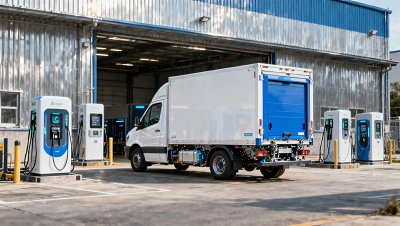
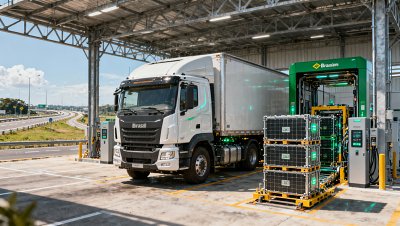
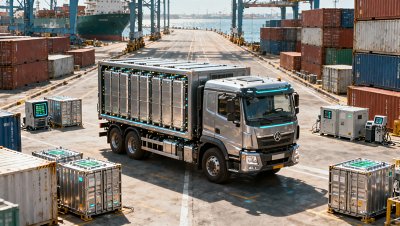
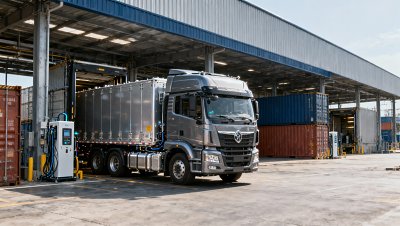
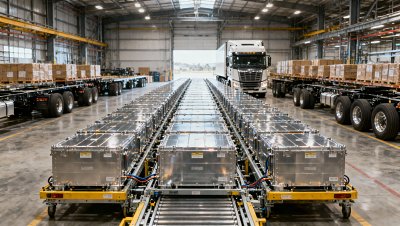
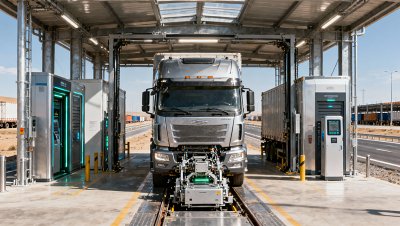
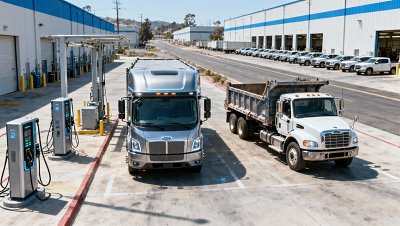
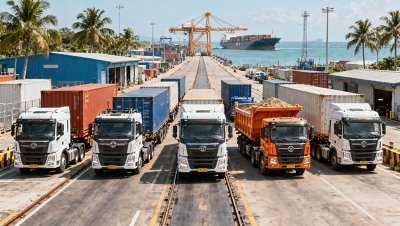
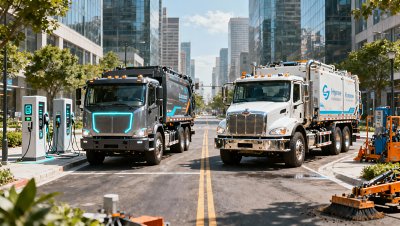
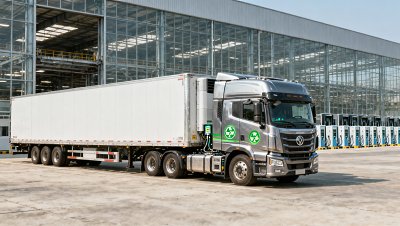
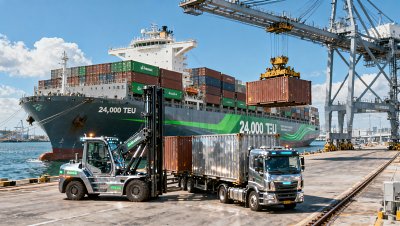
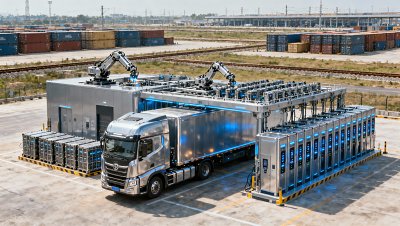
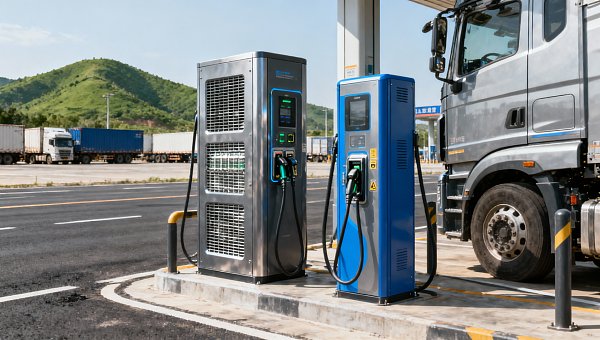
On April 27, 2026, official data confirmed that Jining City in Shandong Province has completed construction of 132 dedicated electric heavy-duty truck charging stations — deployed across expressway service areas, logistics parks, and port distribution centers. The initiative has also yielded a local standard titled Guidelines for Coordinated Construction of Battery Swapping and Fast-Charging Infrastructure for Heavy-Duty Trucks. This integrated model is now being referenced by transportation authorities in ASEAN countries, Chile, and South Africa as a benchmark for low-carbon freight infrastructure development. Stakeholders including overseas government tendering agencies, large logistics groups, and energy operators are evaluating it as a replicable ‘vehicle–charger–grid–operations’ system — opening new EPC-plus-operations cooperation opportunities for Chinese EV heavy-truck infrastructure exports.
Event Overview
As of April 27, 2026, Jining City, Shandong Province, has built 132 dedicated electric heavy-duty truck charging stations. These stations are located at expressway service areas, logistics parks, and port distribution centers. A local standard — Guidelines for Coordinated Construction of Battery Swapping and Fast-Charging Infrastructure for Heavy-Duty Trucks — has been formally issued. The model is cited by transportation departments in ASEAN, Chile, and South Africa as a reference case for low-carbon logistics infrastructure. It is positioned internationally as a scalable ‘vehicle–charger–grid–operations’ integrated solution, supporting EPC-plus-operations export models for Chinese infrastructure providers.
Impact on Specific Industry Segments
Direct Exporters of EV Charging Infrastructure
These enterprises face growing demand signals from overseas public tenders referencing Jining’s design logic and operational integration. Impact manifests in shifting bid requirements: more emphasis on interoperability between charging and battery-swapping systems, grid-load coordination protocols, and full-lifecycle operations support — not just hardware supply.
Large-Scale Logistics Operators (Domestic & Cross-Border)
Operators managing heavy-duty freight fleets — especially those with ASEAN, Latin American, or Southern African routes — may encounter new infrastructure readiness expectations from local partners. Impact includes earlier alignment needs on vehicle specifications (e.g., battery interface standards), depot electrification timelines, and joint planning for grid connection capacity.
Energy Infrastructure Service Providers
Firms offering grid integration, load management, or distributed energy solutions are seeing increased relevance of ‘charger–grid–operations’ co-design capability. Impact lies in tender criteria increasingly requiring demonstrated experience in coordinated power delivery for high-power, intermittent EV loads — beyond standalone station deployment.
Public Sector Procurement & Transport Planning Agencies (Overseas)
Government entities drafting low-emission freight policies or issuing infrastructure tenders are incorporating Jining’s modular, location-specific deployment framework — particularly its tripartite coverage (highways, logistics hubs, ports). Impact includes rising scrutiny of vendor proposals for scalability, maintenance SLAs, and data-sharing architecture compatible with national transport monitoring systems.
What Relevant Enterprises or Practitioners Should Focus On Now
Monitor official updates to national and provincial EV commercial vehicle infrastructure roadmaps
Jining’s local standard may inform upcoming national technical specifications or subsidy frameworks for heavy-duty EV charging. Track revisions to China’s Technical Guidelines for Electric Commercial Vehicle Charging Infrastructure and related Ministry of Transport circulars.
Assess alignment between current product portfolios and the ‘coordinated swapping + fast-charging’ system architecture
Vendors should audit whether their chargers, battery modules, fleet management software, and grid interface units meet functional interoperability thresholds implied by Jining’s model — especially real-time load balancing and unified operations dashboards.
Distinguish policy reference from contractual obligation in overseas markets
While ASEAN, Chile, and South Africa cite Jining as a ‘reference case’, no binding adoption or procurement mandate has been announced. Treat such references as early signal indicators — not de facto compliance requirements — until formal tender documents explicitly incorporate Jining-derived clauses.
Prepare cross-functional coordination protocols for joint infrastructure–fleet–grid pilots
For firms engaging in pilot projects abroad, pre-align internal teams (engineering, procurement, regulatory affairs, operations) around Jining’s documented sequencing: site assessment → grid capacity verification → charger/swapper co-location → fleet integration → remote monitoring rollout.
Editorial Perspective / Industry Observation
Observably, the Jining case represents an institutionalization of infrastructure pragmatism — not just technological demonstration. Its value lies less in scale alone and more in codified operational logic: how charging density maps to freight flow patterns, how grid upgrades synchronize with depot retrofitting, and how maintenance KPIs link to fleet uptime guarantees. Analysis shows this is currently a reference signal — not yet a standardized export requirement — but one gaining traction among emerging-market transport planners seeking proven, modular blueprints. The shift from ‘hardware delivery’ to ‘system-integrated service readiness’ is accelerating; sustained attention is warranted because procurement language in key growth markets may begin embedding Jining-informed criteria within 12–18 months.
Conclusion
The Jining initiative signifies a maturing phase in China’s EV heavy-duty infrastructure development — where localized implementation is formalized into transferable governance and engineering frameworks. It does not indicate immediate global standardization, but rather marks the emergence of a field-tested, policy-adjacent reference model. For industry participants, it is better understood as an early-stage benchmark for system coherence — not a finished specification — and warrants monitoring primarily for its influence on future tender design, interoperability expectations, and cross-sectoral collaboration norms.
Information Sources
— Official announcement released by Jining Municipal Government on April 27, 2026
— Publicly referenced use cases reported by ASEAN Secretariat, Chilean Ministry of Transport, and South African Department of Transport (as of May 2026)
Note: Ongoing observation is recommended for formal adoption status in target countries’ national infrastructure plans and upcoming public tenders — none confirmed as of publication date.
Trending News
- How to compare concrete mixer truck suppliers by total landed cost
- How axle load limits affect low bed trailer exports to Southeast Asia
- How to locate a truck exhaust system leak before replacing parts
- When does heavy equipment transport require a lowboy trailer?
- When does a light commercial vehicle for urban delivery save fleet costs?
Tag
Recommended News
 New Energy TrucksMIIT’s 404th Notice Clears Swap-Body Electric Trucks for ExportMIIT’s 404th notice approves FAW Jiefang swap-body electric trucks for export, boosting CE/ECE and UN R100 compliance readiness for global buyers.
 New Energy TrucksBrazil ANP Clears Three Chinese Battery Makers for Truck Swap NetworkBrazil ANP clears CATL, BYD FinDreams Battery, and Gotion for the truck swap network, opening new opportunities in Brazil’s electric heavy truck and battery-swapping market.
![]() New Energy TrucksEPA Phase 3 Rule Adds CIM Requirement for Hybrid HD TrucksEPA Phase 3 Rule adds CIM requirement for hybrid HD trucks from MY2027. Learn what U.S. importers, exporters, and OEMs must review now to stay compliant and market-ready.
New Energy TrucksEPA Phase 3 Rule Adds CIM Requirement for Hybrid HD TrucksEPA Phase 3 Rule adds CIM requirement for hybrid HD trucks from MY2027. Learn what U.S. importers, exporters, and OEMs must review now to stay compliant and market-ready. New Energy TrucksEPA Phase 3 Rule Adds Carbon Monitoring to N3 TrucksEPA Phase 3 Rule adds carbon monitoring to N3 trucks sold in the U.S. Learn how CARB-CIM v2.1, EPA validation, and 2027 deadlines impact exporters and heavy truck compliance.
 New Energy TrucksEU Battery Rule Starts July 5: 20% Recycled Cobalt Required for Heavy-Truck Power BatteriesEU Battery Rule starts July 5: heavy-truck power batteries entering the EU must disclose recycled content, including 20% recycled cobalt. Learn the compliance impact for exporters and suppliers.
 New Energy TrucksBrazil Tightens Local Battery Testing for NEV TrucksBrazil Tightens Local Battery Testing for NEV Trucks: learn how INMETRO’s new Brazil battery testing rule reshapes certification, delivery timelines, and market access for imported heavy-duty trucks.
 New Energy TrucksMexico Enforces Local Battery Thermal Runaway TestsMexico Enforces Local Battery Thermal Runaway Tests for imported new energy heavy trucks under NOM-042-SEMARNAT-2026. Learn the new Mexico compliance path, local lab testing rules, and what exporters must do now.
 New Energy TrucksIndonesia Extends B30 Rule, Tightens Imported Truck CertificationIndonesia extends B30 through 2027 and tightens imported truck certification. Learn how B30 adaptability testing affects diesel tractor truck exports, compliance costs, and delivery timelines.
 New Energy TrucksBrazil Sets H₂ Leak Monitoring Rule for Gas Tractor ImportsBrazil sets H₂ leak monitoring rule for gas tractor imports from Sept. 1, 2026. Learn how ANP, ABNT, and INMETRO requirements could impact compliance, certification, and delivery plans.
 New Energy TrucksEU Battery Rule Reshapes China E-Truck ExportsEU Battery Rule Reshapes China E-Truck Exports: learn how new UN38.3, IEC 62619, and carbon footprint requirements could impact compliance, lead times, and EU delivery plans.
 New Energy TrucksEU Battery Rules Raise Export Bar for China E-TrucksEU Battery Rules are raising the export bar for China e-trucks. Learn how battery passport registration, carbon footprint data, and supply-chain readiness will shape EU market access by 2026.
 New Energy TrucksBrazil ANP Rule Extends H₂ Leak Monitoring to Imported Gas TrucksBrazil ANP Rule extends H₂ leak monitoring to imported gas trucks, reshaping LNG/CNG export compliance, certification, and delivery planning for Brazil-bound heavy vehicles.
 New Energy TrucksEU Rule Sets Battery Passport Requirement for Imported E-TrucksEU battery passport requirement for imported e-trucks takes effect Aug 1, 2026. Learn the customs risks, compliance documents, and actions exporters, battery suppliers, and EU importers should review now.
 New Energy TrucksMexico PACK Launch Reshapes Heavy Truck Battery FlowsMexico PACK launch reshapes heavy truck battery flows as CATL starts mass production in Mexico, highlighting USMCA origin, AEO support, and localized delivery advantages for North America.
 New Energy TrucksBattery-Swap Corridor Opens on China-Mongolia RouteBattery-swap corridor opens on the China-Mongolia route, bringing 12 fast-swap stations, TIR booking access, and new opportunities for cross-border electric heavy truck logistics.
 New Energy TrucksCalifornia Sets 10% ZEV Truck Floor for 2027California sets a 10% ZEV truck floor for 2027, reshaping medium- and heavy-duty truck registrations, fleet buying, and charging plans. Learn what businesses should do now.
 New Energy TrucksChina CV Exports Rise as E-Trucks Gain New MarketsChina CV exports surge as e-trucks win new markets. Explore growth data, localized adaptation, compliance, and service strategies shaping commercial vehicle success in Latin America and Southeast Asia.
 New Energy TrucksBrazil ANP Sets 2027 Green Truck RuleBrazil ANP’s 2027 green truck rule reshapes municipal fleet procurement, driving demand for electric and hydrogen heavy-duty trucks, certification support, and market-entry planning.
 New Energy TrucksEU Tightens Battery Passport Rules for Heavy TrucksEU battery passport rules for heavy trucks now require ISO 14067 carbon verification. Learn how exporters, OEMs, and battery suppliers can prepare for compliance.
 New Energy TrucksYantai Port Aluminum Ore Logistics Boosts NEV Dump Truck OrdersYantai Port aluminum ore logistics surge drives NEV dump truck orders—42% short-haul haulage rise, 35% QoQ EV demand spike. Act now.
 New Energy TrucksChina Adds Tractor-Trailer Battery-Swap Systems to Subsidy ProgramTractor-trailer battery-swap systems now qualify for China’s new energy subsidy—up to ¥32,000 per unit. Key update for陆路运输设备 manufacturers, logistics fleets, and EV infrastructure providers.
 New Energy TrucksChina Introduces Subsidies for EV Bus & Battery ReplacementEV bus & battery replacement subsidies now live in China—up to ¥12,000/unit for medium/heavy-duty tractors & refrigerated semi-trailers. Act now!
 New Energy TrucksWorld's Largest Methanol-Fueled Container Ship NamedWorld's largest methanol-fueled container ship named — accelerating green adoption across land-based port handling equipment, yard tractors, stacker cranes & reach stackers.
 New Energy TrucksKunming Launches Jacaranda-Themed EV Buses; Design Draws Interest from South AmericaKunming's jacaranda-themed EV buses showcase China's design-led electric bus innovation — drawing strong interest from South America's transport operators.
 New Energy TrucksNanning IRP Launches Smart EV Freight Charging & Swapping StationNanning IRP’s smart EV freight charging & swapping station — China’s first for cross-border heavy-duty trucks — boosts efficiency, cuts downtime, and sets a new benchmark for China–ASEAN green logistics.