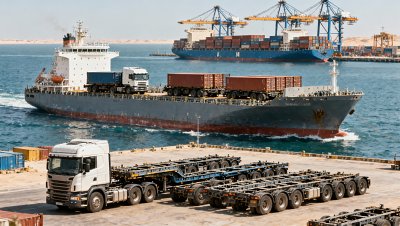
Yangtze River Delta Rail-Sea Freight Exceeds 1M TEUs
On April 27, 2026, China’s Service Trade Guide Network reported that the Yangtze River Delta region had handled 1.023 million TEUs of rail-sea intermodal freight in the first four months of 2026 — a milestone underscoring accelerated integration of inland rail networks with deep-sea ports. This development directly impacts heavy-duty truck exporters, logistics service providers, and regional supply chain actors, driven by standardized ‘one consignment, one bill of lading, one container’ operations across key Southeast Asian markets.
Event Overview
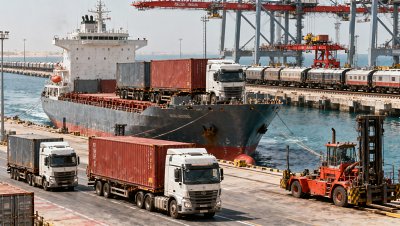
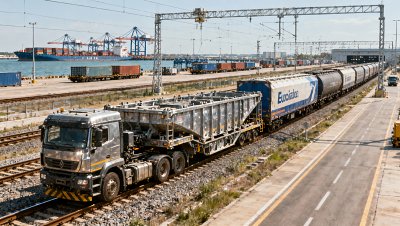
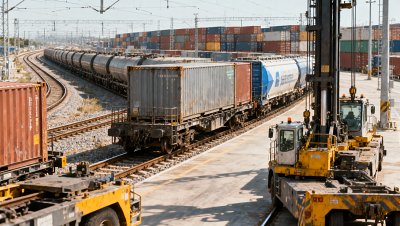
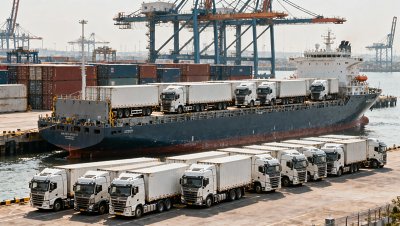
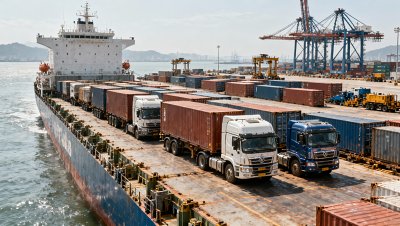
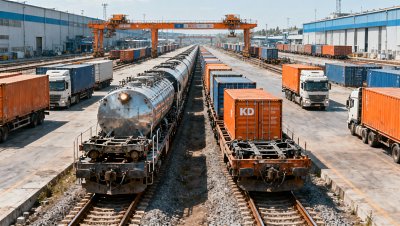
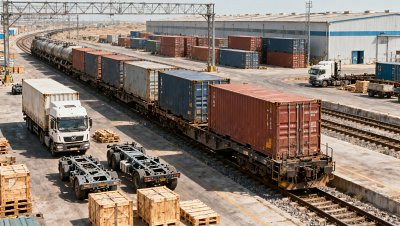
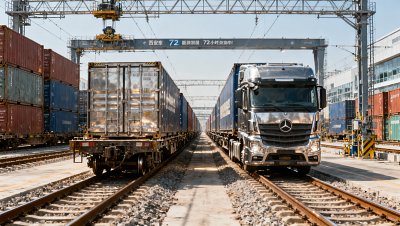
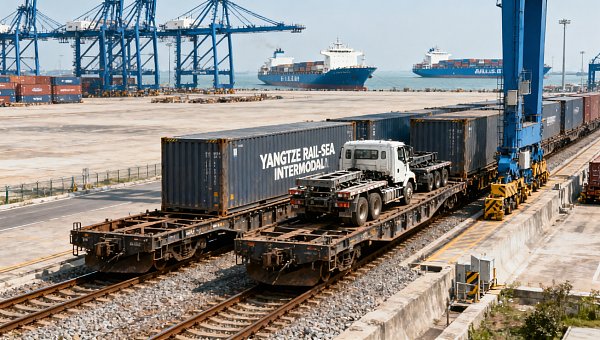
According to official data released on April 27, 2026, by China’s Service Trade Guide Network, the Yangtze River Delta completed 1,023,000 TEUs of rail-sea intermodal freight from January to April 2026. Of this volume, heavy-duty trucks and semi-trailers accounted for 19% of total exports. The service leverages the Ningbo-Zhoushan Port as the maritime hub, connected via rail corridors to Hefei and Nanjing inland hubs. Direct ‘door-to-port-to-destination’ routing is now operational for shipments to Vietnam, Thailand, and Indonesia, achieving freight cost reductions of 8–12% compared to conventional all-sea transport.
Industries Affected
Direct Exporting Enterprises
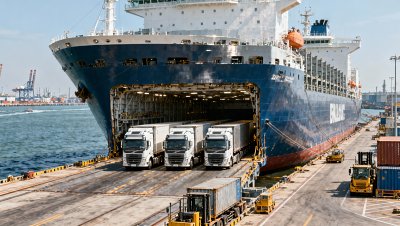
Heavy-duty truck and trailer manufacturers exporting to Southeast Asia face reduced landed costs and improved delivery predictability. The ‘one consignment, one bill of lading, one container’ model eliminates transshipment delays at intermediate ports and reduces documentation friction — particularly valuable for time-sensitive vehicle roll-on/roll-off (Ro-Ro) compatibility and regulatory compliance across ASEAN markets.
Raw Material Procurement Enterprises
Suppliers of chassis steel, axles, braking systems, and cab components may experience increased order visibility and longer-term planning windows, as export-oriented OEMs shift toward more stable, scheduled rail-sea lanes. However, procurement lead times could tighten if demand surges without corresponding upstream capacity expansion — especially for export-grade corrosion-resistant coatings or emissions-compliant engine parts.
Contract Manufacturing & Assembly Enterprises
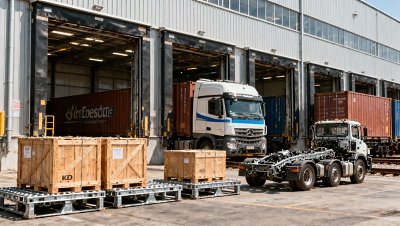
Firms engaged in CKD/SKD (completely/partially knocked-down) assembly in Vietnam or Thailand benefit from more consistent component arrival schedules and lower inventory carrying costs. The reliability of fixed rail departure slots — unlike variable vessel sailings — supports just-in-time sequencing for final assembly lines, though customs harmonization across three jurisdictions remains a constraint not yet fully resolved.
Supply Chain Service Providers
Freight forwarders, multimodal operators, and customs brokers are adapting to integrated digital documentation platforms required under the new rail-sea protocol. Those with certified interoperability between China’s Railway Electronic Bill of Lading system and ASEAN e-Customs portals gain competitive advantage; others risk margin compression due to manual reconciliation and extended transit insurance liabilities.
Key Considerations and Recommended Actions
Validate Inland Origin Point Eligibility
Not all Yangtze River Delta manufacturing sites qualify for subsidized rail-sea rates. Exporters must confirm whether their factory location falls within designated origin zones (e.g., Hefei High-Tech Zone, Nanjing Jiangbei New Area) and whether their cargo meets TEU weight and dimension thresholds for preferential pricing.
Align Documentation with ASEAN Customs Requirements
While ‘one bill of lading’ simplifies internal handoffs, ASEAN national customs authorities still require country-specific import declarations, conformity assessments (e.g., Thailand’s TISI, Vietnam’s CR), and local agent appointments. Proactive engagement with licensed agents in target countries is essential before shipment release.
Assess Cost-Benefit Beyond Base Freight
The 8–12% freight reduction applies to ocean leg + rail leg combined. Exporters must factor in inland drayage to rail terminals, potential demurrage at inland hubs during peak seasons, and insurance premiums covering rail-related risks (e.g., derailment, fire). A full landed-cost model — not just headline freight quotes — is necessary for accurate ROI evaluation.
Monitor Regulatory Harmonization Progress
Current ‘one container’ execution relies on bilateral memoranda between Chinese railways and port authorities in Vietnam, Thailand, and Indonesia. No multilateral agreement yet covers mutual recognition of safety inspections, phytosanitary certificates for auxiliary equipment, or cross-border liability frameworks. Stakeholders should track updates from the ASEAN-China Transport Working Group, next scheduled for Q3 2026.
Editorial Perspective / Industry Observation
Observably, this milestone reflects less a sudden infrastructure breakthrough and more the maturation of coordinated policy implementation across provincial transport bureaus, customs administrations, and port operators — a process that took over five years of pilot trials and tariff alignment. Analysis shows the 19% heavy-vehicle share is not accidental: it signals deliberate prioritization of high-value, low-volume cargo where schedule reliability and equipment integrity outweigh pure cost minimization. From an industry perspective, the real strategic shift lies in how domestic manufacturers are beginning to treat rail-sea lanes not as backup routes, but as primary channels for market entry — especially where maritime congestion or port labor shortages persist. Current more relevant interpretation is that this is a demand-driven scaling of existing capacity, not a greenfield infrastructure expansion.
Conclusion
This achievement marks a tangible step toward de-risking export logistics for China-based heavy-vehicle producers targeting ASEAN growth markets. It does not eliminate maritime dependency, but rather introduces a calibrated alternative — one that balances cost, speed, and control. For the broader industrial logistics sector, it serves as a reference case for how layered public-private coordination can convert policy intent into measurable operational outcomes — albeit one still constrained by fragmented regulatory environments beyond China’s borders.
Source Attribution
Official data sourced from China Service Trade Guide Network (April 27, 2026 bulletin, ID: CSTG-2026Q2-RAILSEA-0427). Additional context drawn from Ningbo-Zhoushan Port Group’s 2026 Intermodal Performance Dashboard and ASEAN Secretariat’s Transport Integration Monitoring Report (Q1 2026). Note: Cross-border customs interoperability status, inland terminal throughput caps, and 2026–2027 rate stabilization mechanisms remain under observation and subject to revision pending ASEAN-China Joint Transport Committee deliberations.
Trending News
- How to compare concrete mixer truck suppliers by total landed cost
- How axle load limits affect low bed trailer exports to Southeast Asia
- How to locate a truck exhaust system leak before replacing parts
- When does heavy equipment transport require a lowboy trailer?
- When does a light commercial vehicle for urban delivery save fleet costs?
Tag
Recommended News
 Logistics & FreightHow does a truck wing body improve loading and unloading efficiency?Truck wing bodies speed up loading and unloading with wide side access, faster forklift handling, and flexible pallet delivery. Discover whether they fit your operation.
 Logistics & FreightRed Sea Delays Push Ro-Ro Transit to 42 DaysRed Sea delays push Ro-Ro transit to 42 days, forcing heavy-truck exporters to rethink Suez route timing, freight costs, and delivery planning. Explore faster alternatives and key trade impacts.
 Logistics & FreightCai Mep Delays Stretch Truck Parts Clearance to 12 DaysTruck parts clearance at Cai Mep now stretches to 12 days, disrupting road transport equipment imports. Learn the impact on delivery, procurement, and logistics planning.
 Logistics & FreightTruck Logging: Common Route and Load Mistakes That Raise Operating RiskTruck logging mistakes in route and load planning can quietly raise fuel costs, delays, wear, and compliance risk. Learn the key errors and how to build safer, more reliable transport decisions.
 Logistics & FreightLight Commercial Vehicle for Urban Delivery: Best Fit for Stop-and-Go RoutesLight commercial vehicle for urban delivery choices can make or break stop-and-go efficiency. Discover how to match payload, maneuverability, and cost for smarter city routes.
 Logistics & FreightRed Sea Disruptions Push Equipment Exports to Rail and Caspian RouteRed Sea disruptions are pushing equipment exports to rail and the Caspian route, cutting transit to 18–21 days. See how exporters can balance delivery speed, cost, and supply chain reliability.
![]() Logistics & FreightAlashankou Opens Priority Clearance for NEV Heavy TrucksAlashankou opens priority clearance for NEV heavy trucks, cutting customs time to under 4 hours and removing key port fees. See what this means for exporters, logistics teams, and buyers.
Logistics & FreightAlashankou Opens Priority Clearance for NEV Heavy TrucksAlashankou opens priority clearance for NEV heavy trucks, cutting customs time to under 4 hours and removing key port fees. See what this means for exporters, logistics teams, and buyers. Logistics & FreightChina-Europe Rail Adds Emergency Fuel SurchargeChina-Europe rail adds an emergency fuel surcharge of USD 1,200/TEU for trucks, semi-trailers, and chassis exports. See route impact, cost risks, and planning actions now.
 Logistics & FreightKazakhstan AI Customs Review Lifts Truck Parts Checks to 37%Kazakhstan AI customs review lifts truck parts checks to 37%, raising HS 8708 inspection risks and delays. Learn what exporters, importers, and brokers must do now.
 Logistics & FreightSuez Fee Hike Reshapes Ro-Ro Truck BookingsSuez fee hike reshapes Ro-Ro truck bookings as heavy truck exporters face higher freight costs, 90-day booking windows, and tighter vessel space—see what to plan now.
 Logistics & FreightRed Sea Disruption Tightens Ro-Ro Capacity on Asia-Europe RouteRed Sea disruption squeezes Ro-Ro capacity on the Asia-Europe route, driving heavy-truck shipping costs and delays. See what exporters, buyers, and logistics teams must track now.
 Logistics & FreightBest Light Commercial Vehicle for Urban Delivery in Tight City RoutesLight commercial vehicle for urban delivery: discover how to choose the best model for tight city routes with better maneuverability, loading efficiency, and lower operating costs.
 Logistics & FreightGTRI Jumps 12.3% as Red Sea Diversions Tighten CapacityGTRI jumps 12.3% as Red Sea diversions tighten truck shipping capacity on Asia-Europe routes. See what rising costs, 62-75 day lead times, and booking suspensions mean for exporters.
 Logistics & FreightWing Van Truck Loading Problems and Practical Ways to Reduce Cargo DamageWing van truck loading mistakes can damage cargo even on short routes. Learn practical ways to improve load balance, restraint, and daily handling to cut losses.
 Logistics & FreightSuez Canal Fees Rise 35% as Heavy Truck Shipping Hits 68 DaysSuez Canal fees rise 35% as heavy truck shipping stretches to 68 days. See how higher costs and longer transit can disrupt Q3 truck and chassis delivery plans.
 Logistics & FreightDjibouti Port Clearance for Truck Chassis Extends to 18 DaysDjibouti Port clearance for truck chassis now extends to 18 days, disrupting East Africa transit. Learn the impact on truck chassis shipments, documents, and delivery planning.
 Logistics & FreightDjibouti Port Extends Truck Chassis Clearance to 18 WorkdaysDjibouti Port extends truck chassis clearance to 18 workdays, raising customs risks for East Africa and Middle East shipments. Learn the new VIN and drawing rules now.
 Logistics & FreightSuez Eastbound Rates Rise 12% as Rail Alternatives GainSuez eastbound rates rise 12% as rail alternatives gain amid Djibouti congestion. See how shippers, vehicle parts importers, and logistics providers can adapt routing and protect supply continuity.
 Logistics & FreightBulk Trailer vs Container Trailer for High-Volume FreightBulk trailer or container trailer? Discover which option cuts handling costs, speeds high-volume freight, and fits your cargo, route, and delivery goals best.
 Logistics & FreightCentral Asia Rail Rates Jump as Red Sea Diversions BiteCentral Asia rail rates jump as Red Sea diversions tighten capacity. See how rising costs on the China-Kyrgyzstan-Uzbekistan corridor affect heavy truck exports, documents, and delivery planning.
 Logistics & FreightRail Rate Jump Signals Cost Pressure on Eurasian DiversionRail rate jump on the China-Kyrgyzstan-Uzbekistan corridor signals rising Eurasian cost pressure. See how it may impact delivery timing, export quotes, and supply chain planning.
 Logistics & FreightWhen a Van Trailer Is the Right Choice for Secure FreightVan trailer solutions protect secure freight from weather, dust, and theft. Learn when a van trailer is the smart choice for safer delivery and better cargo control.
 Logistics & FreightRed Sea Disruption Lifts China-Kyrgyz-Uzbek Rail Rates 18%Red Sea disruption lifts China-Kyrgyz-Uzbek rail rates 18%, raising export costs for truck KD parts, chassis, and loose components. See what shippers must monitor now.
 Logistics & FreightChina-Europe Rail Eastern Route Passes 40,000 TripsChina-Europe Rail Eastern Route passes 40,000 trips as Manzhouli launches a smart warehouse for heavy truck KD exports. Discover how faster customs clearance may improve rail logistics planning.
 Logistics & FreightXi’an Rail Launches Truck Export Service in 72 HoursXi’an Rail launches truck export service in 72 hours, offering a faster China-Europe rail solution for new energy heavy trucks with lower costs, streamlined customs, and stronger delivery efficiency.