Best Commercial Vehicle Parts for Warehouse Fleet Uptime
Keeping a warehouse fleet running depends on choosing the right commercial vehicle parts for warehouse operations. For aftermarket maintenance teams, reliable components mean fewer breakdowns, faster repairs, and better uptime across trucks, trailers, and handling equipment. This guide highlights the parts that matter most and how to source them efficiently from trusted global suppliers.
In warehouse logistics, even a short vehicle stoppage can delay dock schedules, inbound unloading, outbound picking, and yard movements. For maintenance professionals, the priority is not simply replacing failed parts, but building a spare parts strategy that reduces unplanned downtime across daily, weekly, and seasonal operating cycles.
The most effective approach combines fast-moving replacement items, fit-for-duty technical selection, and access to dependable suppliers. For teams managing vans, light trucks, heavy trucks, trailers, and support vehicles, choosing the best commercial vehicle parts for warehouse use is a direct operational decision that affects repair lead time, labor efficiency, and fleet availability.
Why Warehouse Fleet Uptime Depends on the Right Parts Mix
Warehouse fleets operate differently from long-haul fleets. Vehicles often face frequent starts and stops, repeated low-speed maneuvering, tight turning angles, dock impacts, and high idle time. These conditions accelerate wear on braking systems, steering components, batteries, suspension points, lighting assemblies, and trailer connection parts, especially when units run 2 to 3 shifts per day.
Aftermarket maintenance teams usually work under narrow repair windows. A truck that returns at 18:00 may need to be back in service by 06:00 the next morning. In that 12-hour window, parts availability matters as much as technician skill. If one critical component is missing, a routine repair can turn into a 24- to 72-hour outage.
That is why commercial vehicle parts for warehouse operations should be selected by failure frequency, replacement cycle, and operational criticality. A practical parts program separates high-consumption items from low-frequency, high-impact items. This helps maintenance teams control stock levels without overbuying slow-moving inventory.
Common warehouse duty conditions that increase parts wear
Three patterns usually drive abnormal wear in warehouse fleets: short-trip cycling under 15 km per route, repeated braking at docks and crossings, and heavy loading variation between empty and full runs. These conditions can shorten the life of some parts by 20% to 40% compared with more stable transport profiles.
- High-frequency stop-and-go movement increases brake pad, disc, drum, and air system wear.
- Frequent reversing and tight yard turns place extra load on steering linkages, kingpins, and tires.
- Extended idling and multiple electrical loads stress batteries, alternators, and starter systems.
- Dock contact and yard vibration damage lamps, mirrors, connectors, mudguards, and body fittings.
When procurement teams align spare stock with these real operating conditions, service planners can reduce emergency sourcing. That improves first-time fix rates and supports more stable preventive maintenance intervals, often every 250 to 500 operating hours depending on vehicle type and workload.
Core Commercial Vehicle Parts for Warehouse Operations
Not every component deserves equal stocking priority. The best commercial vehicle parts for warehouse fleets are usually the items that fail often, create immediate immobilization risk, or can trigger secondary damage if replacement is delayed. Maintenance teams should focus first on systems tied to safety, movement, electrical continuity, and load control.
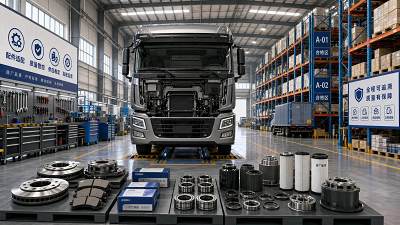
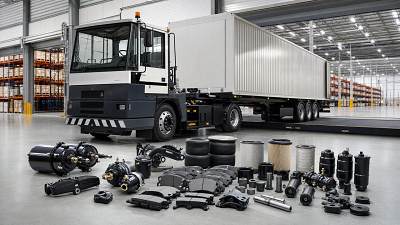
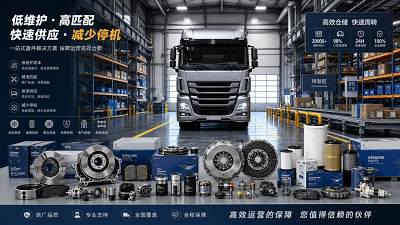
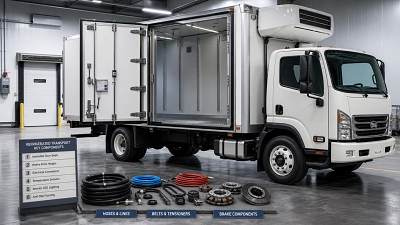
For mixed fleets, the highest-value inventory categories typically include brake parts, filtration items, suspension wear parts, lighting components, batteries, belts, hoses, wheel-end components, and trailer connection hardware. These categories support both scheduled service and rapid-response repairs, which is especially important when fleets operate 6 or 7 days per week.
The table below outlines priority parts categories for warehouse-duty fleets and shows why each category deserves close attention from aftermarket maintenance personnel.
A clear pattern emerges from these categories: the best commercial vehicle parts for warehouse service are not always the most expensive items, but the ones that most directly affect vehicle dispatch readiness. A low-cost relay or hose can sideline a truck just as quickly as a more complex drivetrain issue.
Fast-moving parts every maintenance store should track
For most warehouse fleets, a practical min-max stock list should include at least 8 to 12 fast-moving SKUs per major vehicle family. These usually cover air filters, oil filters, fuel filters, brake friction materials, bulbs or LED units, fuses, hoses, clamps, belts, and common seals. Keeping these on hand cuts repair delays and reduces premium freight costs.
High-impact parts that should never be single-sourced
Brake valves, clutch components, electrical harness connectors, wheel bearings, suspension links, and trailer landing gear parts are worth dual-sourcing. If one supplier slips by 7 to 10 days, operations still have a backup channel. This is especially useful for fleets handling cross-dock flows, municipal contracts, or time-sensitive industrial delivery schedules.
How Aftermarket Teams Should Evaluate Part Quality and Fit
Buying commercial vehicle parts for warehouse fleets is not just a matter of matching dimensions. Correct fit must be verified across application details such as axle type, braking system configuration, engine family, voltage, mounting pattern, load rating, and operating environment. A part that appears compatible on paper can still increase installation time if connector type, bracket orientation, or material specification differs.
Maintenance managers should use a 4-part evaluation process: technical match, durability under warehouse duty, supply consistency, and total service cost. This avoids the common mistake of choosing only by unit price. A cheaper component that fails 30% earlier or causes repeat labor often raises the true maintenance cost per vehicle.
The following checklist helps teams compare parts options more objectively during sourcing, supplier review, and replenishment planning.
For warehouse environments, corrosion resistance and vibration durability deserve extra attention. Vehicles may move through wet yards, wash bays, and dusty loading areas every day. Over 6 to 12 months, these conditions can affect terminals, connectors, bushings, lamp housings, and brake hardware more than many buyers expect at the purchasing stage.
Common sourcing mistakes that increase downtime
- Ordering only by visual similarity instead of confirmed part cross-reference and technical specification.
- Ignoring duty-cycle differences between urban delivery fleets and warehouse yard fleets.
- Keeping less than 2 weeks of stock for critical maintenance consumables during seasonal peaks.
- Using one generic supplier for all categories without checking specialty strength in brakes, suspension, electrical, or trailer parts.
A disciplined selection process lowers rework, supports standardized repairs, and helps maintenance personnel shorten mean time to repair. In many fleet workshops, saving even 1 to 2 labor hours per vehicle intervention creates measurable gains across monthly maintenance throughput.
Building an Efficient Spare Parts Sourcing Strategy
A sourcing strategy for commercial vehicle parts for warehouse fleets should balance availability, lead time, and inventory cost. The goal is to avoid both extremes: too little stock that causes dispatch failures, and too much stock that ties up capital in rarely used items. The best systems segment parts into A, B, and C groups based on turnover and downtime impact.
A-parts are high-frequency or mission-critical items that should usually be stocked on site. B-parts may be held in lower quantity with regional replenishment in 3 to 7 days. C-parts are low-turn items that can be ordered on demand if supplier response is reliable. This structure gives maintenance teams better control over service continuity and storage efficiency.
For international buyers and fleet parts managers, digital B2B sourcing platforms can simplify this process by bringing multiple suppliers, categories, and technical references into one place. That is especially valuable when fleets need parts across trucks, trailers, chassis systems, and related heavy transport equipment.
What a professional B2B platform adds to parts procurement
The Global Heavy Truck Industry Platform supports buyers across the heavy truck and commercial vehicle supply chain by connecting manufacturers, suppliers, distributors, and international procurement teams. Instead of searching across fragmented channels, maintenance decision-makers can compare product categories, identify suitable suppliers, and review industry information in a more structured way.
Because the platform covers key sectors such as truck chassis and cab, complete trucks, light trucks, construction machinery, trailers and semi-trailers, and spare parts, it is well aligned with warehouse fleet maintenance needs. Teams sourcing replacement parts for mixed vehicle fleets can review broader options while keeping procurement workflows more transparent.
A practical 5-step sourcing workflow
- List the top 20 to 50 SKUs by downtime impact and annual consumption.
- Group them by system: brake, engine service, electrical, suspension, wheel-end, and trailer hardware.
- Shortlist suppliers by category strength, response speed, and export support capability.
- Request technical confirmation, packaging details, and lead-time ranges such as 7 to 15 days or 2 to 4 weeks.
- Review delivered performance every quarter using fill rate, return rate, and claim resolution time.
This process helps aftermarket maintenance teams shift from reactive buying to planned procurement. Over time, better sourcing discipline reduces rush orders, improves workshop scheduling, and supports more consistent warehouse fleet uptime.
Maintenance Planning, Risk Control, and FAQ for Warehouse Fleets
Even the best commercial vehicle parts for warehouse operations will underperform if maintenance planning is weak. Service teams should combine replacement quality with inspection intervals, technician feedback, and simple failure tracking. A monthly review of top repeat faults can quickly reveal whether the root issue is part quality, fitment error, overload, or an unaddressed operating condition.
A useful practice is to track three numbers for each high-impact category: average service life, number of emergency replacements, and time lost per incident. If brake chamber failures average 2 hours of downtime each and occur 6 times per quarter, that category clearly deserves closer sourcing review and preventive inspection.
For warehouses with seasonal peaks, it is also smart to raise stock cover before demand surges. Increasing critical spare inventory from 2 weeks to 4 weeks before holiday distribution periods can reduce emergency procurement pressure and protect service levels during the busiest windows.
FAQ: How should maintenance teams choose commercial vehicle parts for warehouse use?
Start with duty cycle, not just vehicle model. Review route length, stop frequency, payload variation, idle hours, and yard conditions. Then prioritize parts by downtime impact. In most fleets, brake, electrical, and filtration categories should be reviewed first because they combine frequent replacement with strong influence on vehicle readiness.
FAQ: What lead time is acceptable for non-stocked parts?
For B-parts, 3 to 7 days is usually manageable if backup vehicles are available. For C-parts, 2 to 4 weeks may be acceptable when failure risk is low. Mission-critical parts that can immobilize a truck or trailer should ideally be available locally or through a supplier able to dispatch within 24 to 72 hours.
FAQ: Which indicators matter most when comparing suppliers?
Look at four areas: application accuracy, consistent lead time, packaging and labeling quality, and responsiveness to technical questions. A supplier that answers fitment questions in less than 1 business day and maintains stable delivery windows is often more valuable than one offering only a lower initial price.
FAQ: How often should warehouse fleets review spare parts policy?
A quarterly review works well for most operations, while fast-growing fleets may need monthly review of top 10 failure categories. Recalculate min-max levels whenever route density changes, new vehicle types enter service, or warehouse operating hours expand from 1 shift to 2 or 3 shifts.
Warehouse uptime depends on choosing parts that match real operating conditions, stocking the categories that prevent dispatch delays, and working with suppliers that can support technical accuracy and timely replenishment. For aftermarket maintenance teams, the right commercial vehicle parts for warehouse fleets are the foundation of faster repairs, fewer repeat failures, and stronger daily performance.
If you are sourcing truck, trailer, chassis, or spare parts for warehouse operations, the Global Heavy Truck Industry Platform offers a practical route to compare suppliers, explore product categories, and access industry resources built for commercial vehicle procurement. Contact us today to discuss your parts requirements, request a tailored sourcing plan, or learn more about solutions for improving fleet uptime.
Trending News
- How to compare concrete mixer truck suppliers by total landed cost
- How axle load limits affect low bed trailer exports to Southeast Asia
- How to locate a truck exhaust system leak before replacing parts
- When does heavy equipment transport require a lowboy trailer?
- When does a light commercial vehicle for urban delivery save fleet costs?
Tag
Recommended News
 Fleet ManagementWhen does a light commercial vehicle for urban delivery save fleet costs?Light commercial vehicle for urban delivery: learn when route density, payload utilization, access, and driver productivity can reduce fleet cost per successful stop.
 Fleet ManagementHeavy Truck Specs That Matter Most for Long-Term Fleet PlanningHeavy truck specs that truly shape long-term fleet success: compare payload, torque, axle setup, fuel efficiency, and parts support to cut downtime and plan smarter.
 Fleet ManagementTruck Parts Supplier Risks That Affect Long-Term Fleet CostsTruck parts supplier risks can quietly increase long-term fleet costs through downtime, poor fitment, and supply delays. Learn how to choose smarter and protect uptime.
 Fleet ManagementSemi Trailer Distributor Red Flags That Can Delay Fleet ExpansionSemi trailer distributor warning signs can stall fleet expansion fast. Learn the key red flags in inventory, delivery, support, and compliance before you buy.
 Fleet ManagementLogistics Transportation Trends Reshaping Fleet Cost ControlLogistics transportation trends are redefining fleet cost control. Discover how data, sourcing, and equipment strategy help fleets cut risk, improve utilization, and stay competitive.
 Fleet ManagementOff Road Truck Safety Risks and Maintenance Checks Before DeploymentOff road truck safety starts before deployment. Learn key risks, maintenance checks, and inspection steps to reduce downtime, protect crews, and keep every jobsite moving.
 Fleet ManagementTruck Fleet Cost Control: 7 Metrics That Matter in 2026Truck fleet cost control in 2026 starts with 7 key metrics. Learn how fuel, uptime, utilization, downtime, and TCO reveal hidden costs and smarter sourcing decisions.
 Fleet ManagementHeavy Truck Fuel Efficiency: What Impacts Operating CostsHeavy truck fuel efficiency directly impacts operating costs. Learn how design, payload, maintenance, and driver behavior affect fuel use and smarter truck buying decisions.
 Fleet ManagementTruck Fleet Planning Tips for Lower DowntimeTruck fleet planning tips to cut downtime, improve uptime, optimize maintenance, manage spare parts, and build a more reliable, cost-efficient transport operation.
 Fleet ManagementTruck Tipper Safety Checks Before Daily OperationTruck tipper daily safety checks made simple: inspect hydraulics, brakes, tires, lights, loads, and tipping stability to reduce downtime and operate with confidence.
 Fleet ManagementDump Truck Supplier Risks in Mining ProjectsFind out how to choose a reliable dump truck supplier for mining industry projects, reduce sourcing risks, secure parts support, and improve uptime in harsh mining operations.
 Fleet ManagementBest Commercial Vehicle Parts for Warehouse Fleets with High Stop-Start UseCommercial vehicle parts for warehouse fleets should handle heavy stop-start use with fewer failures. Discover proven brake, battery, suspension, and steering choices that cut downtime.
 Fleet ManagementDelivery Truck Supplier in USA: What Matters Most for Fleet ExpansionDelivery truck supplier in USA selection impacts uptime, cost, and fleet growth. Learn how to compare suppliers by route needs, service support, and long-term scalability.
 Fleet ManagementHow to Choose Commercial Vehicle Parts for Warehouse Fleet UptimeCommercial vehicle parts for warehouse fleets directly impact uptime. Learn how to choose durable, accurate-fit parts and reliable suppliers to reduce downtime and control maintenance costs.
 Fleet ManagementWhy a Light Duty Truck Manufacturer in USA Still Matters for Fleet ReliabilityLight duty truck manufacturer in USA choices still shape fleet uptime, parts access, and lifecycle value. See what buyers should compare for more reliable operations.
 Fleet ManagementHow to Plan a Dump Truck Bulk Order for Multi-Site ProjectsDump truck bulk order planning for multi-site projects made simple. Learn how to balance specs, delivery, support, and total cost for smarter fleet decisions.
 Fleet ManagementWhat Makes a Delivery Truck Supplier Cost-Effective in Real OperationsDelivery truck supplier with cost-effective solutions: learn how to cut fuel, maintenance, and downtime costs with a practical checklist for smarter fleet purchasing.
 Fleet ManagementHow Low-Maintenance Truck Spare Parts Suppliers Help Cut DowntimeTruck spare parts supplier with low maintenance benefits help fleets cut downtime, speed repairs, and lower service costs. Discover how smarter sourcing boosts uptime.
 Fleet ManagementHow Commercial Vehicle Parts for Warehouse Improve Daily UptimeCommercial vehicle parts for warehouse operations help reduce downtime, improve safety, and keep trucks and trailers moving efficiently. Discover how the right parts boost daily uptime.
 Fleet ManagementCommercial Vehicle Parts for Cold Storage: Reducing Failure in Daily UseCommercial vehicle parts for cold storage help reduce daily failures, protect cargo quality, and improve fleet uptime. Discover scenario-based maintenance insights for refrigerated transport.
 Fleet ManagementDelivery Truck Supplier in USA: What to Compare Before Expanding a FleetDelivery truck supplier in USA comparison guide for fleet expansion. Learn how to evaluate quality, service, parts support, and lifecycle cost before you invest.
 Fleet ManagementBest Commercial Vehicle Parts for Warehouse OperationsCommercial vehicle parts for warehouse operations should boost safety, uptime, and load control. Explore the best brake, tire, steering, and lighting solutions for efficient fleet performance.
 Fleet ManagementTruck Cement Mixer Supplier: What to Check Before Fleet ExpansionTruck cement mixer supplier selection can make or break fleet expansion. Learn the key checks on quality, compliance, parts support, and total cost before you buy.
 Fleet ManagementTruck Trailer Supplier Checklist for Long-Haul Fleet ExpansionTruck trailer supplier checklist for long-haul fleet expansion: compare compliance, lifecycle cost, delivery, and support to reduce sourcing risk and scale with confidence.
 Fleet ManagementIs a Lightweight Semi Trailer Manufacturer the Right Fit for High-Frequency RoutesFind out if a semi trailer manufacturer with lightweight design is the smart choice for high-frequency routes, balancing payload, durability, compliance, and long-term fleet savings.