Truck Battery Problems: Signs, Causes, and Fixes
Truck Battery Problems: Signs, Causes, and Fixes
Truck battery issues can disrupt delivery schedules, reduce vehicle reliability, and increase maintenance costs if ignored.
Early diagnosis makes a big difference.
When a truck battery starts to fail, the warning signs usually appear before a full breakdown happens.
The key is knowing what to look for and what each signal really means.
This guide covers common truck battery symptoms, likely root causes, and practical fixes that support faster troubleshooting and better uptime.
Why truck battery health matters
A healthy truck battery does far more than start the engine.
It supports ignition, lighting, sensors, telematics, cabin electronics, and other electrical loads across the vehicle.
In heavy-duty operations, battery performance affects fleet reliability, service response time, and total maintenance cost.
A weak truck battery can also place extra strain on the starter and charging system.
That means one neglected battery issue can lead to several avoidable repairs.
Common signs of truck battery problems
From recent service patterns, most truck battery failures follow a familiar sequence of warning signs.
Some signs are obvious, while others are easy to dismiss during busy operations.
Slow engine cranking
A slow or dragging crank is one of the clearest truck battery warning signs.
If the starter turns the engine sluggishly, battery voltage or cranking capacity may be dropping.
Dim lights or unstable electronics
Headlights that dim at startup often point to truck battery weakness.
Dashboard flicker, sensor resets, or radio memory loss can also indicate low battery power.
Frequent jump-starts
Needing repeated jump-starts is not a temporary inconvenience.
It usually means the truck battery no longer holds charge properly, or another system is draining it.
Battery case swelling or leakage
A swollen case, cracked housing, or acid leakage should be treated as a serious truck battery problem.
These signs often reflect overheating, overcharging, freezing damage, or internal failure.
Corroded terminals
White, green, or bluish buildup around terminals increases resistance.
This can mimic truck battery failure even when the battery itself still has usable life.
Battery warning light
A warning light does not always mean the truck battery alone is bad.
It may also point to alternator, wiring, or voltage regulation faults.
Main causes behind truck battery failure
Once the signs appear, the next step is finding the real cause.
In actual service work, truck battery problems are often linked to both battery condition and surrounding electrical factors.
Age and normal wear
Every truck battery has a limited service life.
Repeated charge cycles, vibration, and high electrical demand gradually reduce capacity and cold cranking performance.
Charging system faults
A failing alternator can leave the truck battery undercharged.
An overcharging condition is just as harmful because it overheats the battery and shortens life.
Parasitic electrical drain
Accessories, telematics, tracking devices, and faulty circuits can drain a truck battery when the engine is off.
This becomes more obvious when a truck sits idle for extended periods.
Extreme temperature exposure
Cold weather reduces available cranking power.
High heat accelerates fluid loss and internal plate damage.
Both conditions can push an already weak truck battery into failure.
Poor connections and vibration
Loose clamps, damaged cables, and constant road vibration can interrupt electrical flow.
In heavy-duty trucks, vibration damage is a common but overlooked battery issue.
How to diagnose truck battery problems step by step
A consistent process helps prevent wrong part replacement.
That also improves repair accuracy when truck battery complaints overlap with starter or alternator issues.
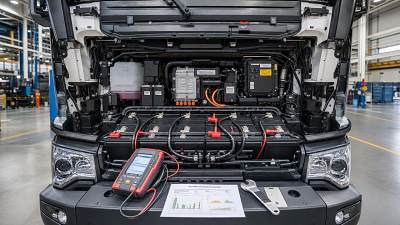
- Inspect the truck battery case for swelling, cracks, leaks, or loose hold-downs.
- Check terminal condition, cable tightness, and visible corrosion.
- Measure open-circuit voltage after the truck has rested.
- Perform a load test to confirm actual truck battery capacity under demand.
- Verify alternator charging voltage and charging consistency.
- Test for parasitic draw if the battery goes flat during parking periods.
- Review battery age, service history, and recent operating conditions.
This sequence makes truck battery troubleshooting faster and more reliable.
Practical fixes for the most common truck battery issues
The right fix depends on the actual cause, not just the symptom.
Here are the most effective responses to common truck battery problems.
Clean and secure the connections
If corrosion is present, clean the terminals thoroughly and inspect cable ends for damage.
A simple connection repair can restore normal truck battery performance immediately.
Recharge the battery correctly
If the truck battery is discharged but still healthy, use the correct charging method and charging rate.
Avoid fast charging as a routine fix because it can increase heat stress.
Replace an aged or failed battery
If the truck battery fails a load test, replacement is usually the most efficient solution.
Choose a battery with the correct voltage, capacity, and vibration resistance for the application.
Repair charging system faults
A new truck battery will not solve an alternator or regulator problem.
Always correct charging voltage issues before returning the vehicle to service.
Eliminate parasitic drain
If the truck battery keeps losing charge overnight, isolate the circuit causing the draw.
Common sources include lighting faults, aftermarket devices, and control modules that do not power down properly.
Truck battery maintenance tips that reduce downtime
Good maintenance lowers the chance of sudden truck battery failure.
It also improves planning for replacement cycles and service parts inventory.
- Check truck battery voltage during routine inspections.
- Keep terminals clean and protected from moisture buildup.
- Verify clamp tightness and hold-down security.
- Test charging output during scheduled electrical checks.
- Inspect parked vehicles for parasitic drain risks.
- Replace truck battery units before end-of-life causes roadside failure.
In busy transport operations, preventive battery care is usually cheaper than emergency recovery and delayed delivery costs.
Choosing the right support and parts source
Truck battery service quality also depends on supply chain decisions.
Reliable sourcing helps reduce fitment errors, inconsistent quality, and delays in replacing critical components.
The Global Heavy Truck Industry Platform connects buyers with manufacturers, suppliers, and spare parts resources across the commercial vehicle sector.
That makes it easier to compare truck battery options, review supplier capabilities, and identify suitable products for heavy-duty applications.
For teams managing cross-border sourcing or multi-brand service needs, access to a transparent B2B marketplace can save both time and operating cost.
Final takeaway
Most truck battery failures do not happen without warning.
Slow cranking, dim lights, repeat jump-starts, and terminal corrosion are all signs worth acting on quickly.
When the diagnosis covers battery condition, charging performance, and electrical drain, repairs become more accurate and more cost-effective.
A practical truck battery maintenance routine, combined with dependable parts sourcing, helps keep heavy trucks on the road and operating with fewer interruptions.
If truck battery issues are showing up more often, now is the right time to review inspection standards, replacement timing, and supplier quality together.
Trending News
- How to compare concrete mixer truck suppliers by total landed cost
- How axle load limits affect low bed trailer exports to Southeast Asia
- How to locate a truck exhaust system leak before replacing parts
- When does heavy equipment transport require a lowboy trailer?
- When does a light commercial vehicle for urban delivery save fleet costs?
Tag
Recommended News
 FAQHow to spot early signs of truck hydraulic system failureTruck hydraulic system issues rarely start with total failure. Learn the early signs—pressure loss, noise, leaks, heat, and jerky movement—to prevent downtime and costly repairs.
 FAQHow to Diagnose Common Truck Steering System Problems Before They Cause DowntimeTruck steering system problems can cause costly downtime. Learn how to spot early warning signs, diagnose faults fast, and keep fleets safe and reliable.
 FAQTruck Air System Problems: Common Failure Points and FixesTruck air system problems can start with slow pressure build, leaks, or moisture. Learn common failure points, practical fixes, and how to improve truck uptime and safety.
 FAQExcavator Parts Failure Signs You Should Not IgnoreExcavator parts warning signs often start small. Learn how to spot wear, hydraulic weakness, overheating, and undercarriage damage early to reduce downtime and avoid costly shutdowns.
 FAQTruck Axle Failure Signs and Maintenance Checks That MatterTruck axle warning signs often start with heat, noise, leaks, or uneven tire wear. Learn the key maintenance checks that prevent costly downtime and unsafe failures.
 FAQTruck Wing Loading Problems and How to Prevent DowntimeTruck wing loading problems often start with small daily errors. Learn practical checks, route-based prevention tips, and smart maintenance steps to cut downtime and keep deliveries moving.
 FAQTruck Cement Delivery Problems: Common Causes and Practical FixesTruck cement delivery problems can cause blockages, delays, and waste. Learn the common causes, practical fixes, and smart checks to improve reliability and reduce downtime.
 FAQTruck Refrigerated Unit Failures That Increase Cargo Loss RiskTruck refrigerated failures can quietly raise cargo loss risk. Learn how route type, heat, airflow, seals, and parts planning affect cold-chain reliability.
 FAQTruck Transmission Problems: Early Signs, Causes, and Fix OptionsTruck transmission issues can start with subtle shifts, slipping, or heat buildup. Learn early signs, key causes, and practical repair or rebuild options for every duty cycle.
 FAQTruck Pump Troubleshooting: Common Pressure Loss Causes and FixesTruck pump troubleshooting guide: discover common pressure loss causes, warning signs, and practical fixes to restore hydraulic performance, reduce downtime, and prevent repeat failures.
 FAQHow to Evaluate a Truck Cement Supplier for Delivery RiskTruck cement supplier evaluation starts with delivery risk. Learn how to assess capacity, logistics control, export readiness, and on-time performance before you place an order.
 FAQExcavator Bucket Sizes Explained for Trenching, Loading, and Rock WorkExcavator bucket size affects trenching accuracy, loading speed, and rock work durability. Learn how to choose the right excavator bucket for better productivity and lower wear.
 FAQTruck Battery Problems: Signs, Causes, and FixesTruck battery problems can lead to breakdowns and costly delays. Learn the key warning signs, main causes, and practical fixes to keep heavy trucks reliable and on the road.
 FAQTipper Trailer Payload Limits and Safety RisksTipper trailer payload limits affect braking, stability, and rollover risk. Learn practical safety checks, load control tips, and ways to reduce costly overload damage.
 FAQHow to Qualify a Truck Tipper Supplier for Safety and Build ConsistencyTruck tipper supplier qualification starts with safety. Learn how to assess build consistency, hydraulic reliability, and factory controls to reduce sourcing risk.
 FAQHow to Read a Water Truck Quotation Without Missing Hidden CostsWater truck quotation guide: learn how to spot hidden costs in specs, freight, compliance, spare parts, and warranty so you can compare offers accurately and buy with confidence.
 FAQDelivery Truck Supplier for School Transportation: Safety ChecklistDelivery truck supplier for school transportation: use this safety checklist to compare compliance, braking, visibility, build quality, and supplier reliability before you buy.
 FAQHow ISO Certification Reduces Sourcing Risk in Truck Chassis SupplyHeavy truck chassis manufacturer with ISO certification: discover how certified suppliers reduce sourcing risk, improve traceability, and support safer global truck chassis procurement.
 FAQWater Sprinkler Truck Uses, Tank Sizes, and Road Safety BasicsWater sprinkler truck uses, tank sizes, and road safety basics explained. Learn how to choose the right capacity, improve dust control efficiency, and compare reliable fleet-ready options.
 FAQDelivery Truck for School Transportation: Safety Points Before OrderingDelivery truck supplier for school transportation: review key safety points before ordering, from braking and visibility to compliance and passenger protection.
 FAQDump Truck Sourcing Mistakes That Delay Construction ProjectsDump truck sourcing mistakes can delay construction projects, raise hidden costs, and disrupt site schedules. Learn the key risks to avoid and source smarter for faster, more reliable project delivery.
 FAQIs a Bulldozer for Construction the Right Fit for Your Site ConditionsBulldozer for construction: learn how terrain, soil, slope, and job size determine the right machine fit. Compare site conditions, avoid costly mismatches, and choose with confidence.
 FAQDump Truck OEM Quality Control Points Before Factory AcceptanceDump truck OEM quality control points before factory acceptance: learn the key checks for welding, hydraulics, brakes, and safety to reduce risk, avoid failures, and choose reliable suppliers.
 FAQTruck Trailer Bulk Order: How to Avoid Spec Drift Across BatchesTruck trailer bulk order quality can fail when specs drift across batches. Learn how to lock standards, align suppliers, and protect safety, compliance, and delivery consistency.
 FAQWhat a Dump Truck Distributor Should Offer After Vehicle DeliveryDump truck distributor support matters after delivery. Learn what to expect in spare parts, warranty, training, and technical service to reduce downtime and protect your investment.