EU Sets Battery Footprint Rule for Heavy Trucks
From January 1, 2027, new electric and hybrid heavy-duty trucks registered in the EU will need a certified battery carbon footprint declaration as part of type-approval documentation under Regulation (EU) 2026/1389, formally issued by the European Commission on July 24, 2026. For exporters of new energy heavy trucks and power batteries, especially those supplying the EU market, this is not just a documentation update: it directly affects market access, customs clearance, and order execution.
What the new EU requirement formally changes
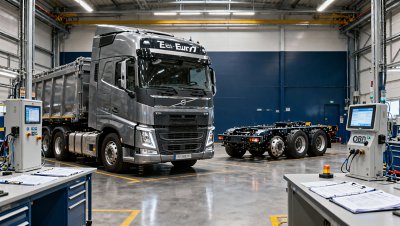
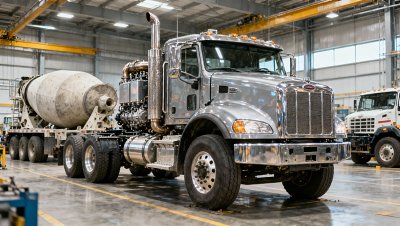
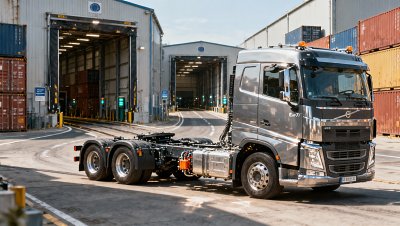
The confirmed requirement applies to new electric and hybrid heavy-duty truck models registered in the EU market, including tractor units, dump trucks, and concrete mixer trucks. Under Regulation (EU) 2026/1389, these vehicles must provide a certified battery carbon footprint declaration, or CBF, and that declaration must be included in the vehicle type-approval file.
The regulation was formally released by the European Commission on July 24, 2026, and the mandatory reporting requirement takes effect on January 1, 2027. Based on the provided information, vehicle and battery suppliers that have not completed LCA life cycle assessment and EPD environmental product declaration certification will not be able to obtain EU type approval, creating a direct risk of customs delays and canceled orders.
Where the pressure is likely to appear first
EU-bound truck exporters face an approval bottleneck
From an industry perspective, the most immediate impact falls on manufacturers and trading companies shipping new energy heavy trucks into the EU. The reason is straightforward: the battery carbon footprint declaration is tied to type approval rather than treated as a separate optional sustainability document. That means the effect is concentrated at the market-entry stage, where model registration, homologation files, and shipment planning intersect.
What deserves closer attention is whether existing export schedules, launch plans for new models, and customer delivery commitments are aligned with the new documentation threshold. If the required certification is incomplete, the issue moves quickly from compliance into sales execution risk.
Battery suppliers become part of the approval chain
The rule also places battery suppliers under closer scrutiny because the required declaration concerns the battery itself. Observably, this shifts part of the compliance burden upstream. If a battery supplier has not completed the relevant LCA and EPD work, the vehicle manufacturer may be unable to finalize the full type-approval package for the EU market.
For battery manufacturers and their export clients, the key business impact is likely to appear in technical documentation readiness, certification coordination, and timing alignment between component supply and vehicle approval.
Supply chain service providers may face document-driven delays
Logistics, customs, and compliance service providers may also feel the effects, not because the rule changes transport operations directly, but because incomplete approval documentation can interrupt cross-border delivery and customs processes. Analysis shows that once market-access documentation becomes a precondition for shipment acceptance or registration, service providers are often pulled into issue resolution after orders have already been scheduled.
This makes document verification, handoff timing, and communication among manufacturers, battery suppliers, and downstream customers more sensitive than before.
What companies should review now
Check whether certification work matches the 2027 deadline
The practical issue is not only understanding the regulation text, but confirming whether the battery carbon footprint declaration can be produced in certified form before vehicles enter the EU registration process. Companies involved in EU-bound heavy-duty truck programs need to review whether their LCA and EPD preparation is complete enough to support type approval on schedule.
Separate policy language from transaction readiness
Analysis shows that a regulation taking effect on a fixed date does not automatically mean every business process is equally prepared. What deserves closer attention is the gap between formal policy requirements and the actual readiness of model files, supplier records, and customer-facing delivery documents. That gap is where commercial risk is most likely to surface first.
Review which product lines are exposed
Not every exporter may face the same level of urgency across its portfolio. The requirement specifically concerns new electric and hybrid heavy-duty truck models registered in the EU, including vehicle categories such as tractor units, dump trucks, and concrete mixer trucks. Companies should therefore identify which model programs, battery configurations, and pending orders are directly exposed to the new approval condition.
Prepare customer and supplier communication early
Because the stated risk includes customs disruption and possible order cancellation, communication across the chain matters. Manufacturers, battery suppliers, and commercial teams should closely track whether supporting documents, certifications, and approval files can be delivered in the sequence required for EU entry. In practice, this is also a contract and delivery-management issue, not only a regulatory one.
Why this looks like more than a short-term filing change
Observably, this development is better understood as a concrete compliance threshold rather than a symbolic policy signal. The reason is that the battery carbon footprint declaration is linked to EU type approval, which directly affects whether a new model can enter the market. That gives the rule immediate operational relevance once the effective date arrives.
At the same time, it is more appropriate to understand this as an industry signal that documentation around battery sustainability is becoming embedded in access requirements for commercial vehicles. Based on the provided information alone, it would be premature to extend that conclusion beyond the confirmed scope of the rule, but the compliance direction is already clear enough to warrant continued attention.
How this news is best understood at this stage
The immediate significance of this update lies in its direct connection to approval, customs, and order continuity for EU-bound electric and hybrid heavy-duty trucks. It does not merely add another reporting layer; within the stated scope, it creates a practical entry condition for new models.
From a neutral industry reading, this is best understood as an implemented regulatory change with near-term business consequences, while still remaining a development that requires close follow-up in execution. The central issue now is less whether the rule matters and more whether affected companies can align certification, documentation, and delivery timing before the requirement becomes mandatory.
Basis of this report and points that still need verification
This article is based on the user-provided news title, event date, and event summary concerning Regulation (EU) 2026/1389, the January 1, 2027 effective date, the battery carbon footprint declaration requirement, and the stated implications for exporters of new energy heavy trucks and power batteries.
For this type of industry update, commonly relevant source categories may include official government or regulatory announcements, company disclosures, industry association releases, authoritative media reports, and standard-related documents. No specific official source link was provided in the input, so the exact official publication link still needs to be verified on an ongoing basis. Continued attention should focus on any later official clarifications, implementation wording, and practical approval requirements affecting LCA, EPD, and type-approval documentation.
Trending News
- How to assess a truck cement manufacturer’s build quality before ordering
- When does a truck trailer OEM make sense for private-label fleets?
- What to verify before choosing a water truck OEM for your fleet
- How to size a cab chassis truck for a fire department apparatus
- When does a truck off road setup need locking differentials?
Tag
Recommended News
 Policy & RegulationsGermany Ends EV Subsidy ExtensionGermany ends EV subsidy extension, reshaping EV and commercial vehicle plans in Europe. See how importers, distributors, and Chinese NEV suppliers should respond.
 Policy & RegulationsEU Rule Sets LCA Certification for Truck ImportsEU Rule Sets LCA Certification for Truck Imports: learn how the new EU LCA and EPD compliance rule will affect truck approvals, export timelines, costs, and delivery planning.
 Policy & RegulationsEU Requires LCA Reports for Imported HDVs from Oct 2026EU LCA reports for imported HDVs become mandatory from Oct 2026. Learn how the new EU heavy-duty vehicle carbon compliance rule affects exporters, suppliers, costs, and delivery readiness.
 Policy & RegulationsChina Tightens Export Filing for New Energy Heavy TrucksChina Tightens Export Filing for New Energy Heavy Trucks: learn how new HS code rules and CNAS carbon-footprint reports may impact customs clearance, compliance, and delivery timelines.
 Policy & RegulationsEU Updates CO2 Rules for Heavy-Duty Vehicle ApprovalEU Updates CO2 Rules for Heavy-Duty Vehicle Approval: learn how new lifecycle carbon and battery due diligence requirements affect EU market access, approval timing, and compliance costs.
 Policy & RegulationsChina Customs Adds New Export Fields for Road Transport EquipmentChina Customs adds new export fields for road transport equipment from Aug 15, 2026. Learn how drive type and certification data may affect compliance, clearance speed, and export planning.
 Policy & RegulationsEU Tightens Truck WVTA Brake and Lighting TestsEU Tightens Truck WVTA Brake and Lighting Tests: learn how Regulation (EU) 2026/1387 reshapes brake response, headlamp compliance, certification timing, and EU market access.
 Policy & RegulationsEU Sets CO2 Rules for New Heavy Trucks from 2027EU Sets CO2 Rules for New Heavy Trucks from 2027: learn how new EU CO2 limits, OBD, and remote data upload requirements could reshape type approval, costs, and delivery planning.
 Policy & RegulationsEU Brings Forward Cybersecurity Approval for Heavy TrucksEU heavy truck cybersecurity approval moves to August 1, 2026. Learn how WVTA, UNECE R155, OTA and telematics rules will impact EU exports, type approval and delivery plans.
 Policy & RegulationsEU Moves Truck Cybersecurity WVTA Forward to Aug 1, 2026EU truck cybersecurity WVTA moves to Aug 1, 2026. Learn how UN R155 and EU 2022/1426 affect heavy truck type approval, exports, suppliers, and compliance planning.
 Policy & RegulationsEU Brings Forward WVTA Cybersecurity Approval for TrucksEU Brings Forward WVTA Cybersecurity Approval for Trucks: learn how the 2026 deadline impacts heavy truck exports, retrofit projects, supplier compliance, costs, and EU market-entry planning.
 Policy & RegulationsEU Brings Forward WVTA Cybersecurity Approval for Heavy TrucksEU heavy truck WVTA cybersecurity approval now starts on August 1, 2026. Learn how EU type approval, CSMS audits, ADAS, OTA, and registration risks affect exporters and manufacturers.
 Policy & RegulationsEU Cybersecurity Approval Rule Takes Effect for Heavy TrucksEU Cybersecurity Approval Rule now reshapes heavy trucks market access. Learn how CSMS, UNECE R155, and WVTA deadlines could impact certification, delivery, and EU export readiness.
 Policy & RegulationsEU Requires EN 15038 Declarations for Truck ImportsEU Requires EN 15038 Declarations for Truck Imports: learn how the new EU rule affects heavy truck customs clearance, compliance timing, and export readiness.
 Policy & RegulationsEU Rule Brings SCIP Filing to Imported Truck Battery PartsSCIP filing for imported truck battery parts becomes critical in the EU from Oct 1, 2026. Learn how the rule impacts heavy-duty truck exports, aftermarket parts, and customs compliance.
 Policy & RegulationsEU REACH Expands to Truck Battery PartsEU REACH expands to truck battery parts, covering lithium-ion battery modules, BMS units, and thermal systems. Learn how SCIP filing, SVHC disclosure, and EU export compliance may affect truck suppliers.
 Policy & RegulationsEU Sets Battery Footprint Rule for Heavy TrucksEU Sets Battery Footprint Rule for Heavy Trucks: learn how the 2027 EU battery carbon footprint requirement could impact type approval, customs clearance, and truck exports.
 Policy & RegulationsEU Requires Certified V2X Modules in Heavy TrucksEU Requires Certified V2X Modules in Heavy Trucks from July 22, 2026. Learn how UN R155 and ETSI EN 303 648 rules will impact EU type approval, registration, and exports.
 Policy & RegulationsEU Tightens V2X Approval for Heavy TrucksHeavy trucks entering the EU face tougher V2X approval from July 22, 2026. Learn how UNECE R155/R156 and EU Type Approval will affect registration, exports, and delivery readiness.
 Policy & RegulationsEU Rule Takes Effect: Heavy Trucks Need V2X from July 22, 2026Heavy trucks entering the EU from July 22, 2026 need V2X modules and UN R155 approval. Learn how this rule impacts compliance, certification, exports, and delivery.
 Policy & RegulationsEU Opens Euro 7 Transition for Heavy TrucksEU Opens Euro 7 Transition for Heavy Trucks: learn how new filing rules, battery carbon footprint declarations, and OBD II checks will impact EU truck exports and compliance planning.
 Policy & RegulationsEPA Update Removes Seven Chinese Diesel Engine ModelsEPA Update Removes Seven Chinese Diesel Engine Models: learn how this EPA compliance change could affect North American truck exports, sourcing, certification, and delivery planning.
 Policy & RegulationsEU Enforces Euro 7 for New Heavy TrucksEU Enforces Euro 7 for New Heavy Trucks: learn how stricter NOx, NH₃, and brake particle certification impacts EU market access, registration timing, and exporter compliance costs.
 Policy & RegulationsLight Duty Truck Manufacturer in USA: Key Compliance ChecksLight duty truck manufacturer in USA selection starts with compliance. Learn the key checks for FMVSS, emissions, load ratings, and traceability before you buy.
 Policy & RegulationsEU Enforces Euro 7 Upgrade for Heavy Truck ImportsEU Enforces Euro 7 Upgrade for Heavy Truck Imports: learn how new PN, NH3, brake and tire wear tests affect certification, customs clearance, and on-time EU delivery.